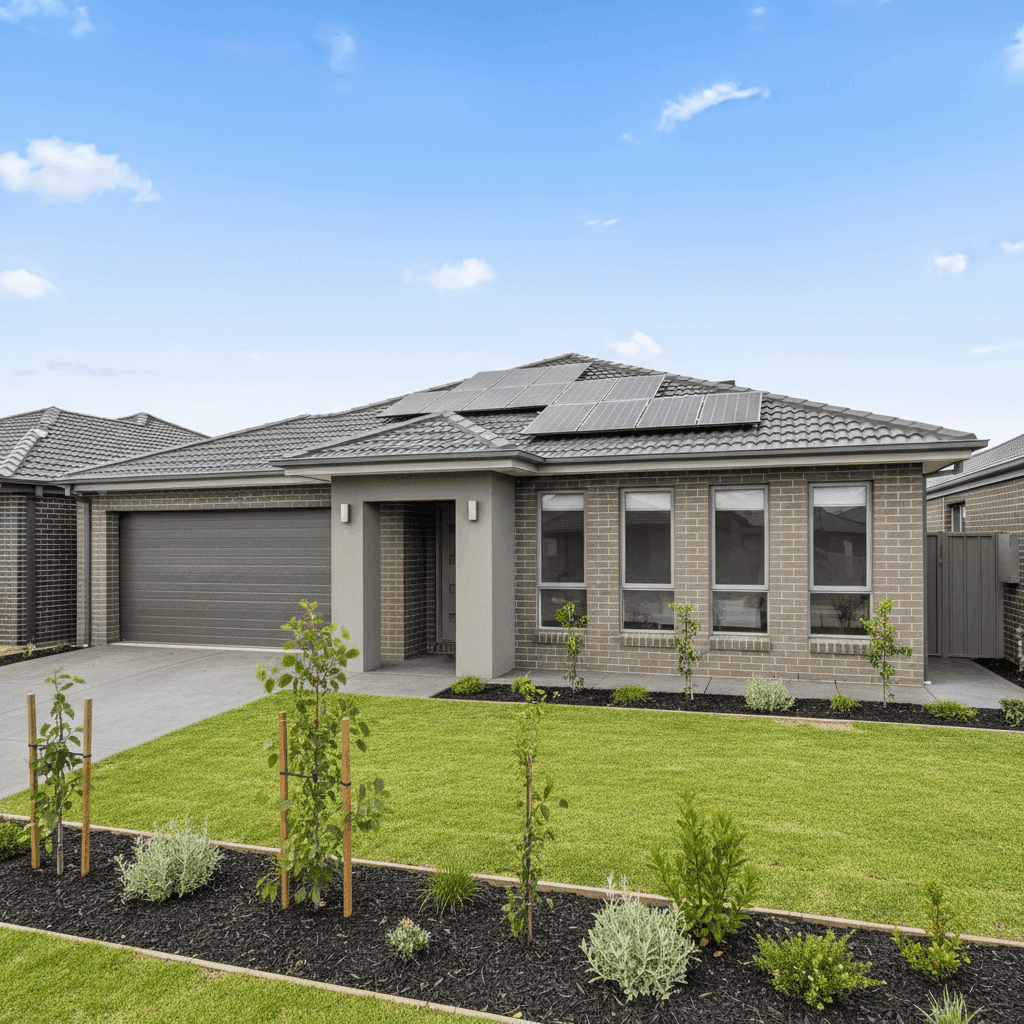
Fraser Rise is one of Melbourne's fastest-growing outer-western suburbs, and it's easy to see why families are flocking here. With new estates, modern homes, and relatively affordable land, the area around postcode 3336 has become a popular destination for first-home buyers and upsizers alike. If you own a free standing home in Fraser Rise, understanding what you should be paying for building insurance is an important part of protecting what is likely your most valuable asset.
This article breaks down a recent building-only insurance quote for a four-bedroom, two-bathroom free standing home in Fraser Rise — and puts that price into context against local, state, and national benchmarks.
---
Is This Quote Fair?
The short answer: yes — it's exceptionally competitive.
The quote in question came in at $715 per year (or around $67 per month) for building-only cover with a $683,000 sum insured. Our price rating for this quote is CHEAP, meaning it sits well below the average for comparable properties in the area.
To put that into perspective, the suburb average for Fraser Rise building insurance is $2,008 per year, and the median sits at $1,736 per year. Even the 25th percentile — meaning the cheapest quarter of quotes we've seen in this postcode — comes in at $1,347 per year. This quote at $715 per year is significantly below even that threshold, making it a genuinely outstanding result for the homeowner.
It's worth noting that a $4,000 building excess applies to this policy. A higher excess is one of the most common levers insurers use to reduce premiums, so homeowners should weigh up whether they're comfortable covering that amount out-of-pocket in the event of a claim. For a well-built, relatively new home in a low-risk area, many owners decide the trade-off is worthwhile — but it's a personal decision that deserves careful thought.
---
How Fraser Rise Compares
Zooming out from the suburb level, the savings look even more striking. Here's how this quote stacks up across different benchmarks:
| Benchmark | Annual Premium |
|---|---|
| This Quote | $715 |
| Fraser Rise Suburb Average | $2,008 |
| Fraser Rise Suburb Median | $1,736 |
| Fraser Rise 25th Percentile | $1,347 |
| LGA (Melton) Average | $1,960 |
| VIC State Average | $2,921 |
| VIC State Median | $2,694 |
| National Average | $2,965 |
| National Median | $2,716 |
This quote is 64% below the Fraser Rise suburb average, 75% below the Victorian state average, and 76% below the national average. Based on a sample of 65 quotes collected for this postcode, it's clear that most homeowners in Fraser Rise are paying considerably more for equivalent cover.
You can explore the full breakdown of insurance costs in this postcode at our Fraser Rise suburb stats page, compare it against all Victorian home insurance data, or see how it measures up on the national stats page.
---
Property Features That Affect Your Premium
Several characteristics of this particular property work in the homeowner's favour when it comes to insurance pricing.
Newer construction (2021): Homes built in the last few years benefit from modern building codes, updated electrical and plumbing systems, and materials that meet current Australian Standards. Insurers typically view newer builds as lower risk, which can translate into meaningfully lower premiums.
Brick veneer external walls: Brick veneer is one of the most common — and insurer-friendly — wall types in Australian suburban construction. It offers solid fire resistance and structural integrity, which helps keep premiums in check compared to timber-framed or cladded alternatives.
Tiled roof: Like brick veneer, a tiled roof is considered a standard, low-risk roofing material in Victoria. It performs well in moderate weather events and is generally straightforward for insurers to assess and price.
Slab foundation: A concrete slab foundation is the norm for modern construction in Melbourne's growth corridors and carries no particular risk premium. It's stable, well-understood, and unlikely to raise any red flags during underwriting.
Solar panels: This property has solar panels installed, which is increasingly common across new Victorian homes. It's worth confirming with your insurer that solar panels are explicitly covered under your building policy — some policies include them automatically, while others may require a specific notation.
Ducted climate control: Ducted heating and cooling systems are considered part of the building and should be covered under a building-only policy. Again, it pays to double-check that your policy schedule reflects this.
Above-average fittings: The property features above-average quality internal fittings. While this is already factored into the sum insured of $683,000, it's a good reminder to ensure your building sum insured is reviewed regularly — particularly as construction costs continue to rise across Victoria.
No pool, no cyclone risk: The absence of a pool removes a common liability consideration, and Fraser Rise is not classified as a cyclone risk area, which keeps the risk profile straightforward for insurers.
---
Tips for Homeowners in Fraser Rise
1. Review your sum insured annually. Construction costs in Victoria have risen significantly in recent years. A sum insured of $683,000 may be appropriate today, but it's worth getting a rebuilding cost estimate each year to make sure you're not underinsured. Tools like the Cordell Sum Sure calculator can help, and your insurer may also offer guidance.
2. Understand your excess before you commit. A $4,000 building excess is on the higher end of the scale. Before accepting this trade-off for a lower premium, think about your financial buffer. If a storm damaged your roof tomorrow, could you comfortably cover $4,000 before insurance kicks in? If not, it may be worth comparing policies with a lower excess — even if the annual premium is slightly higher.
3. Confirm solar panel coverage explicitly. Solar systems can be expensive to repair or replace. Don't assume they're covered — ask your insurer directly and get it confirmed in writing or on your policy schedule. Some insurers treat rooftop solar as a separate item.
4. Shop around at renewal time. Insurance loyalty rarely pays off in Australia. Insurers routinely offer better rates to new customers than to those who simply roll over their existing policy. Even if you're happy with your current cover, it costs nothing to compare quotes before your renewal date. Run a new quote at CoverClub to see how your current premium stacks up.
---
Compare Your Home Insurance Quote Today
Whether you're a new homeowner in Fraser Rise or you've been in your property for a few years, it's always worth knowing if you're getting a fair deal. CoverClub makes it easy to compare building and contents insurance quotes from a range of Australian insurers — so you can see exactly where your premium sits relative to your neighbours and the broader market.
Get a home insurance quote now at CoverClub and find out if you could be paying less.