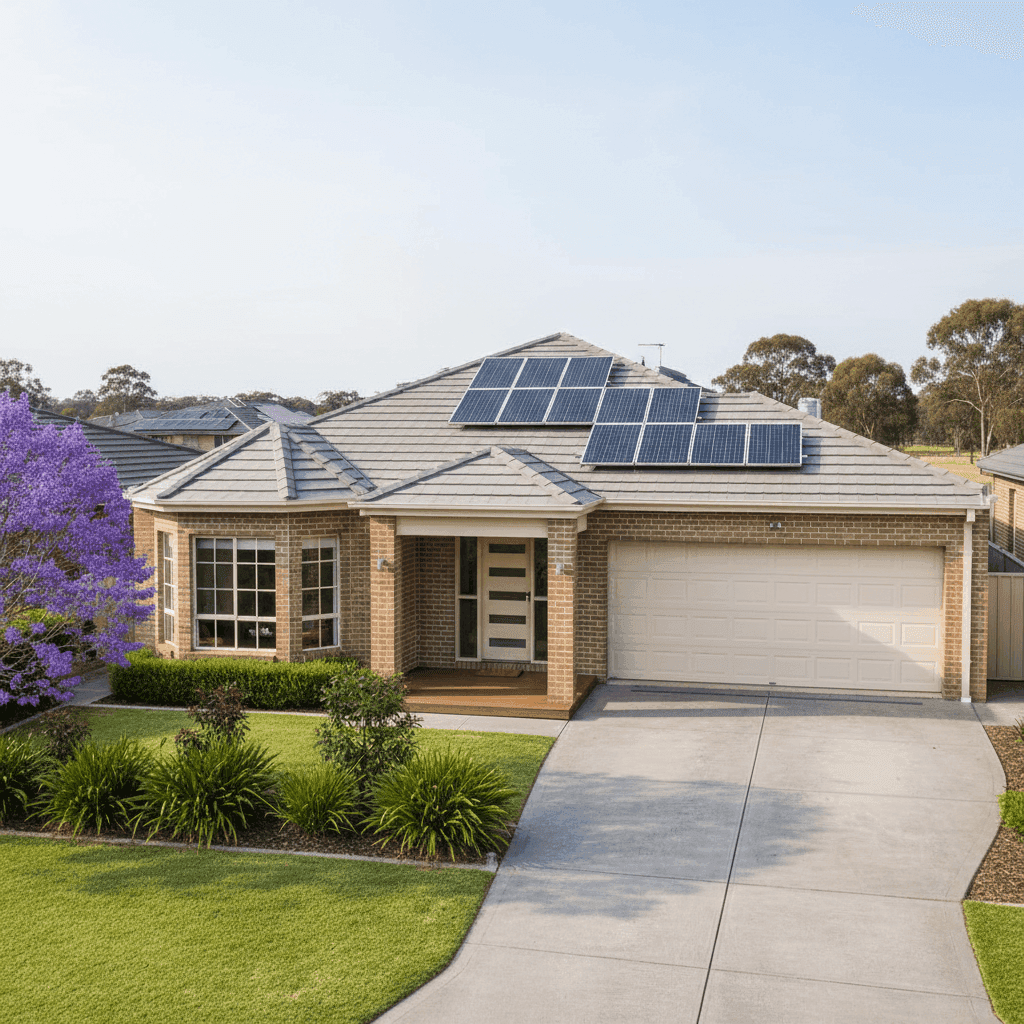
If you own a free standing home in Frazers Creek, NSW 2446, you've probably wondered whether you're paying a fair price for home and contents insurance — or whether there's a better deal out there. This article breaks down a real insurance quote for a three-bedroom, two-bathroom brick veneer home in the area, and puts it in context against local, state, and national benchmarks so you can make a genuinely informed decision.
---
Is This Quote Fair?
The short answer: yes — and then some. This quote comes in at $2,496 per year (or $239 per month) for combined home and contents cover, with a building sum insured of $512,000 and contents valued at $75,000. Both the building and contents excess are set at $1,000, which is fairly standard.
CoverClub's pricing analysis rates this quote as CHEAP — below average — meaning it sits comfortably under what most comparable homeowners are paying. That's a meaningful finding, particularly in a state like New South Wales where insurance premiums have been climbing steadily in recent years off the back of severe weather events, rising rebuild costs, and broader inflationary pressure on the industry.
For a property of this size and specification, a sub-$2,500 annual premium represents solid value. The $1,000 excess on both building and contents is a reasonable trade-off — it keeps the premium down without leaving you exposed to a crippling out-of-pocket cost in the event of a claim.
---
How Frazers Creek Compares
To understand just how competitive this quote is, it helps to look at the broader pricing landscape. You can explore detailed local data on the Frazers Creek insurance stats page, but here's a snapshot:
| Benchmark | Annual Premium |
|---|---|
| This quote | $2,496 |
| LGA (Walcha) average | $2,935 |
| NSW state average | $9,528 |
| NSW state median | $3,770 |
| National average | $5,347 |
| National median | $2,764 |
A few things stand out here. The NSW state average of $9,528 is eye-wateringly high — a figure heavily skewed by properties in flood-prone, cyclone-affected, or high-value coastal areas. The state median of $3,770 is a more grounded benchmark, and this quote still beats it by over $1,200 a year.
Compared to the national average of $5,347, this quote is less than half the price. Even against the national median of $2,764, it comes in roughly $270 cheaper. Within the Walcha LGA, the average sits at $2,935 — again, higher than this quote.
Across every relevant comparison point, this premium lands below the benchmark. That's not something to take for granted; it suggests the property's risk profile is working in the homeowner's favour. Check out the NSW statewide insurance data for more context on how premiums vary across the state.
---
Property Features That Affect Your Premium
Insurance pricing isn't arbitrary — it's driven by the specific characteristics of your home. Here's how the features of this property likely influence its premium:
Brick Veneer Construction Brick veneer walls are well regarded by insurers. They offer solid fire resistance and structural durability, which typically translates to lower premiums compared to timber-framed or clad exteriors. It's one of the more favourable wall types from an underwriting perspective.
Concrete Tile Roof A concrete tile roof is a double-edged sword. It's heavy, durable, and resistant to fire — all good things. However, concrete tiles can be more expensive to repair or replace than metal roofing, and they can be susceptible to cracking under hail impact. On balance, insurers generally view them as a moderate-risk roofing material.
Slab Foundation A concrete slab foundation is the norm for homes built in this era and region. It's stable, low-maintenance, and presents minimal subsidence or pest-related risk compared to raised timber stumps. Insurers tend to price slab-on-ground homes favourably.
Built in 2006 At roughly 18–19 years old, this home sits in a comfortable middle ground — modern enough to meet contemporary building codes (including updated electrical and plumbing standards) but old enough that some components may be approaching the end of their service life. It's not a newly built home, but it's far from being considered aged or high-risk.
Solar Panels Solar panels are increasingly common on Australian homes, and most insurers now include them under building cover — but it's worth confirming this is the case with your specific policy. Panels add replacement value to the building, which is factored into the sum insured.
Ducted Climate Control Ducted air conditioning systems are a fixed building feature and are generally covered under building insurance. Like solar panels, they contribute to the overall replacement cost of the home.
No Pool, No Cyclone Risk The absence of a swimming pool removes a meaningful liability and maintenance risk from the equation. And being outside a designated cyclone risk zone is a significant premium advantage — cyclone-rated cover can add hundreds of dollars to an annual premium in affected areas of Queensland and northern Australia.
Standard Fittings With standard-grade fittings rather than premium or luxury finishes, the cost to rebuild or repair is more predictable and generally lower, which supports a more modest premium.
---
Tips for Homeowners in Frazers Creek
Even with a competitive quote in hand, there's always room to optimise your cover and protect your home more effectively.
1. Review your sum insured regularly Building costs have risen sharply across regional NSW in recent years. A sum insured of $512,000 for a 214 sqm home works out to roughly $2,393 per square metre — which is in the ballpark for standard construction, but worth revisiting annually. Being underinsured at claim time can leave you significantly out of pocket.
2. Document your contents thoroughly With $75,000 in contents cover, it pays to have a clear, up-to-date record of what you own. Take photos or video of each room, note serial numbers for electronics and appliances, and store that documentation somewhere secure (like cloud storage). This makes the claims process considerably smoother.
3. Confirm solar panel coverage Check your policy documents to confirm that your solar panels are explicitly covered under the building section. Some policies include them automatically; others require them to be listed separately. Given the replacement cost of a quality solar system, this is worth a quick phone call to your insurer.
4. Consider your excess strategically A $1,000 excess on both building and contents is reasonable, but if you're in a strong financial position and want to reduce your annual premium further, increasing the excess to $2,000 or more can yield meaningful savings. Conversely, if cash flow is a concern, keeping the excess lower provides more predictable out-of-pocket costs at claim time.
---
Ready to Compare?
A below-average premium is a great starting point, but the best policy isn't always the cheapest — it's the one that gives you the right cover at a competitive price. CoverClub makes it easy to compare home and contents insurance quotes from multiple providers in minutes. Get a quote today at CoverClub and see how your current policy stacks up.