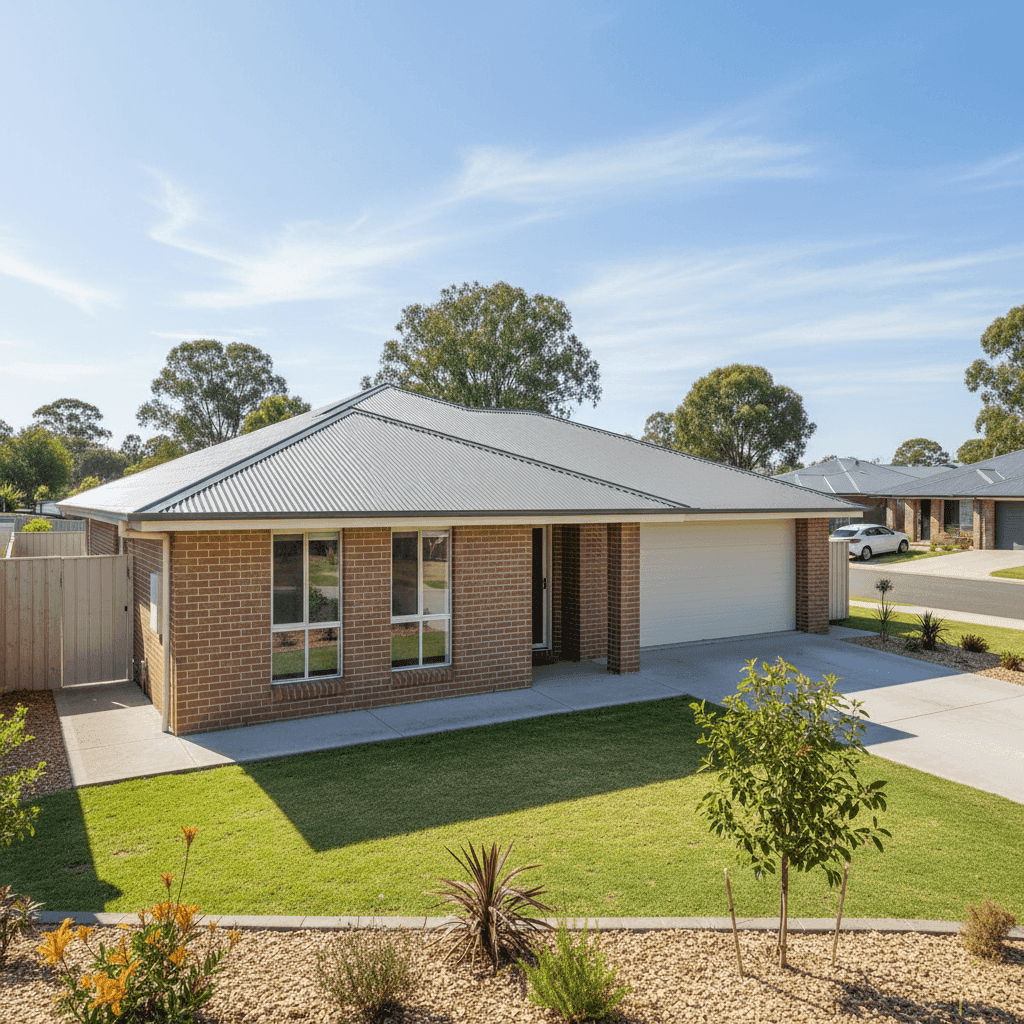
If you own a free standing home in Frenchville, QLD 4701, you already know that finding affordable home insurance in regional Queensland can feel like a challenge — especially in an area that carries cyclone risk. This article breaks down a real building insurance quote for a three-bedroom brick veneer home in Frenchville, compares it against local, state and national benchmarks, and offers practical tips to help you get the best value cover.
---
Is This Quote Fair?
The short answer: yes — and then some. This quote came in at $969 per year (or roughly $94 per month) for building-only cover on a 130 sqm free standing home insured for $320,000. CoverClub's pricing engine rates this as CHEAP, meaning it sits well below the average for the area.
To put that in perspective, the average home insurance premium across Frenchville sits at $4,469 per year, with a median of $4,085. That means this quote is roughly 78% below the suburb average — a remarkable result for a property in a declared cyclone risk zone.
Even measured against the suburb's 25th percentile (the cheapest quarter of quotes), which sits at $2,907 per year, this premium of $969 is still dramatically lower. It's worth noting that the building excess on this policy is $4,000, which is relatively high and is one of the levers insurers use to bring premiums down. That trade-off is worth understanding before you sign on the dotted line.
---
How Frenchville Compares
Frenchville is a suburb of Rockhampton, sitting in the Livingstone LGA — and the insurance data tells a revealing story about the cost of covering homes in this part of Queensland.
| Benchmark | Annual Premium |
|---|---|
| This quote | $969 |
| Frenchville suburb average | $4,469 |
| Frenchville suburb median | $4,085 |
| QLD state average | $9,129 |
| QLD state median | $3,903 |
| National average | $5,347 |
| National median | $2,764 |
| Livingstone LGA average | $13,146 |
A few things stand out here. First, the Livingstone LGA average of $13,146 is extraordinarily high — nearly three times the Queensland state average and more than double the national average. This reflects the significant natural hazard exposure across the broader LGA, which encompasses coastal and cyclone-prone areas. Frenchville's suburb average of $4,469, while still elevated, is considerably more manageable by comparison.
Second, Queensland's state average of $9,129 is nearly double the national average of $5,347, which underscores just how much climate risk — cyclones, flooding, severe storms — inflates premiums across the Sunshine State.
You can explore the full breakdown of Frenchville insurance statistics, compare it to Queensland-wide data, or view national home insurance benchmarks on CoverClub.
---
Property Features That Affect Your Premium
Every home is different, and insurers weigh up a range of property characteristics when calculating your premium. Here's how the features of this particular home likely influence its pricing:
Brick Veneer Walls
Brick veneer is generally viewed favourably by insurers. It offers solid fire resistance and durability compared to timber or fibre cement cladding, which can translate to lower rebuild risk and, in turn, a more competitive premium.
Steel / Colorbond Roof
A Colorbond steel roof is another tick in the right column. These roofs are lightweight, resistant to corrosion, and — critically for Queensland — perform well in high-wind events. Insurers typically price Colorbond roofs more favourably than older materials like terracotta tiles or asbestos sheeting.
Slab Foundation
A concrete slab foundation is a low-risk construction type in most insurer assessments. It's structurally sound, less susceptible to termite damage, and provides a stable base in varying soil conditions.
Cyclone Risk Area
This is the big one. Frenchville falls within a declared cyclone risk zone, which is one of the primary drivers of elevated premiums across the region. Insurers apply cyclone loading to policies in these areas, which is why even modest homes can attract significant premiums. The fact that this quote came in well below the local average despite this risk factor is notable.
Ducted Climate Control
The presence of ducted air conditioning adds to the home's insured value and can slightly increase premiums, as it's a costly system to repair or replace. That said, it's a standard feature in many Queensland homes and unlikely to be a major pricing driver on its own.
Construction Year (1995)
A home built in 1995 sits in a reasonable middle ground — old enough that some wear and tear is expected, but built after many of the major building code improvements that came through in the late 1980s and early 1990s. Post-1985 construction in Queensland generally benefits from improved cyclone-resistance standards.
---
Tips for Homeowners in Frenchville
Whether you're renewing an existing policy or shopping around for the first time, here are four practical steps to make sure you're getting the right cover at the right price.
1. Don't Underinsure Your Home
A sum insured of $320,000 for a 130 sqm brick veneer home in Frenchville seems reasonable, but building costs have risen sharply in recent years. Make sure your sum insured reflects current replacement cost, not market value. Use a building cost calculator or speak to a local builder to sense-check your figure — underinsurance can leave you badly out of pocket after a claim.
2. Understand Your Excess
This policy carries a $4,000 building excess. A higher excess is a common way to reduce your annual premium, but it means you'll need to cover that amount yourself before the insurer steps in. Make sure you have that buffer accessible, particularly heading into cyclone season.
3. Prepare Your Home for Cyclone Season
Insurers reward risk reduction — and so does your peace of mind. Before each cyclone season (November to April), check that your roof is properly secured, gutters are clear, and any loose items around the property are stored safely. Some insurers offer discounts for properties with documented cyclone-mitigation measures.
4. Compare Quotes Annually
The insurance market shifts constantly, and loyalty doesn't always pay. Given how dramatically premiums can vary — as this quote illustrates — it's worth getting fresh quotes each year at renewal time. Even a small amount of time spent comparing can save you thousands.
---
Ready to Compare?
If this analysis has prompted you to take a closer look at your own home insurance, CoverClub makes it easy. You can get a personalised home insurance quote in minutes, and instantly see how your premium compares to others in your suburb, your state, and across Australia. No jargon, no pressure — just clear, comparable data to help you make a confident decision.