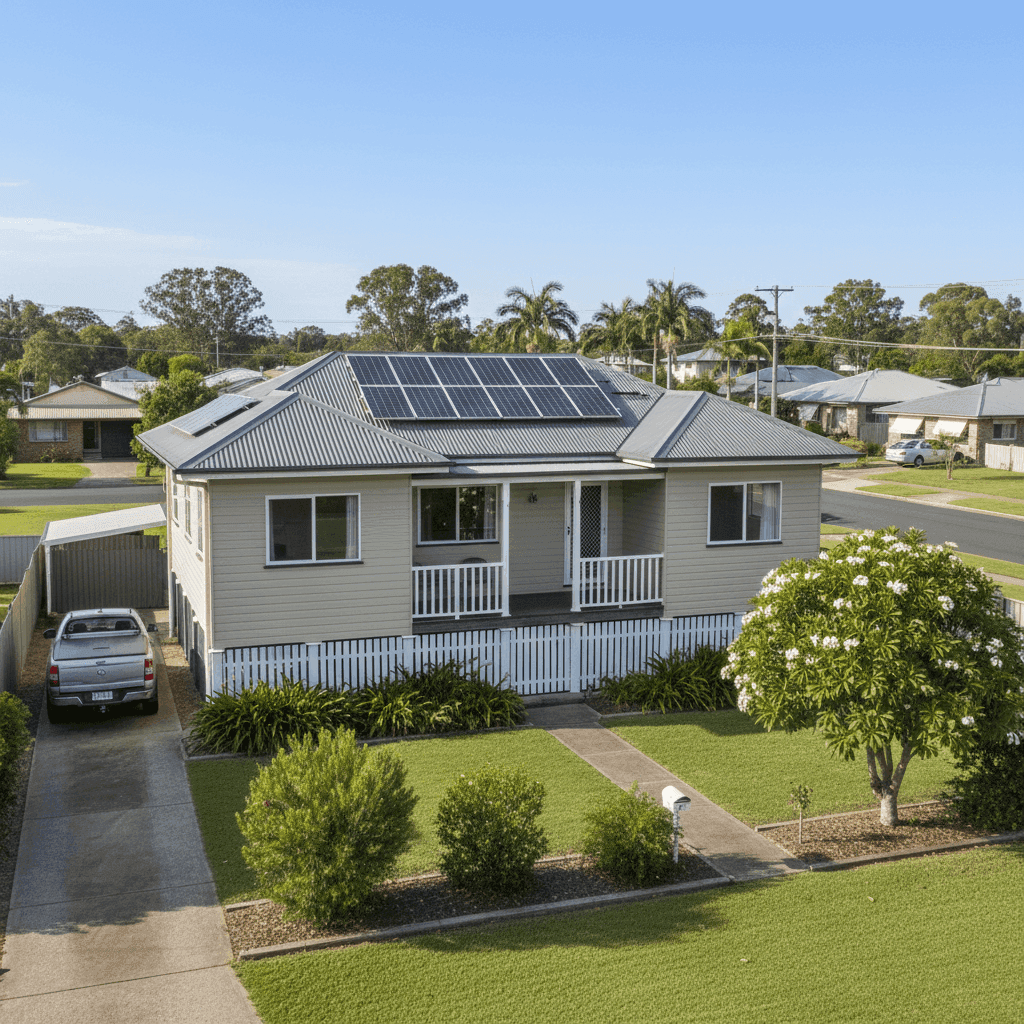
Home insurance in regional Queensland can be a complicated puzzle — premiums vary wildly depending on your suburb, your property's construction, and the risks your area faces. This article breaks down a recent building insurance quote for a two-bedroom free standing home in Frenchville, QLD 4701, comparing it against local, state, and national benchmarks so you can understand exactly where it sits in the market.
---
Is This Quote Fair?
The quoted annual premium of $1,562 per year (or roughly $147 per month) has been rated FAIR — Around Average for this property type and location.
At first glance, "around average" might sound underwhelming, but in the context of Frenchville and broader Queensland, this rating tells a more encouraging story. The suburb's average premium sits at $2,760 per year, and the median lands at $2,224 per year. This quote comes in well below both figures — sitting closer to the 25th percentile of $1,455 per year than the median. In practical terms, that means roughly three-quarters of comparable quotes in the area cost more.
The "Fair" rating reflects that while this isn't the cheapest quote on the market, it represents solid value relative to what most Frenchville homeowners are paying. For a property with several risk-elevating characteristics (more on those below), landing near the lower end of the local price range is a genuinely positive outcome.
The building is covered for a sum insured of $476,000, with a $2,500 building excess applying to claims. Opting for a higher excess is a common strategy to reduce premiums, and this excess level is likely contributing to the competitive price point.
---
How Frenchville Compares
To put this quote in proper perspective, it helps to zoom out and look at the broader pricing landscape. Based on data from 67 quotes collected for Frenchville (QLD 4701), here's how the numbers stack up:
| Benchmark | Premium |
|---|---|
| This Quote | $1,562/yr |
| Frenchville 25th Percentile | $1,455/yr |
| Frenchville Median | $2,224/yr |
| Frenchville Average | $2,760/yr |
| Frenchville 75th Percentile | $4,173/yr |
| QLD State Average | $4,547/yr |
| QLD State Median | $3,931/yr |
| National Average | $2,965/yr |
| National Median | $2,716/yr |
| Livingstone LGA Average | $13,146/yr |
The figures here are striking. Queensland's average home insurance premium of $4,547 per year is nearly three times this quote — a reflection of the state's elevated exposure to cyclones, flooding, and severe weather events. Even the national average of $2,965 per year is almost double what's been quoted here.
The Livingstone LGA average of $13,146 per year deserves special attention. This extraordinarily high figure is likely skewed by coastal and high-risk properties within the broader local government area — a reminder that postcode-level data can mask enormous variation within a region. Frenchville, as an inland suburb of Rockhampton, generally benefits from lower risk exposure compared to coastal LGA counterparts, which helps explain why its suburb-level figures are far more reasonable.
---
Property Features That Affect Your Premium
Several characteristics of this property directly influence what insurers are willing to charge. Understanding these factors can help you make smarter decisions at renewal time.
Cyclone Risk Area Frenchville falls within a designated cyclone risk zone, which is one of the most significant premium drivers in Queensland. Insurers price in the potential for wind damage, storm surge, and associated structural losses. Despite this designation, the quoted premium remains competitive — partly because Frenchville is inland and not directly coastal.
Construction Materials The home's Hardiplank/Hardiflex external walls and steel/Colorbond roof are generally viewed favourably by insurers. Fibre cement cladding like Hardiflex is durable, fire-resistant, and performs well in severe weather. Colorbond roofing is similarly robust and widely used in Queensland's climate. These materials can help moderate premiums compared to older or more vulnerable construction types.
Stumped Foundation Built in 1965, this home sits on stumps — a common foundation type for Queensland homes of that era. While stump foundations allow for airflow and are well-suited to the climate, they can introduce some risk around settlement and structural movement over time. Insurers may factor in the age of the home alongside the foundation type when assessing risk.
Solar Panels The presence of solar panels adds a modest layer of complexity to building insurance. Panels are typically covered under building policies, but they represent an additional asset that can be damaged in hail storms or high winds — both of which are relevant risks in this region. It's worth confirming with your insurer that the solar system is explicitly included in your sum insured.
Timber and Laminate Flooring The timber and laminate flooring throughout the home is worth noting from a claims perspective. These materials can be costly to repair or replace following water ingress or flooding events, which is something to keep in mind when reviewing your sum insured and policy inclusions.
---
Tips for Homeowners in Frenchville
1. Review Your Sum Insured Annually Building costs in Queensland have risen sharply in recent years due to labour shortages and material price increases. A sum insured of $476,000 for a 105 sqm home may be appropriate today, but it's worth reassessing each year to ensure you wouldn't be underinsured in the event of a total loss. Use a building cost calculator or speak to a quantity surveyor if you're unsure.
2. Confirm Solar Panel Coverage Don't assume your solar panels are automatically covered — check your Product Disclosure Statement (PDS) to confirm they're included under your building policy and that the insured amount reflects their replacement value. Some policies treat panels as a separate item.
3. Prepare for Cyclone Season Given the cyclone risk designation, take practical steps to reduce your exposure: secure loose items around the property, check that gutters and downpipes are clear, and ensure roof fixings and flashings are in good condition. Some insurers offer premium discounts for properties with documented cyclone mitigation measures.
4. Compare Quotes at Renewal Even a "Fair" rated quote can be improved upon. Insurance markets shift constantly, and a premium that was competitive last year may not be the best available this year. Shopping around — particularly using a comparison platform — is one of the most effective ways to ensure you're not overpaying.
---
Ready to Compare?
Whether you're reviewing an existing policy or shopping for cover on a new property, comparing quotes is the smartest first step. CoverClub makes it easy to see what multiple insurers are offering for your specific home — so you can make a confident, informed decision. Get a home insurance quote today and find out if you could be paying less.