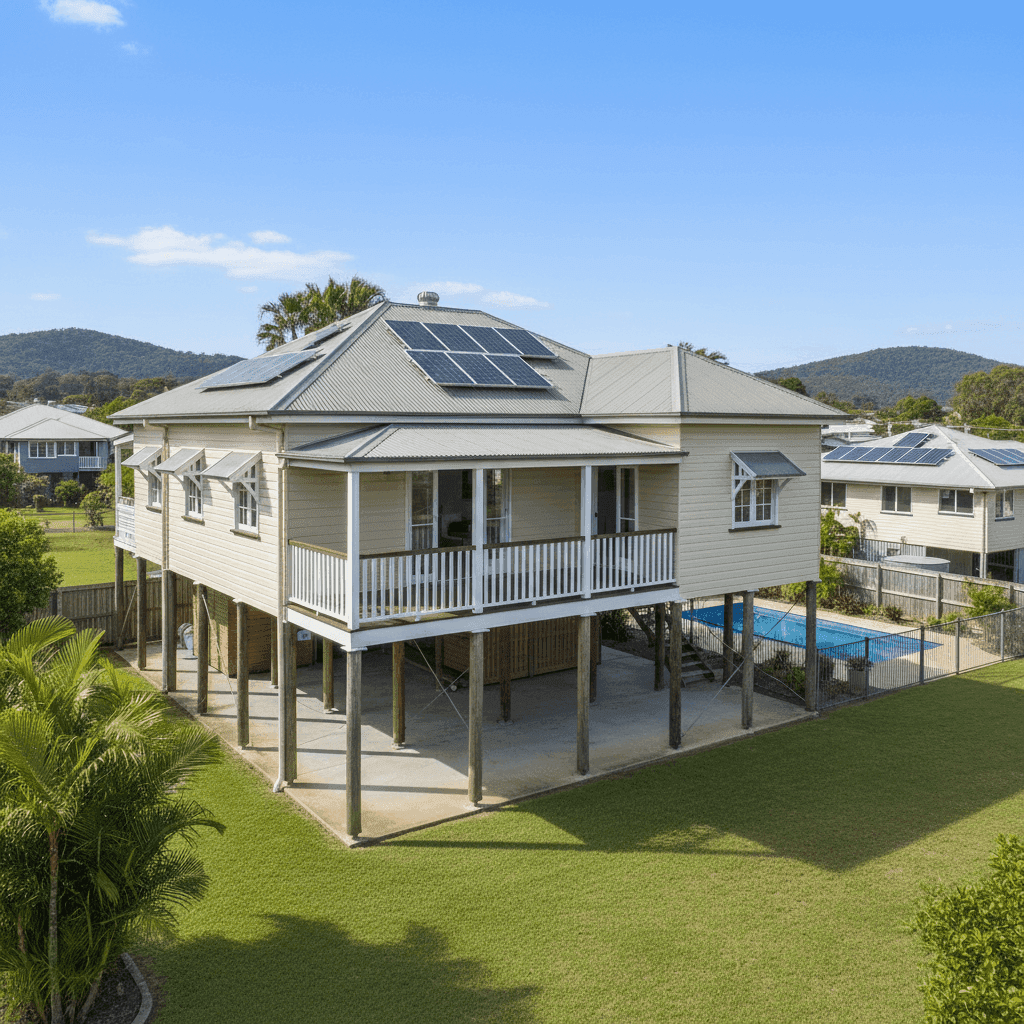
If you own a free standing home in Frenchville, QLD 4701, you already know that insuring a property in Central Queensland comes with its own set of considerations — from cyclone exposure to the quirks of older elevated construction. This article takes a close look at a real home insurance quote for a three-bedroom, two-bathroom weatherboard home in Frenchville, breaking down whether the price is competitive and what factors are likely pushing the premium up or down.
---
Is This Quote Fair?
The quote in question comes in at $3,827 per year (or $360 per month) for a combined Home and Contents policy, covering a building sum insured of $557,000 and contents valued at $40,000. The building excess is $1,000 and the contents excess is $500.
Our price rating for this quote is FAIR — Around Average, which is actually a reasonably positive outcome for a property in this part of Queensland. Here's why that matters.
When you look at the Frenchville suburb insurance data, the average premium across 63 quotes sits at $4,469 per year, with a median of $4,085. This quote lands comfortably below both figures, suggesting the homeowner is getting a better-than-typical deal for the area. The suburb's 25th percentile is $2,907 and the 75th percentile is $5,348 — so while there are cheaper options out there, this quote is well within a reasonable range and avoids the upper end of the market.
In short: for Frenchville, this is a solid result. You're not getting the cheapest possible cover, but you're paying less than what most comparable properties in the suburb are quoted.
---
How Frenchville Compares
The numbers become even more interesting when you zoom out to a broader view.
| Benchmark | Average Premium | Median Premium |
|---|---|---|
| Frenchville (suburb) | $4,469/yr | $4,085/yr |
| Queensland (state) | $9,129/yr | $3,903/yr |
| Australia (national) | $5,347/yr | $2,764/yr |
| Livingstone LGA | $13,146/yr | — |
The Queensland state average of $9,129 per year looks alarming at first glance, but the median of $3,903 tells a more balanced story — the state average is heavily skewed by high-risk coastal and cyclone-prone areas. Frenchville's median of $4,085 is broadly in line with the state median, which makes sense given its inland position within the Rockhampton region.
Looking at the national picture, the average of $5,347 is above this quote, but the national median of $2,764 is notably lower — a reflection of how much cheaper home insurance tends to be in lower-risk southern states like Victoria and South Australia. Queensland homeowners, particularly in cyclone-declared zones, consistently pay more than the national median.
Perhaps the most striking figure is the Livingstone LGA average of $13,146 per year. While Frenchville falls under the Rockhampton Regional Council rather than Livingstone, this figure underscores just how dramatically premiums can vary within a relatively small geographic area in Queensland.
---
Property Features That Affect Your Premium
Several characteristics of this property have a meaningful influence on the final premium figure. Understanding them can help you make smarter decisions about coverage and risk mitigation.
Cyclone Risk Area
This is arguably the single biggest factor. Frenchville is located within a designated cyclone risk zone, which triggers mandatory cyclone-specific excess clauses and higher base premiums from most insurers. There's no getting around this — it's a geographic reality that all Central Queensland homeowners face.
Elevated Construction (Pole Home)
The property sits on poles and is elevated by at least one metre. This style of construction — common in Queensland — can actually work in your favour during flood events, as water is more likely to pass beneath the structure. However, elevated homes can also present higher wind-load risk during severe storms, which some insurers price accordingly.
Weatherboard Timber Walls
Timber weatherboard is a classic Queensland building material, but it does carry a higher fire risk and greater susceptibility to termite or moisture damage compared to brick or rendered masonry. Insurers typically charge a modest premium loading for timber-framed and clad homes.
Steel/Colorbond Roof
On the plus side, a Colorbond steel roof is generally viewed favourably by insurers. It's durable, resistant to ember attack, and performs well in high-wind events — all relevant considerations in this part of Queensland.
Timber/Laminate Flooring
Timber and laminate floors can be costly to replace after a water or flood event, which may influence the contents and building replacement estimates. Ensuring your sum insured accurately reflects current replacement costs is essential.
Additional Features: Pool, Solar Panels & Ducted Climate Control
A swimming pool, rooftop solar system, and ducted air conditioning all add to the overall replacement value of the property and its contents. Solar panels in particular can be a sticking point — not all policies cover them under the building sum insured by default, so it's worth confirming with your insurer exactly what's included.
---
Tips for Homeowners in Frenchville
1. Review your sum insured annually. With construction costs rising sharply across Queensland in recent years, a building sum insured set a few years ago may no longer reflect true replacement costs. Underinsurance is a serious risk — if your home is destroyed and the payout doesn't cover a full rebuild, you'll be out of pocket for the difference.
2. Confirm solar panel coverage explicitly. Ask your insurer whether your rooftop solar system is covered under the building section, and up to what value. Some policies include panels automatically; others require a specific endorsement. Don't assume.
3. Prepare for cyclone season proactively. Insurers look favourably on homes with documented cyclone-readiness measures. Securing roof tie-downs, maintaining gutters and downpipes, and trimming overhanging trees can reduce the risk of a claim — and may support a better premium at renewal.
4. Compare quotes before renewing. Loyalty doesn't always pay in the insurance industry. Premium rates can vary significantly between providers for the same property, and the market shifts year to year. Running a fresh comparison before your renewal date is one of the simplest ways to avoid overpaying.
---
Ready to Compare?
Whether you're reviewing your current policy or shopping for cover for the first time, it pays to see what the broader market has to offer. At CoverClub, you can compare home insurance quotes for your Frenchville property in minutes — with transparent pricing data drawn from real quotes in your suburb. Don't settle for the first number you're given; a better deal could be closer than you think.