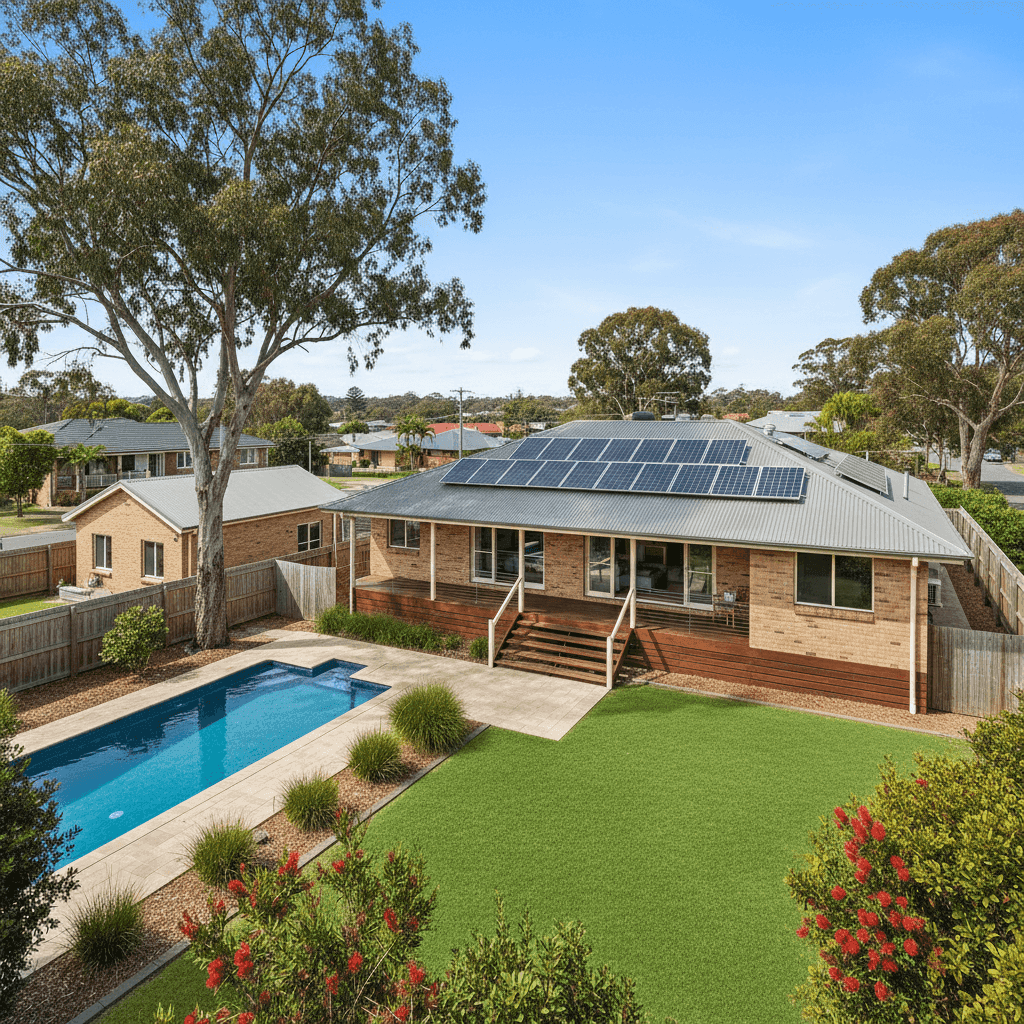
Freshwater is one of the Northern Beaches' most sought-after suburbs — a relaxed coastal community with character homes, strong property values, and a tight-knit local feel. For owners of larger, well-appointed free standing homes in the area, understanding what drives your home and contents insurance premium is essential to making sure you're getting genuine value for your cover.
This article breaks down a real insurance quote for a six-bedroom, four-bathroom free standing home in Freshwater, NSW 2096, compares it against local, state, and national benchmarks, and offers practical guidance for homeowners looking to optimise their cover.
---
Is This Quote Fair?
The annual premium for this property came in at $7,336 per year (or $703/month), covering both building and contents with a sum insured of $2,516,000 on the building and $50,000 on contents. Both the building and contents excess are set at $1,000.
Our price rating for this quote is Expensive — Above Average.
To put that in context: the suburb average for Freshwater sits at $2,753/year, and the median is $2,545/year. Even the 75th percentile — meaning 75% of quotes in the suburb are cheaper — comes in at just $3,064/year. This quote lands well above all of those markers.
That said, it's important to understand why. This isn't a typical three-bedroom suburban home. At 235 sqm with six bedrooms, four bathrooms, a pool, solar panels, ducted climate control, and a granny flat, this is a substantial and feature-rich property. The building sum insured of $2,516,000 reflects the true replacement cost of a large, quality home — and that figure is the single biggest driver of the premium. Higher insured values mean higher premiums, almost without exception.
So while the dollar figure looks steep compared to local averages, those averages likely reflect smaller, less complex properties. The more meaningful question is whether the rate applied to this property's insured value is competitive — and that's where shopping around becomes critical.
---
How Freshwater Compares
Understanding where Freshwater sits in the broader insurance landscape helps frame whether your premium is driven by location risk or property-specific factors.
| Benchmark | Average Premium | Median Premium |
|---|---|---|
| Freshwater (NSW 2096) | $2,753/yr | $2,545/yr |
| Northern Beaches LGA | $3,266/yr | — |
| New South Wales | $9,528/yr | $3,770/yr |
| National | $5,347/yr | $2,764/yr |
You can explore the full data on the Freshwater suburb stats page, the NSW state overview, or the national insurance statistics.
A few things stand out here. The NSW average premium of $9,528/year is notably high — largely skewed by high-value properties and elevated-risk areas across the state. The NSW median of $3,770/year is a more reliable indicator for most homeowners. Freshwater's median of $2,545/year actually sits below the national median of $2,764/year, which is a positive signal — the suburb itself doesn't carry outsized geographic risk compared to many other parts of the country.
The Northern Beaches LGA average of $3,266/year is modestly higher than Freshwater's suburb average, suggesting that some surrounding areas carry slightly more risk or higher property values on average.
For this specific property, the premium is driven far more by the property's characteristics and insured value than by location risk alone.
---
Property Features That Affect Your Premium
Several features of this home have a meaningful impact on what insurers charge. Here's how they play out:
Large home with high sum insured At 235 sqm with six bedrooms and four bathrooms, this is a sizeable dwelling. The $2,516,000 building sum insured reflects genuine replacement costs — including demolition, materials, and labour in a high-cost coastal market. Insurers price directly off this figure, so a higher sum insured will always translate to a higher base premium.
Brick veneer construction with Colorbond roof Brick veneer walls are generally viewed favourably by insurers — they offer solid fire resistance and structural durability. A steel/Colorbond roof is similarly well-regarded: lightweight, long-lasting, and resistant to ember attack. This combination typically attracts more competitive rates than, say, timber weatherboard with a tiled roof.
Slab foundation, slightly elevated A concrete slab foundation provides good stability and is a neutral-to-positive risk factor. The property being elevated by less than one metre is noted — while not classified as a high-set or Queenslander-style home, this modest elevation can offer some protection against surface water ingress.
Swimming pool Pools add to the insured value of the property and introduce some additional liability considerations. They're a common feature on Northern Beaches properties and are factored into building cover.
Solar panels Solar systems are increasingly standard but do add to the replacement value of the home. It's worth confirming with your insurer exactly how your solar installation is covered — some policies include it automatically under building cover, while others may require it to be specifically noted.
Ducted climate control Ducted systems are a significant fixed asset and form part of the building's insured value. Their inclusion is another reason this property's sum insured is higher than average.
Granny flat A secondary dwelling on the same property adds both value and complexity. Insurers need to know about granny flats — whether they're rented out or used by family members can affect your cover type and premium. Make sure your policy explicitly covers the secondary dwelling.
Timber and laminate flooring Timber and laminate floors are a contents consideration as much as a building one. They can be more susceptible to water damage than tiles, which is worth keeping in mind when reviewing your policy's water damage provisions.
---
Tips for Homeowners in Freshwater
1. Review your sum insured regularly Construction costs have risen significantly in recent years, and the Northern Beaches is a high-cost building market. Underinsurance is a real risk — but so is over-insuring. Use a professional quantity surveyor or an online building calculator to validate your sum insured annually. Even a $100,000 adjustment in either direction can meaningfully shift your premium.
2. Confirm your granny flat is explicitly covered Secondary dwellings are a common source of claim disputes. Check your policy wording to ensure the granny flat is listed as part of the insured structure. If it's rented out, you may need landlord cover or a specific endorsement — standard home insurance may not cover a tenanted secondary dwelling.
3. Shop around — seriously This quote is rated expensive relative to suburb benchmarks. While the property's complexity justifies a higher-than-average premium, there can still be significant variation between insurers for the same risk profile. Get a comparison quote at CoverClub to see what other insurers would charge for the same cover.
4. Ask about bundling discounts and excess options Some insurers offer discounts for combining home and contents cover (which this policy already does), paying annually rather than monthly, or increasing your excess. With a $1,000 excess currently, there may be room to adjust — raising it to $2,000 could reduce your annual premium noticeably if you're comfortable self-insuring smaller claims.
---
Compare Your Options with CoverClub
Whether you're renewing your existing policy or shopping for the first time, CoverClub makes it easy to see how your quote stacks up against real data from your suburb, your LGA, and across Australia. Don't settle for the first number you're given — run a free comparison at CoverClub and make sure your premium reflects your property, not just a default rate.