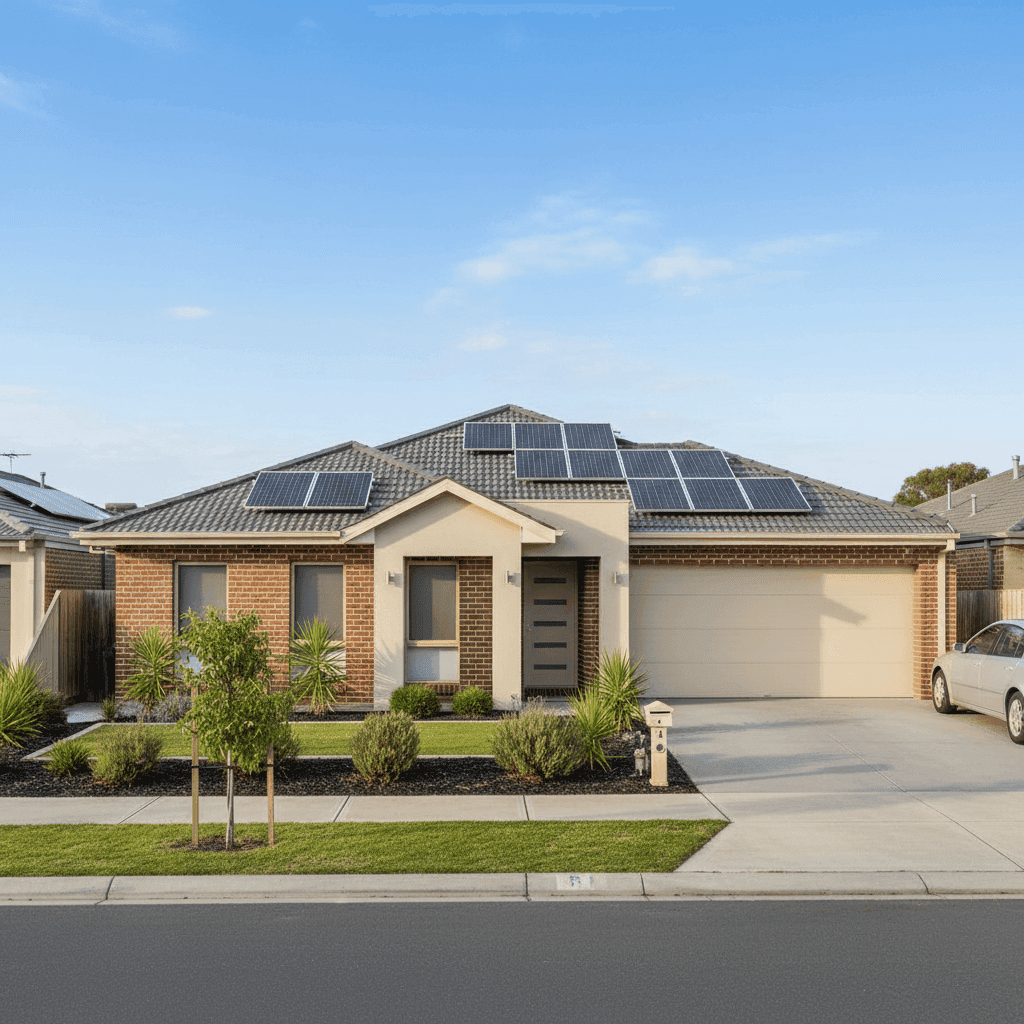
If you own a free standing home in Fulham Gardens, SA 5024, you're probably curious about what your neighbours are paying for home insurance — and whether your own premium stacks up. This article breaks down a real home and contents insurance quote for a three-bedroom, two-bathroom brick veneer home in the suburb, comparing it against local, state, and national benchmarks so you can make a more informed decision at renewal time.
---
Is This Quote Fair?
The short answer: yes — and then some. The quote in question comes in at $1,352 per year (or about $136 per month), covering both building (insured at $355,000) and contents ($50,000). Our pricing model rates this quote as CHEAP, meaning it sits well below the average for comparable properties in the area.
To put that in perspective, the suburb average premium for Fulham Gardens is $2,100 per year, and the median sits at $2,032. That means this quote is roughly $748 cheaper than the average — a saving of around 36%. Even against the suburb's 25th percentile (the cheapest quarter of quotes), which sits at $1,687, this quote still undercuts the field.
For homeowners, this is the kind of result worth paying attention to. A well-priced policy doesn't just save money upfront — it compounds over the life of your ownership. At this rate, you could be saving over $3,700 compared to the suburb average across a five-year period.
It's worth noting the excess structure: the building excess is set at $3,000, while the contents excess is $1,000. A higher building excess is one mechanism insurers use to lower premiums, so it's important to weigh up whether you're comfortable covering that amount out of pocket in the event of a significant claim.
---
How Fulham Gardens Compares
Understanding where your suburb sits in the broader insurance landscape helps you gauge whether you're getting a fair deal — or being overcharged.
Here's how Fulham Gardens stacks up:
| Benchmark | Annual Premium |
|---|---|
| This Quote | $1,352 |
| Suburb Average (Fulham Gardens) | $2,100 |
| Suburb Median | $2,032 |
| LGA Average (West Torrens) | $1,992 |
| SA State Average | $2,433 |
| SA State Median | $1,679 |
| National Average | $5,347 |
| National Median | $2,764 |
The Fulham Gardens suburb average of $2,100 is notably lower than the South Australian state average of $2,433, suggesting the suburb is considered relatively low-risk by insurers. Fulham Gardens sits within the City of West Torrens LGA, where the average premium is $1,992 — consistent with the suburb-level data.
When you zoom out to the national picture, the contrast becomes even starker. The national average of $5,347 reflects the outsized impact of high-risk regions — particularly cyclone-prone areas in Queensland and Western Australia, as well as flood-affected zones in NSW and Victoria. South Australia, and Fulham Gardens in particular, benefits from a comparatively benign natural hazard profile, which keeps premiums lower than much of the country.
---
Property Features That Affect Your Premium
Several characteristics of this property work in favour of a lower premium. Here's what insurers are likely factoring in:
Brick Veneer Construction Brick veneer external walls are well-regarded by insurers for their durability and fire resistance. Compared to lightweight cladding or weatherboard, brick veneer tends to attract lower premiums because it holds up better against both fire and impact damage.
Tiled Roof A tiled roof is another tick in the right column. Tiles are long-lasting, low-maintenance, and perform well in most weather conditions. They're generally preferred over older materials like fibrous cement sheeting or corrugated iron when it comes to insurance pricing.
Slab Foundation A concrete slab foundation is considered structurally stable and is less susceptible to subsidence or pest-related damage than older pier-and-beam styles. This reduces the risk profile of the building from an insurer's perspective.
Built in 2012 At just over a decade old, this home sits in a sweet spot — modern enough to meet current building codes (which improved significantly after the 2011 updates), but not so new that replacement costs are at a premium. Newer builds generally attract more favourable rates than ageing homes with outdated wiring or plumbing.
No Pool The absence of a swimming pool removes a meaningful liability risk from the equation. Pools introduce both injury liability exposure and additional maintenance-related claims potential, so skipping this feature keeps the risk profile clean.
Solar Panels Solar panels are worth flagging — while they don't typically inflate premiums significantly, it's essential to confirm they are explicitly covered under your policy. Some insurers include them automatically under building cover; others treat them as an optional add-on. Always check the Product Disclosure Statement (PDS).
Ducted Climate Control Ducted systems are a fixed building feature and should be covered under your building sum insured. Make sure the $355,000 building cover accounts for the replacement cost of this system, particularly given the cost of ducted HVAC installations has risen sharply in recent years.
---
Tips for Homeowners in Fulham Gardens
1. Review your building sum insured regularly Construction costs have risen substantially across Australia since 2020. A sum insured of $355,000 for a 139 sqm home may be adequate today, but it's worth using an independent building cost calculator each year at renewal to ensure you're not underinsured. Underinsurance is one of the most common — and costly — mistakes homeowners make.
2. Understand what your excess means in practice A $3,000 building excess is on the higher end. Before locking in a policy, consider whether you have that amount readily accessible in an emergency. If cash flow is a concern, it may be worth comparing quotes with a lower excess, even if the annual premium increases slightly.
3. Check your solar panels are explicitly covered As mentioned above, solar panels are a specific item worth verifying in your PDS. Ask your insurer directly whether panels are covered for damage from storms, hail, or electrical faults — and whether the inverter is included.
4. Don't auto-renew without comparing This quote demonstrates that significant savings are available in Fulham Gardens for those willing to shop around. The gap between the cheapest and most expensive quotes in the suburb spans from $1,687 (25th percentile) to $2,444 (75th percentile) — a difference of over $750 per year for broadly similar cover. Loyalty doesn't pay in home insurance.
---
Compare Your Own Quote
Whether you're renewing soon or just want to know if you're getting a fair deal, CoverClub makes it easy to see how your premium compares. Get a home insurance quote today and find out where you sit against the suburb, state, and national benchmarks — in minutes, for free.