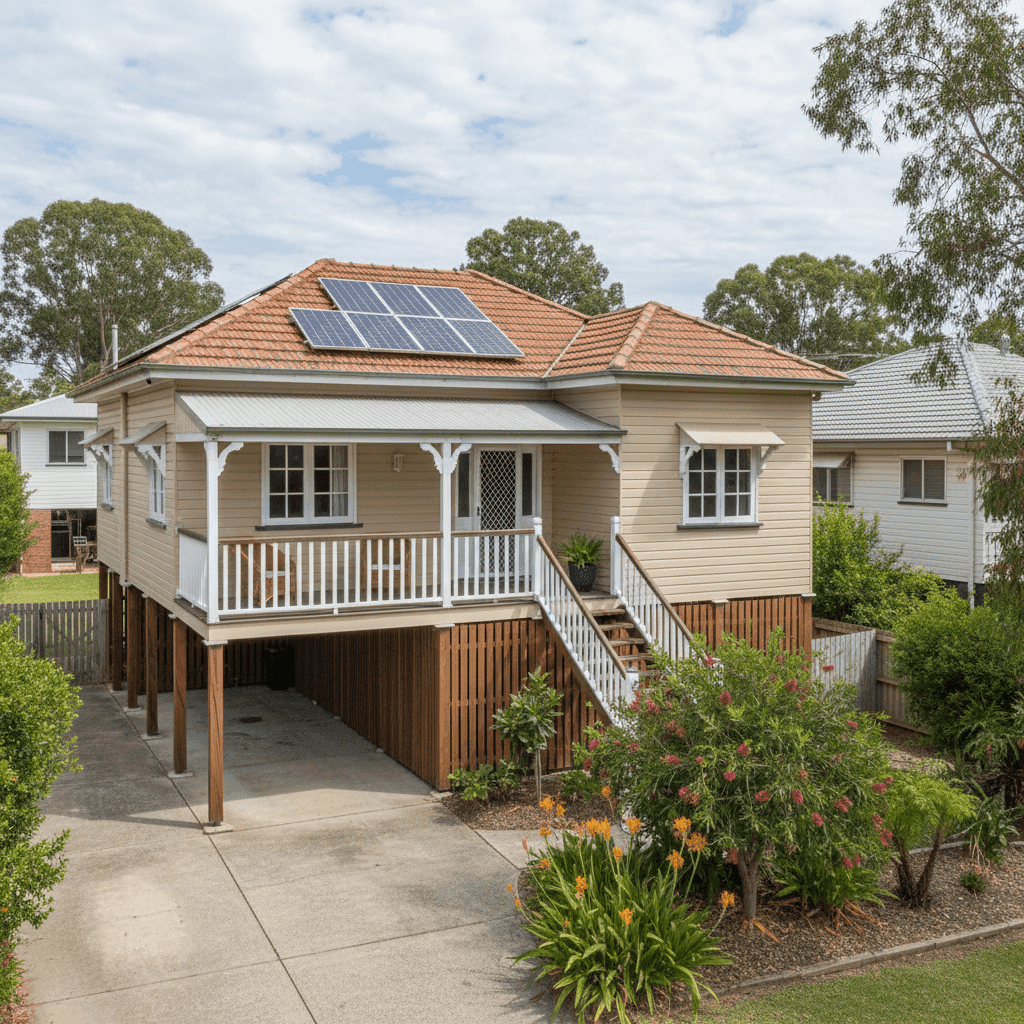
Gailes is a quiet residential suburb in the City of Ipswich, sitting roughly 30 kilometres southwest of Brisbane's CBD. With a mix of older character homes and more recent builds, it's a suburb that attracts families looking for affordable living within commuting distance of the city. If you own a free standing home here, understanding what drives your home insurance premium — and whether you're getting a fair deal — is well worth your time.
This article breaks down a real home and contents insurance quote for a 3-bedroom, 2-bathroom free standing home in Gailes, compares it against local, state, and national benchmarks, and offers practical tips to help you manage your cover.
---
Is This Quote Fair?
The annual premium for this property came in at $2,576 per year (or $247 per month), covering both building (sum insured: $500,000) and contents ($60,000), each with a $1,000 excess.
Our pricing analysis rates this quote as CHEAP — below average — which is genuinely good news for the homeowner. To put that in context:
- The Queensland state average premium is $9,129/yr, and the state median sits at $3,903/yr
- The national average is $5,347/yr, with a national median of $2,764/yr
- The Ipswich LGA average is a notable $8,901/yr
At $2,576/yr, this quote sits below the national median and well below both the Queensland and Ipswich LGA averages. For a home in the Ipswich region — an area that has historically faced elevated insurance costs due to flood risk — landing a premium this far below the local average is a strong result.
That said, premiums vary enormously depending on individual property characteristics, insurer appetite, and the specific cover selected. This quote reflects one point-in-time comparison and should be reviewed regularly.
---
How Gailes Compares
Benchmarking your own premium against broader data is one of the most useful things you can do as a homeowner. Here's how the numbers stack up:
| Benchmark | Annual Premium |
|---|---|
| This Quote | $2,576 |
| National Median | $2,764 |
| National Average | $5,347 |
| QLD State Median | $3,903 |
| QLD State Average | $9,129 |
| Ipswich LGA Average | $8,901 |
The gap between the Ipswich LGA average ($8,901) and this quote ($2,576) is striking — a difference of over $6,300 per year. This likely reflects the fact that many Ipswich properties carry significant flood risk loadings, particularly those closer to the Bremer River and its tributaries. Properties that sit outside high-risk flood zones, or that have characteristics reducing their risk profile, can attract substantially lower premiums.
Note that suburb-level data for Gailes wasn't available at the time of this analysis. For the latest local pricing trends, visit the Gailes suburb stats page, the Queensland state overview, or explore national home insurance data.
---
Property Features That Affect Your Premium
Several characteristics of this particular home have a meaningful influence on how insurers price the risk. Here's what stands out:
Fibro Asbestos External Walls
This is one of the most significant factors. Homes built with fibro asbestos cladding — common in Queensland homes constructed before the mid-1980s — carry higher rebuild and repair costs due to the specialised handling and disposal requirements for asbestos-containing materials. Insurers typically load premiums for these properties, though the extent varies between providers. With a 1972 construction year, this home falls squarely into that era.
Elevated on Stumps
The property is elevated by at least one metre on stumps — a hallmark of traditional Queensland architecture. Elevation can be a double-edged sword: it may reduce flood inundation risk (which could lower premiums), but it also increases vulnerability to wind events and can complicate repairs. On balance, the elevated design likely works in this property's favour in flood-prone Ipswich.
Tiled Roof
Terracotta or concrete tiles are generally viewed favourably by insurers compared to older corrugated iron or fibro roofing. Tiles are durable, fire-resistant, and well-suited to Queensland's climate. This is a neutral-to-positive factor for pricing.
Solar Panels
The presence of solar panels adds replacement value to the property. Insurers need to account for the cost of reinstating panels after a covered event such as hail or storm damage. Homeowners should confirm with their insurer that solar panels are explicitly covered under their building policy and that the sum insured adequately reflects their replacement value.
Ducted Climate Control
Ducted air conditioning systems are a significant asset — and a costly one to replace. Like solar panels, this adds to the overall replacement cost of the home and should be factored into the building sum insured to avoid being underinsured.
Timber and Laminate Flooring
Timber floors are susceptible to water damage and can be expensive to replace. This is worth keeping in mind when assessing contents cover and ensuring your building policy covers internal fixtures adequately.
---
Tips for Homeowners in Gailes
1. Review Your Sum Insured Annually
With a building sum insured of $500,000 and construction costs continuing to rise across Queensland, it's important to reassess whether this figure still reflects the true cost of rebuilding your home — including demolition, asbestos removal, and professional fees. Underinsurance is one of the most common and costly mistakes homeowners make.
2. Confirm Asbestos Coverage with Your Insurer
Not all policies treat asbestos-containing materials the same way. Some insurers exclude or limit cover for asbestos removal and disposal costs. Before renewing, ask your insurer directly how they handle asbestos in the event of a claim — and get it in writing if you can.
3. Document Your Contents Thoroughly
With $60,000 in contents cover, maintaining an up-to-date home inventory — including photos, receipts, and serial numbers for high-value items — makes the claims process significantly smoother. Store this documentation securely off-site or in cloud storage.
4. Shop Around at Renewal Time
Even if your current premium looks competitive, insurers regularly re-price risk at renewal. What's cheap today may not be cheap next year. Make it a habit to compare quotes from multiple providers each time your policy comes up for renewal — especially given how dramatically premiums vary across the Ipswich LGA.
---
Compare Your Home Insurance at CoverClub
Whether you're a first-time buyer or a long-term Gailes resident, comparing home insurance quotes is one of the simplest ways to make sure you're not overpaying. CoverClub makes it easy to see how your premium stacks up and find cover that suits your property and budget. Get a quote today and see what you could be saving.