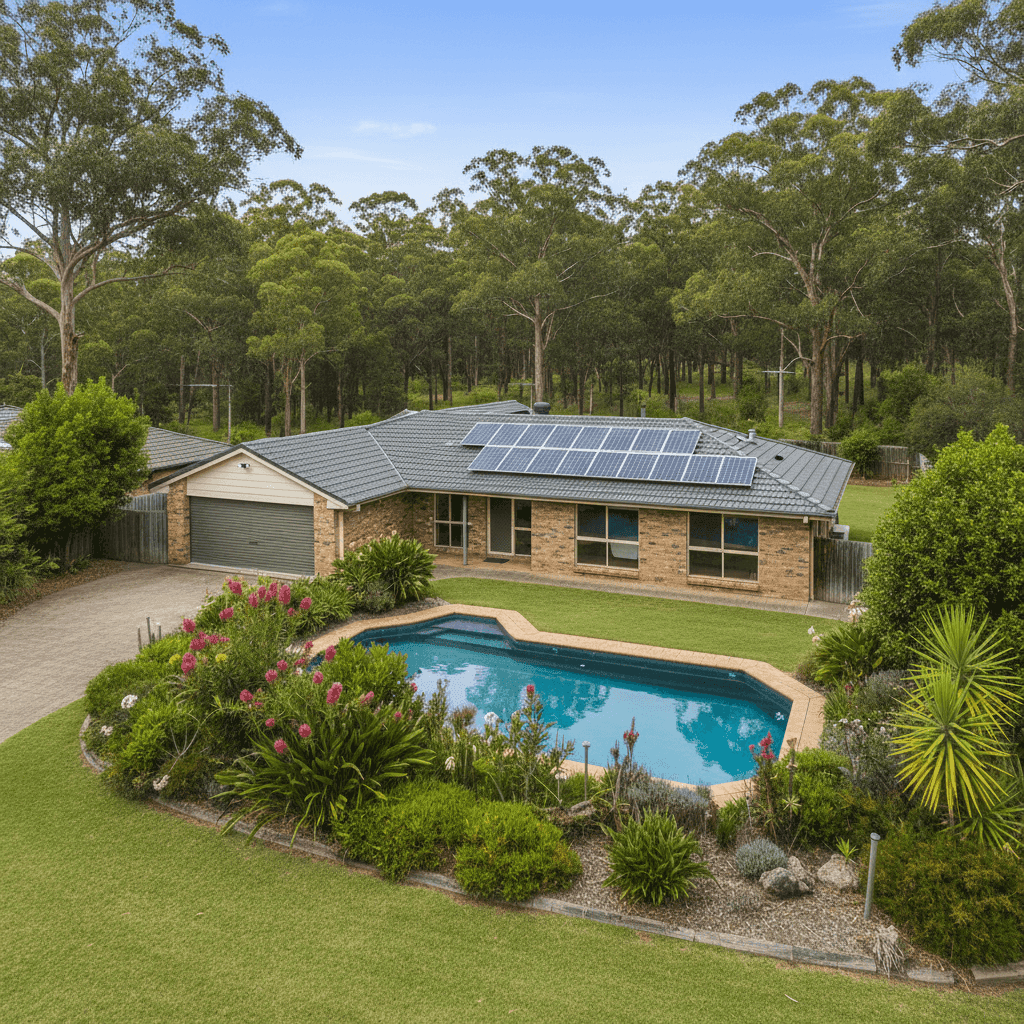
Galston is one of Sydney's more leafy and relaxed semi-rural suburbs, sitting in the Hornsby Shire on the city's north-western fringe. Properties here tend to be larger than typical metro homes, often featuring generous land, established gardens, and the kind of lifestyle extras — pools, solar panels, ducted air conditioning — that make them genuinely comfortable places to live. But those same features can have a meaningful impact on what you pay for home and contents insurance. This article breaks down a recent quote for a four-bedroom, two-bathroom free-standing home in Galston to help you understand whether you're paying a fair price — and what you can do about it if you're not.
---
Is This Quote Fair?
The short answer: yes, and then some. This quote came in at $2,149 per year (or around $205 per month), and it carries a "Cheap" price rating — meaning it sits well below what most comparable properties in the area are paying.
To put that in perspective:
- The suburb average for Galston (postcode 2159) is $4,313/yr
- The suburb median sits at $3,950/yr
- Even the 25th percentile — the cheapest quarter of quotes in the suburb — is $3,472/yr
This quote undercuts even that lower benchmark by more than $1,300 annually. That's a significant saving. For a home insured at $804,000 for the building and $50,000 for contents, a premium of $2,149 represents genuinely strong value — particularly given the property includes a pool, solar panels, and ducted climate control, all of which typically push premiums higher.
At the state level, the NSW average home insurance premium is $3,801/yr, with a median of $3,410/yr. This quote is nearly 43% below the NSW average — a remarkable gap. Even against the national average of $2,965/yr, this premium comes in cheaper, sitting about 27% below what Australians typically pay for home and contents cover.
---
How Galston Compares
Galston's insurance costs are notably higher than both state and national benchmarks, which reflects a few local realities. The suburb's bushland surrounds, larger block sizes, and higher average property values all contribute to elevated premiums across the board.
| Benchmark | Average Premium | Median Premium |
|---|---|---|
| Galston (2159) | $4,313/yr | $3,950/yr |
| LGA (Hornsby) | $3,666/yr | — |
| NSW | $3,801/yr | $3,410/yr |
| National | $2,965/yr | $2,716/yr |
Interestingly, Galston's suburb average of $4,313/yr sits above the NSW state average of $3,801/yr — and well above the national average. This isn't unusual for properties in Sydney's bushland fringe, where bushfire exposure, larger insured values, and older housing stock can combine to drive premiums up.
You can explore more detailed pricing data for this postcode at the Galston suburb stats page.
It's worth noting that the sample size for Galston is relatively small (8 quotes), so the suburb averages should be treated as indicative rather than definitive. That said, the consistent gap between this quote and every benchmark is hard to ignore.
---
Property Features That Affect Your Premium
Several characteristics of this property are worth understanding in the context of insurance pricing.
Brick veneer construction and tiled roof are generally viewed favourably by insurers. Brick veneer offers solid fire resistance and structural durability, while tiled roofs tend to be more resilient than alternatives like Colorbond or corrugated iron in certain weather events. Together, these features typically support more competitive premiums.
Stump foundations are common in older Australian homes, particularly those built before the 1990s. This home was constructed in 1985, which puts it in a generation of housing that can carry slightly higher rebuild risk due to ageing materials and the need to meet modern building codes in the event of a significant claim. Insurers factor this in when calculating replacement costs.
The pool is a meaningful addition. Swimming pools increase both the replacement cost of the property and the liability exposure for insurers — if someone is injured on your property, your home insurance policy may be called upon. Pools can add anywhere from a few hundred to over a thousand dollars to an annual premium depending on the insurer.
Solar panels are another consideration. Rooftop solar systems add to the insured value of the home and can complicate roof repairs after storm or hail damage. Not all insurers cover solar panels under the building component automatically, so it's worth confirming your policy covers them explicitly.
Ducted climate control similarly adds to the replacement value of the home. A full ducted system can cost $10,000–$25,000 to replace, and this should be factored into your sum insured to avoid being underinsured.
With a building sum insured of $804,000, this property appears to be insured at a realistic replacement value for a 214 sqm brick veneer home in Sydney's north-west — though it's always worth reviewing this figure annually as construction costs continue to rise.
---
Tips for Homeowners in Galston
1. Review your sum insured every year Construction costs in NSW have risen sharply in recent years. A sum insured that was accurate two or three years ago may now leave you underinsured. Use a building cost calculator or speak with a quantity surveyor to make sure your $804,000 figure still reflects true replacement cost — including demolition, professional fees, and the pool.
2. Check your solar panels are covered It sounds simple, but many homeowners assume their solar system is automatically covered under their building policy. Read the product disclosure statement carefully to confirm your panels are included — and at what value. If they're not listed, ask your insurer to add them explicitly.
3. Reduce bushfire risk to lower your premium Galston sits in a bushfire-prone area. Insurers take this seriously, and properties with well-maintained defensible space, ember guards on vents, and leaf guards on gutters are generally viewed more favourably. Some insurers will discount premiums for documented risk-mitigation measures — it's worth asking.
4. Consider your excess strategy This policy carries a $2,000 building excess and a $1,000 contents excess. A higher excess typically means a lower premium, but make sure you can comfortably cover the excess amount in the event of a claim. If cash flow is a concern, a lower excess with a slightly higher premium might be the smarter trade-off.
---
Ready to Compare?
Whether you're renewing your current policy or shopping for the first time, the best way to know if you're getting a fair deal is to compare. CoverClub makes it easy to see quotes side by side, so you're not left guessing whether your premium is reasonable.
Get a home insurance quote for your Galston property and see how your options stack up — it takes just a few minutes and could save you thousands.