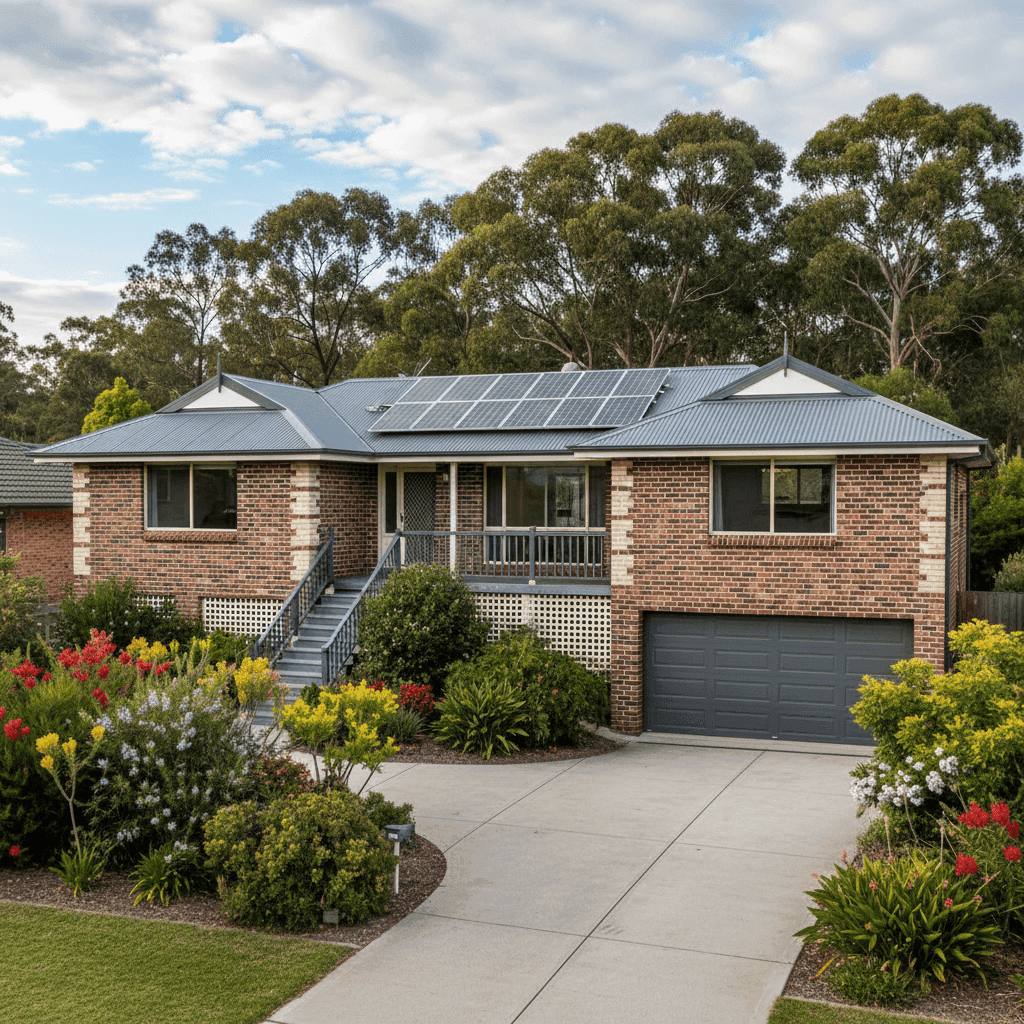
Garden Suburb is a quiet, leafy pocket of Lake Macquarie — one of those classic Newcastle-fringe neighbourhoods where 1970s brick homes sit comfortably on generous blocks. If you own a free standing home here, you're likely paying close attention to the cost of protecting it. This article breaks down a real home and contents insurance quote for a 3-bedroom, 2-bathroom property in Garden Suburb (NSW 2289), and puts that number into context using suburb, state, and national benchmarks.
---
Is This Quote Fair?
The quote in question comes in at $3,300 per year (or $312 per month) for combined home and contents cover, with a $550,000 building sum insured and $90,000 in contents. Our price rating for this quote is Expensive — above average for the area.
To understand why, it helps to look at the local landscape. The suburb average premium in Garden Suburb sits at $2,715 per year, with a median of $2,444. This quote lands noticeably above both figures — roughly 22% above the suburb average and 35% above the median. It also sits above the 75th percentile for the area ($3,074), meaning it's more expensive than at least three-quarters of comparable quotes we've seen in this postcode.
That said, "expensive" doesn't automatically mean "wrong." Premiums are influenced by the specific insurer's risk appetite, the level of cover selected, and individual property characteristics. But it does suggest there's meaningful room to shop around.
---
How Garden Suburb Compares
One of the more striking data points here is how dramatically NSW premiums vary depending on where you look. Here's a quick snapshot:
| Benchmark | Average Premium | Median Premium |
|---|---|---|
| Garden Suburb (2289) | $2,715 | $2,444 |
| NSW (State) | $9,528 | $3,770 |
| National | $5,347 | $2,764 |
| Lake Macquarie LGA | $11,064 | — |
The NSW state average of $9,528 looks alarming at first glance, but it's heavily skewed by high-risk and high-value properties — particularly in flood-prone or bushfire-exposed regions. The median of $3,770 is a more realistic benchmark for typical NSW homeowners. Similarly, the national average of $5,347 is pulled upward by Queensland cyclone zones and other elevated-risk areas, making the national median of $2,764 the more useful comparison point.
Garden Suburb's median of $2,444 is actually quite competitive on a national scale, which reflects the suburb's relatively low exposure to extreme weather events. The Lake Macquarie LGA average of $11,064 is eye-catching, but this figure is likely driven by waterfront and flood-adjacent properties within the broader council area — Garden Suburb itself sits in a more favourable risk category.
For this particular quote, the $3,300 annual premium is above where most Garden Suburb homeowners land, which makes comparison shopping a worthwhile exercise.
---
Property Features That Affect Your Premium
Every insurer prices risk differently, but certain property characteristics consistently influence what you'll pay. Here's how this home stacks up:
Construction era (1974): Homes built in the early-to-mid 1970s are now over 50 years old. While many are structurally sound, insurers factor in the age of plumbing, wiring, and roofing when assessing risk. Older homes can attract slightly higher premiums due to the increased likelihood of maintenance-related claims.
Brick veneer walls: This is generally a positive from an insurance perspective. Brick veneer is durable, fire-resistant, and holds up well in storms. It's one of the more insurer-friendly wall types available, and typically results in lower premiums compared to timber-clad or fibro construction.
Steel/Colorbond roof: Colorbond roofing is widely regarded as one of the best choices for Australian conditions — it's lightweight, corrosion-resistant, and performs well in high winds. Insurers tend to view it favourably.
Stump foundation with timber/laminate flooring: The combination of a stump foundation and timber flooring is worth noting. While the home is only elevated by less than 1 metre, stumped foundations can be more susceptible to movement and moisture-related issues over time. Timber flooring, while beautiful, can be costly to repair or replace if water damage occurs — a factor some insurers price into their premiums.
Solar panels: Solar panels are an increasingly common feature, but they do add to the replacement cost of a home. Ensuring your building sum insured accounts for the panels (and their installation) is important. Some insurers include them automatically; others require specific endorsement.
Ducted climate control: A ducted HVAC system is a significant fixed asset. Like solar panels, it contributes to the overall rebuild cost and should be reflected in your sum insured.
No pool, no cyclone risk zone: Both of these work in the homeowner's favour. Pools introduce liability considerations, and cyclone-rated areas attract significant premium loadings. Neither applies here.
---
Tips for Homeowners in Garden Suburb
1. Review your sum insured carefully. At $550,000 for a 235 sqm home, the building sum insured works out to roughly $2,340 per sqm. Given current construction costs in the Newcastle region — which have risen sharply post-pandemic — it's worth confirming this figure with an independent building cost estimator. Being underinsured can be just as costly as overpaying for your premium.
2. Shop around — this quote has room to move. With this premium sitting above the 75th percentile for the suburb, there's a real chance a comparable policy is available at a lower price point. Use a comparison tool like CoverClub to benchmark multiple insurers side by side before renewing.
3. Ask about discounts for your home's features. Colorbond roofing, brick veneer walls, and solar panels can all work in your favour with the right insurer. Some providers offer explicit discounts for newer roofing materials or security upgrades. It's worth asking directly — or letting a comparison platform surface those savings automatically.
4. Consider your excess strategically. Both the building and contents excess on this policy are set at $1,000. If you have the financial capacity to absorb a higher out-of-pocket cost in the event of a claim, increasing your excess (say, to $2,000) can meaningfully reduce your annual premium. Just make sure the saving justifies the added risk exposure.
---
Compare Your Home Insurance Today
Whether you're renewing an existing policy or shopping for the first time, understanding how your premium stacks up against local and national benchmarks is the first step to making a smarter decision. CoverClub makes it easy to compare home and contents quotes for properties across Garden Suburb and beyond. Get a quote today and see what you could be saving — it takes just a few minutes and could put hundreds of dollars back in your pocket each year.