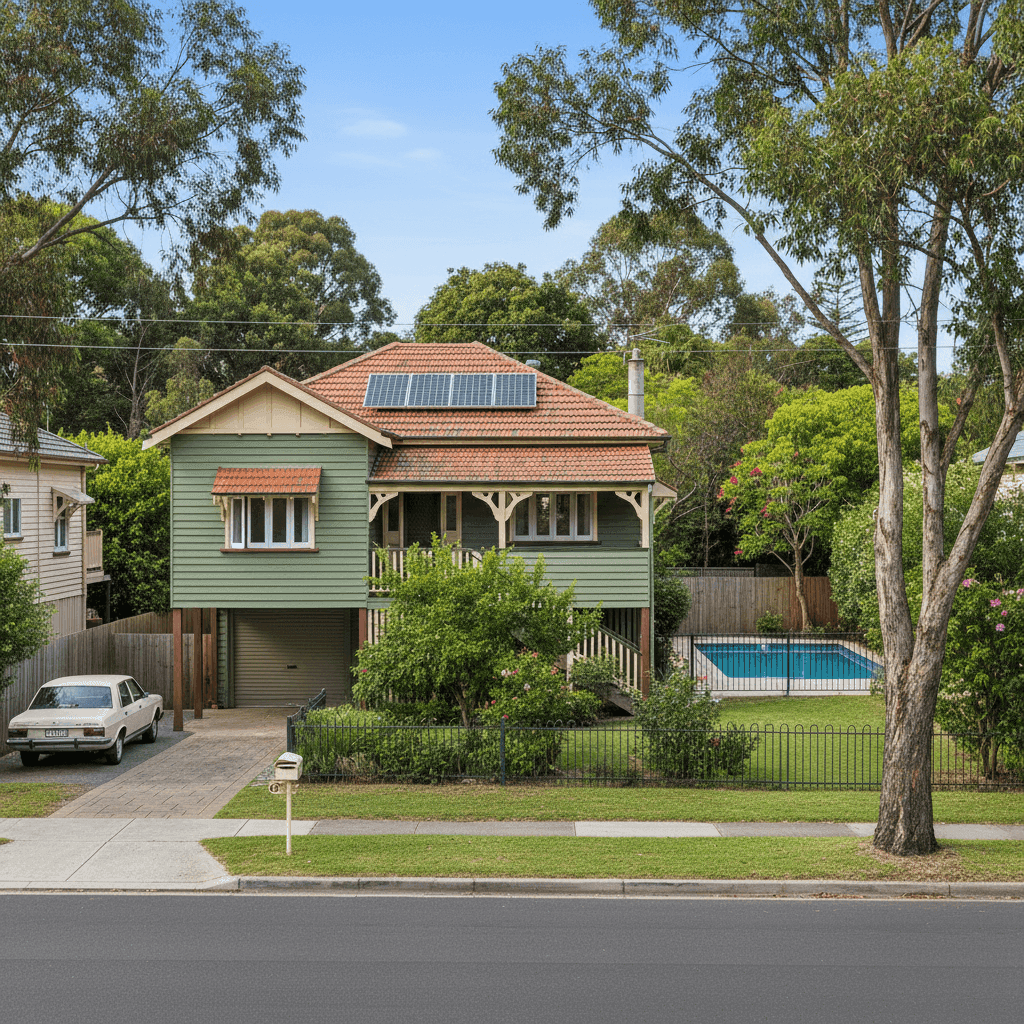
Garden Suburb is a leafy residential pocket nestled within the Lake Macquarie local government area, just a short drive from the shores of Lake Macquarie and the heart of Newcastle. Known for its established streetscapes and older character homes, it's the kind of suburb where a well-loved weatherboard house on stumps is as common as a morning walk to the local oval. If you own a free-standing home here and you're wondering whether your insurance premium is reasonable, this article breaks down a real quote — and what's driving the numbers.
---
Is This Quote Fair?
The quote we're analysing comes in at $5,463 per year (or $534/month) for a combined home and contents policy, covering a 4-bedroom, 2-bathroom free-standing home with a building sum insured of $860,000 and $80,000 in contents cover. Both the building and contents excess are set at $1,000.
Our price rating for this quote is Expensive — above average. That assessment is based on how the premium stacks up against comparable properties in the area, and it's a signal worth paying attention to.
To be fair, a premium doesn't exist in a vacuum. A $860,000 sum insured is a significant coverage amount, and the property has several features — a pool, solar panels, ducted climate control, above-average fittings, and a weatherboard-on-stumps construction from 1986 — that all contribute to a higher risk profile. But even accounting for those factors, this quote sits notably above what most homeowners in Garden Suburb are paying.
---
How Garden Suburb Compares
Here's where the numbers get interesting. According to data from CoverClub's Garden Suburb suburb stats, the average annual premium in the 2289 postcode is $2,715, with a median of $2,444. The middle 50% of quotes fall between $2,061 and $3,074 per year.
At $5,463, this quote is more than double the suburb average and sits well above the 75th percentile of $3,074. That's a significant gap — roughly $2,748 more per year than the average Garden Suburb homeowner is paying.
Zooming out to the state level, the picture shifts somewhat. NSW is one of Australia's more expensive states for home insurance, with an average premium of $9,528/yr — though that figure is heavily skewed by high-risk coastal and flood-prone areas. The NSW median sits at $3,770/yr, which still puts this quote above the midpoint for the state.
At the national level, the average premium is $5,347/yr and the median is $2,764/yr. Interestingly, this quote is almost exactly in line with the national average — which suggests it may be more reflective of the property's individual risk factors than any particular geographic loading for Garden Suburb itself.
It's also worth noting that the Lake Macquarie LGA average sits at a striking $11,064/yr — a figure that's likely pulled up by higher-risk properties elsewhere in the LGA. Relative to that benchmark, this quote looks far more reasonable.
| Benchmark | Average | Median |
|---|---|---|
| Garden Suburb (2289) | $2,715 | $2,444 |
| NSW | $9,528 | $3,770 |
| National | $5,347 | $2,764 |
| Lake Macquarie LGA | $11,064 | — |
| This Quote | $5,463 | — |
---
Property Features That Affect Your Premium
Several characteristics of this property are likely pushing the premium above the local average. Understanding them can help you make smarter decisions at renewal time.
Weatherboard construction on stumps Timber-framed weatherboard homes are more susceptible to fire, termite damage, and general wear than brick or rendered block construction. Insurers typically apply a higher risk weighting to these builds — and a home from 1986 adds the consideration of ageing materials and potentially outdated wiring or plumbing. The elevated stump foundation, while less than 1 metre, also introduces some underfloor vulnerability.
High sum insured At $860,000, the building sum insured is substantial. This reflects above-average fittings quality and a 214 sqm floor plan, but it also means the insurer is on the hook for more in the event of a total loss. Premiums scale with the sum insured, so it's worth periodically reviewing whether your coverage amount accurately reflects current rebuild costs — neither over- nor under-insuring.
Pool, solar panels, and ducted climate control Each of these features adds complexity and cost to a potential claim. Swimming pools carry liability risk and can be expensive to repair or replace. Solar panel systems — particularly older installations — can be a fire risk and are costly to reinstate. Ducted climate control systems are expensive to repair and often need specialist tradespeople. Insurers factor all of these in.
Timber and laminate flooring Timber floors are susceptible to water damage and can be costly to replace or restore, particularly in a home with above-average fittings. This adds to the overall contents and building replacement cost profile.
---
Tips for Homeowners in Garden Suburb
If you're paying more than you'd like for home insurance in Garden Suburb, here are some practical steps worth considering:
- Shop around at renewal time. The gap between the cheapest and most expensive quotes for the same property can be thousands of dollars. Don't auto-renew — get a fresh comparison quote at CoverClub before your policy rolls over.
- Review your sum insured carefully. Over-insuring is a common and costly mistake. Use a professional building cost estimator or speak to a quantity surveyor to confirm your rebuild value. Equally, make sure you're not under-insured, which can leave you exposed at claim time.
- Consider a higher excess. If you have the financial buffer to absorb a larger out-of-pocket cost in a claim, opting for a higher excess (say, $2,000 instead of $1,000) can meaningfully reduce your annual premium. Just make sure the savings justify the added risk.
- Maintain your property proactively. Insurers reward lower-risk properties. Keeping your roof tiles in good condition, ensuring your electrical and plumbing systems are up to date, and maintaining your pool fencing and solar panel system can all support a cleaner claims history — and a better renewal offer over time.
---
Compare Your Quote Today
Whether you're renewing soon or just curious about whether you're getting a fair deal, CoverClub makes it easy to see how your premium stacks up. With access to real quote data from across Australia, you can benchmark your current policy and find out whether there's a better option waiting for you. Start your comparison at CoverClub — it only takes a few minutes and could save you hundreds.