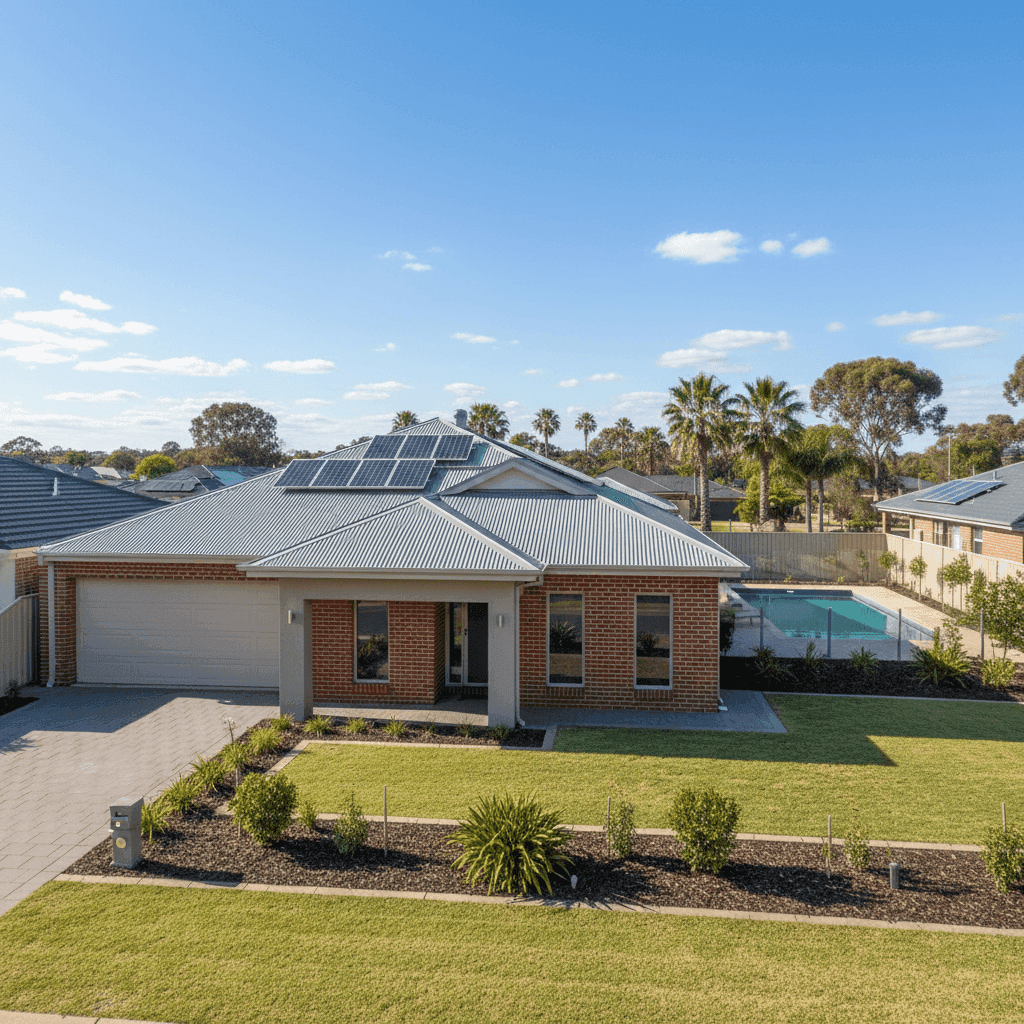
Gawler South is a well-established suburb on the northern fringe of Greater Adelaide, sitting within the City of Playford and offering a mix of newer family homes and suburban convenience. This analysis looks at a home and contents insurance quote for a four-bedroom, free-standing brick veneer home in the area — and asks whether the premium on offer represents fair value or room for savings.
---
Is This Quote Fair?
The quote in question comes in at $1,688 per year (or roughly $166 per month) for combined home and contents cover, with a building sum insured of $733,000 and contents valued at $176,000. The building excess is set at $3,000, with a separate $1,000 excess applying to contents claims.
Our price rating for this quote is Expensive — Above Average.
To put that in context: the suburb average for Gawler South sits at $1,133 per year, and the median is $1,237 per year. This quote lands well above both benchmarks — and even sits above the 75th percentile for the suburb, which is $1,410 per year. That means this premium is higher than at least three-quarters of comparable quotes we've seen for homes in this postcode.
That said, "expensive" doesn't automatically mean "wrong." The sum insured here is substantial — $733,000 for the building alone — and the property includes a number of features (more on those below) that legitimately push premiums upward. The question for any homeowner is whether the cover is appropriately priced for this specific property, or whether shopping around could uncover a more competitive rate.
---
How Gawler South Compares
Understanding where your suburb sits in the broader insurance landscape is useful context when evaluating any quote. Here's how Gawler South stacks up:
| Benchmark | Premium |
|---|---|
| This quote | $1,688/yr |
| Suburb average (Gawler South) | $1,133/yr |
| Suburb median (Gawler South) | $1,237/yr |
| Suburb 75th percentile | $1,410/yr |
| LGA average (Playford) | $1,769/yr |
| SA state average | $1,933/yr |
| SA state median | $1,787/yr |
| National average | $2,965/yr |
| National median | $2,716/yr |
A few things stand out here. First, Gawler South is notably more affordable than the South Australian state average — the suburb median of $1,237 is well below the state median of $1,787. This reflects the area's relatively low-risk profile compared to parts of South Australia that face greater exposure to bushfire, flooding, or coastal hazards.
Second, both the suburb and state figures sit significantly below the national average of $2,965 per year. Homeowners in Gawler South are, generally speaking, in a favourable position compared to many parts of the country — particularly Queensland and northern Australia, where cyclone risk and flood exposure drive premiums considerably higher.
You can explore the full breakdown of local pricing at our Gawler South insurance stats page, compare it against the South Australia state overview, or see where it sits on the national insurance landscape.
> Note: The suburb sample for this analysis is based on 21 quotes, which provides a reasonable directional guide but may not capture every insurer or policy configuration available in the area.
---
Property Features That Affect Your Premium
Several characteristics of this property are worth examining, as they each play a role in how insurers calculate risk and set premiums.
Brick veneer construction with a Colorbond roof Brick veneer walls are generally viewed favourably by insurers — they're durable, fire-resistant, and perform well in most weather conditions. A steel Colorbond roof similarly carries a positive risk profile: it's lightweight, low-maintenance, and resistant to ember attack. Together, these construction materials typically attract more competitive premiums than, say, weatherboard or fibrous cement cladding.
Slab foundation and tiled flooring A concrete slab foundation is standard for homes of this era in South Australia and doesn't introduce any notable risk premium. Tiled flooring is also considered a lower-risk finish compared to timber or carpet, particularly in terms of water damage claims.
Built in 2004 At roughly 20 years old, this home sits in a comfortable middle ground — newer than many older homes that may have ageing wiring or plumbing, but well past the point where construction defects are a concern. Insurers generally price homes of this vintage quite consistently.
Swimming pool A pool on the property adds to the insurer's liability exposure and can modestly increase premiums. It also raises the replacement cost of the property, which feeds into the building sum insured.
Solar panels Solar panels are an increasingly common feature on Australian homes, but they do add to rebuilding costs — and some insurers price this in. Panels on the roof also introduce a small additional risk profile around electrical systems and storm damage.
Ducted climate control Ducted air conditioning is a significant installed asset and contributes to the overall replacement value of the home. It's worth confirming that your sum insured adequately accounts for the cost of replacing this system in a total loss scenario.
Building size: 244 sqm At 244 square metres, this is a generously sized family home. Larger floor areas mean higher rebuilding costs, which directly influences the appropriate sum insured — and therefore the premium. A $733,000 building sum insured for a home of this size and specification in the current construction cost environment is not unreasonable.
---
Tips for Homeowners in Gawler South
1. Review your sum insured carefully The most common mistake homeowners make is underinsuring their property. Construction costs have risen sharply in recent years, and a sum insured that felt adequate three years ago may no longer cover a full rebuild. Use an independent building cost calculator or speak with a quantity surveyor if you're unsure.
2. Compare quotes across multiple insurers This quote is rated above average for the suburb — which is a strong signal to shop around. Different insurers weight risk factors differently, and the same property can attract meaningfully different premiums depending on who you ask. Get a comparison quote at CoverClub to see what else is available.
3. Consider your excess settings The building excess on this policy is $3,000 — which is on the higher end. A higher excess generally reduces your premium, but it's worth modelling whether the savings justify the out-of-pocket cost if you ever need to claim. Conversely, if cash flow is a concern, a lower excess with a slightly higher premium may be worth considering.
4. Bundle your home and contents cover This quote already combines building and contents insurance, which is a smart move. Most insurers offer discounts for bundled policies, and managing a single policy is far more straightforward come renewal time. Just make sure both sums insured are reviewed annually — contents values in particular tend to creep up over time.
---
Ready to Compare?
If this quote feels like it's on the expensive side — and the data suggests it is — it's well worth taking a few minutes to compare your options. At CoverClub, you can enter your property details and see how quotes stack up across a range of insurers, all in one place. With premiums in Gawler South ranging from around $855 at the lower end to over $1,400 at the upper end, there's a real chance a better deal is out there for your home.