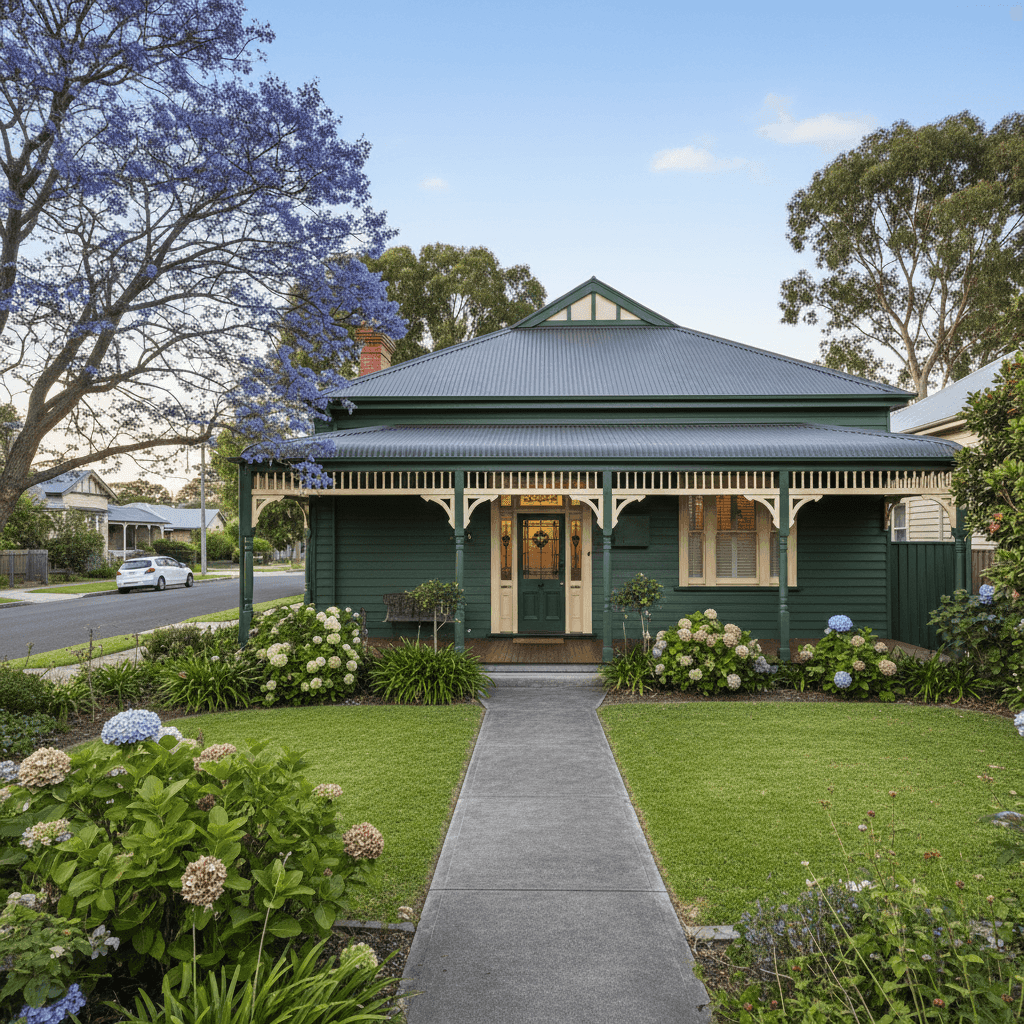
Geelong West is one of the Inner West's most characterful suburbs — a leafy pocket of Victoria defined by wide streets, Federation-era cottages, and a strong sense of community. For owners of a free standing home in this postcode, understanding what you should be paying for home and contents insurance is just as important as knowing the value of your property itself. This analysis breaks down a real insurance quote for a 3-bedroom, 1-bathroom weatherboard home built in 1910, and puts the numbers into context against local, state, and national benchmarks.
---
Is This Quote Fair?
The annual premium for this property came in at $706 per year (or around $68 per month), covering both building (sum insured: $479,000) and contents ($25,000). Our price rating for this quote is CHEAP — below the suburb average — and the data backs that up emphatically.
To put it plainly: this is an excellent result. The suburb average for Geelong West sits at $1,718 per year, meaning this quote is roughly 59% below what most homeowners in the area are paying. Even compared to the suburb's 25th percentile — the cheapest quarter of quotes — at $967 per year, this premium still comes in well under the mark.
A building excess of $3,000 and a contents excess of $2,000 are on the higher side, which will have contributed to keeping the premium low. Higher excesses mean the insurer carries less risk on smaller claims, and that saving is passed on through a reduced annual cost. It's worth weighing whether those excess levels suit your financial situation — if a $3,000 out-of-pocket cost in the event of a claim feels manageable, this kind of trade-off can make a lot of sense.
---
How Geelong West Compares
Geelong West (VIC 3218) sits in an interesting position when you look at the broader insurance landscape. Based on 79 quotes collected for the suburb, the local averages are notably lower than both state and national figures — yet this particular quote still undercuts even the suburb's most competitive tier.
Here's how the numbers stack up:
| Benchmark | Premium |
|---|---|
| This Quote | $706/yr |
| Suburb 25th Percentile | $967/yr |
| Suburb Median | $1,521/yr |
| Suburb Average | $1,718/yr |
| Suburb 75th Percentile | $1,918/yr |
| VIC State Average | $2,921/yr |
| National Average | $2,965/yr |
| LGA (Golden Plains) Average | $3,134/yr |
Victoria's state average of $2,921 per year reflects the broad range of risk profiles across the state — from bushfire-prone rural areas to flood-affected river towns and high-value metro suburbs. Nationally, the picture is similar, with the average sitting at $2,965. Geelong West, as an established urban suburb with relatively low natural hazard exposure (no cyclone risk, no noted flood overlay in this instance), tends to attract more competitive premiums than the state norm.
What's particularly striking is the gap between the Geelong West suburb average ($1,718) and the broader LGA average for Golden Plains ($3,134). This reflects how dramatically risk — and therefore cost — can vary even within the same local government area, as rural and semi-rural properties in Golden Plains carry very different risk profiles to an inner-suburban Geelong West home.
---
Property Features That Affect Your Premium
Several characteristics of this property are worth understanding in the context of insurance pricing.
Weatherboard construction is one of the most significant factors. Timber-framed, weatherboard-clad homes are common across Geelong West's Federation and Edwardian streetscapes, but they carry a higher fire risk than brick veneer or full brick construction. Insurers typically price this in, so it's worth noting that despite the weatherboard walls, this quote still came in well below average.
Heritage Overlay is another important consideration. This property falls under a heritage overlay, which means any repairs or rebuilds following an insured event may need to comply with heritage guidelines — potentially requiring specialist trades, period-appropriate materials, or council approval. This can increase the cost of a claim significantly, and it's why ensuring your sum insured accurately reflects heritage rebuild costs is critical. At $479,000 for a 130 sqm home, it's worth getting a professional building valuation to confirm this figure is sufficient.
Stumped foundations are characteristic of older homes in this era and can add complexity to repairs after events like subsidence, storm damage, or pest damage. Not all policies cover the same scope of sub-floor work, so it pays to read the Product Disclosure Statement (PDS) carefully.
Ducted climate control is listed as a feature of this property. This is a fixed system and should be covered under the building policy — but it's worth confirming this is reflected in the sum insured, as ducted systems can be costly to replace.
Timber and laminate flooring throughout the home is another detail to note. Timber floors in a heritage property can be expensive to source and restore to a matching standard, particularly if the original boards are no longer in production.
---
Tips for Homeowners in Geelong West
1. Get a heritage-specific rebuild estimate. Standard online calculators may underestimate the true cost of rebuilding a heritage-listed weatherboard home. Consider engaging a quantity surveyor or a builder familiar with heritage properties to assess your sum insured. Being underinsured at claim time can leave you significantly out of pocket.
2. Review your excess levels annually. The higher excesses on this policy ($3,000 building, $2,000 contents) are one reason the premium is so competitive. If your financial circumstances change, it may be worth modelling the cost of reducing your excess — the premium increase might be modest relative to the added protection.
3. Document your contents thoroughly. With $25,000 in contents cover, it's important to know exactly what that needs to cover. Walk through your home and photograph or video your possessions, keeping a record stored securely off-site or in the cloud. Many homeowners discover they're underinsured on contents only after a loss event.
4. Compare at renewal — every year. The insurance market shifts, and the cheapest insurer one year may not be the most competitive the next. Given that the suburb average is more than double this quote, there's clearly a wide range of pricing in the market. Use tools like CoverClub to benchmark your renewal quote before you accept it.
---
Compare Your Own Quote
Whether you're a first-time buyer in Geelong West or a long-time homeowner wondering if you're overpaying, it pays to compare. CoverClub makes it easy to see how your current premium stacks up against real quotes from across your suburb, state, and nationally. Enter your address at CoverClub to get started and find out if your home insurance is truly competitive.