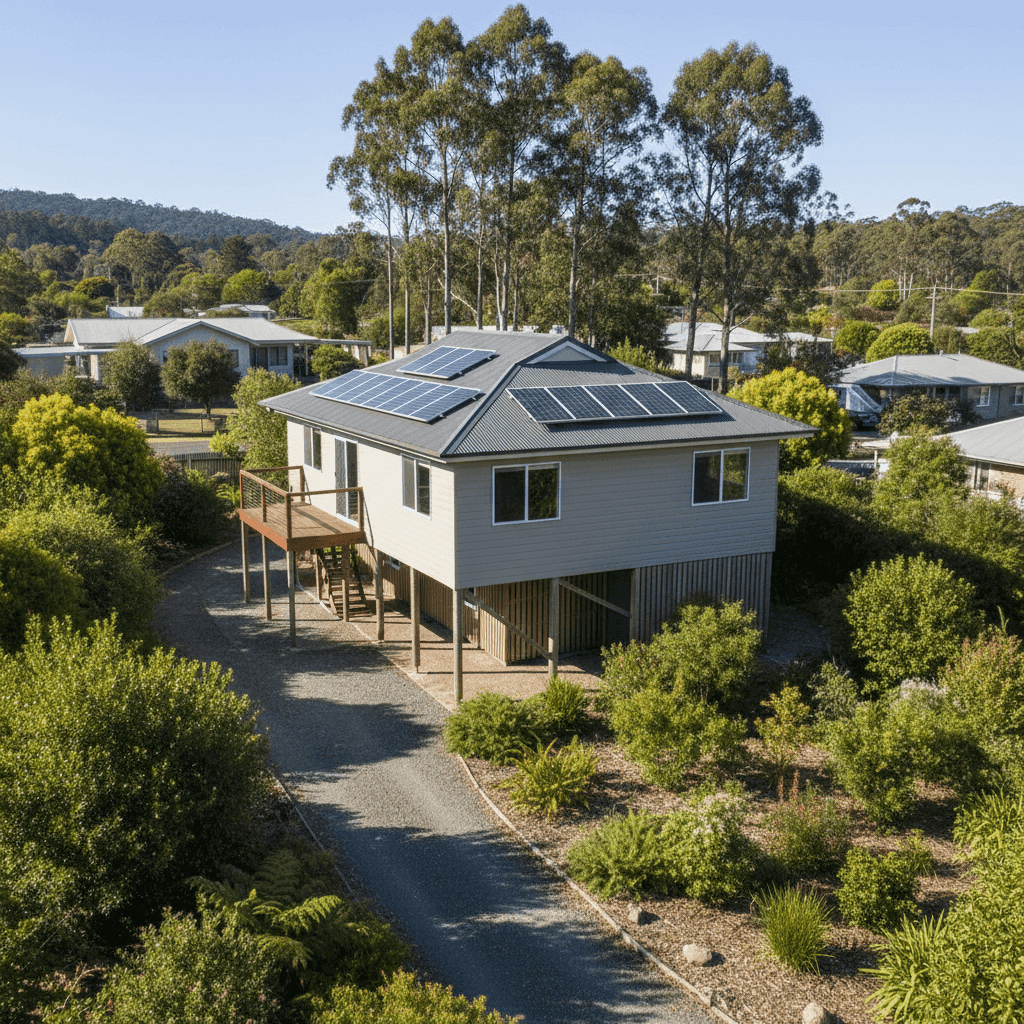
Geeveston is a quiet township nestled in the Huon Valley, about an hour south of Hobart — known for its lush forests, cool-climate lifestyle, and close-knit community. For owners of free standing homes in this part of Tasmania, understanding what a fair home insurance premium looks like can make a real difference at renewal time. This article breaks down a real quote for a 2-bedroom, 2-bathroom free standing home in Geeveston (postcode 7116), comparing it against local, state, and national benchmarks to help you make a more informed decision.
---
Is This Quote Fair?
The annual premium for this property came in at $1,976 per year (or roughly $195/month), covering both building (sum insured: $383,000) and contents ($100,000). The building excess is set at $2,000, with a separate contents excess of $600.
Our pricing analysis rates this quote as Fair — around average for the area. That's actually a reasonably positive result. The quote sits just above the suburb's 25th percentile of $1,932/yr, meaning it's more affordable than the majority of quotes seen in the area. It comes in noticeably below both the Geeveston suburb average of $2,553/yr and the suburb median of $2,568/yr, and well under the 75th percentile of $2,958/yr.
In plain terms: while this isn't the cheapest quote imaginable, it's a solid result — particularly for a combined home and contents policy in a regional Tasmanian location.
---
How Geeveston Compares
Putting this quote in context helps clarify just how competitive it is across different scales of comparison.
| Benchmark | Premium |
|---|---|
| This Quote | $1,976/yr |
| Suburb Average (Geeveston) | $2,553/yr |
| Suburb Median (Geeveston) | $2,568/yr |
| LGA Average (Central Highlands, TAS) | $2,252/yr |
| TAS State Average | $2,814/yr |
| TAS State Median | $2,326/yr |
| National Average | $5,347/yr |
| National Median | $2,764/yr |
A few things stand out here. First, the Geeveston suburb average of $2,553/yr is based on a sample of 32 quotes — a reasonably representative pool for a small regional town. This quote beats that average by around $577/yr, which is meaningful savings over time.
Second, Tasmania as a whole sits at a state average of $2,814/yr, though the median of $2,326/yr suggests some high-value outliers are pulling that average up. This quote sits comfortably below both figures.
Perhaps most striking is the national comparison. The national average of $5,347/yr reflects the significant impact of high-risk zones — particularly cyclone-prone areas in Queensland and Northern Australia — on premiums across the country. Homeowners in southern Tasmania benefit from being well removed from those elevated-risk regions, which is clearly reflected in more modest premiums like this one.
---
Property Features That Affect Your Premium
Several characteristics of this property play a direct role in how insurers assess and price the risk.
Construction Materials
The home features Hardiplank/Hardiflex external walls — a fibre cement cladding product that is widely regarded as durable, fire-resistant, and low-maintenance. Paired with a steel/Colorbond roof, this is a construction profile that many insurers view favourably. Both materials hold up well in the cool, wet conditions typical of the Huon Valley, and they carry a lower risk of weather-related damage compared to older timber weatherboard homes.
Elevated Foundation (Stumps)
The property is elevated by at least one metre on stumps — a traditional construction style that offers genuine practical benefits in areas prone to ground moisture or minor flooding. While elevated homes can sometimes attract slightly higher rebuild estimates due to the additional structural complexity, the style also provides better ventilation and reduces the risk of subfloor moisture damage. Insurers generally view stumped foundations as a neutral-to-positive factor in Tasmania.
Timber and Laminate Flooring
The combination of timber and laminate flooring is worth noting for contents and building cover alike. These materials can be more susceptible to water damage than tiles, which is something to keep in mind when setting your sum insured and reviewing your policy's water damage provisions.
Solar Panels
This property has solar panels installed, which are typically covered under building insurance as a fixed fixture. It's worth confirming with your insurer that the panels are explicitly included in your building sum insured, and that the $383,000 figure adequately accounts for their replacement value.
No Pool, No Cyclone Risk
The absence of a swimming pool removes a common source of liability and maintenance-related claims. And being located in southern Tasmania, this property sits well outside any designated cyclone risk zone — a factor that contributes meaningfully to keeping premiums lower than the national average.
---
Tips for Homeowners in Geeveston
1. Review Your Building Sum Insured Regularly
At $383,000, the building sum insured should reflect the full cost of rebuilding your home from scratch — not its market value. With construction costs rising across Australia, it's worth reassessing this figure annually. Don't forget to factor in the solar panels, elevated stumped foundation, and any recent renovations.
2. Check Solar Panel Coverage Explicitly
Solar panels are a common source of confusion in home insurance policies. Some insurers cover them automatically under building; others require you to list them separately or may apply specific sub-limits. Ask your insurer directly and get confirmation in writing.
3. Understand Your Excess Structure
This policy carries a $2,000 building excess and a $600 contents excess. These are fairly standard figures, but it's worth understanding that a higher excess typically translates to a lower premium — and vice versa. If cash flow allows, opting for a higher excess can be a legitimate way to reduce your annual outgoing.
4. Compare at Renewal, Not Just at Inception
Insurance pricing shifts constantly. The fact that this quote is currently below the suburb average doesn't mean it will stay that way. Set a reminder to compare quotes at CoverClub before your renewal date each year — even a 15-minute comparison could save you hundreds.
---
Ready to Compare Home Insurance in Geeveston?
Whether you're a first-time buyer in the Huon Valley or a long-term homeowner looking to make sure you're not overpaying, CoverClub makes it easy to compare home and contents insurance quotes in one place. Enter your address at CoverClub to see how your current premium stacks up — and find out if there's a better deal waiting for you.