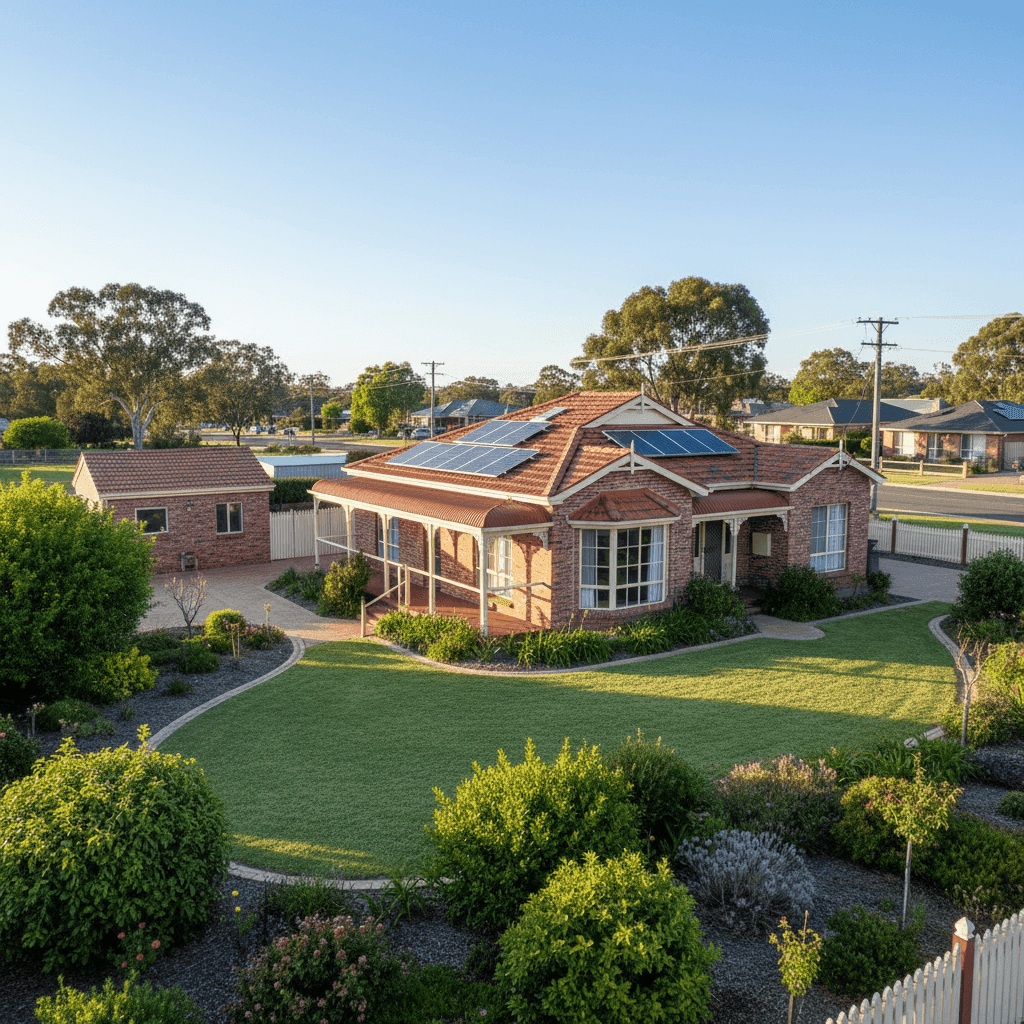
Gilgai is a small rural locality in the New England region of New South Wales, sitting within the Gwydir Local Government Area roughly 20 km south of Inverell. It's the kind of community where large family homes are common, land is generous, and the pace of life is a world away from the city. If you own a free-standing home here and you're trying to make sense of your home insurance costs, this article breaks down a real quote — and what it means for you.
---
Is This Quote Fair?
The quote in question covers a 5-bedroom, 3-bathroom free-standing home in Gilgai for $3,941 per year (or $392/month) on a combined Home and Contents policy. The building is insured for $659,000 and contents for $100,000, with a $1,000 excess on both.
Our price rating for this quote is CHEAP — below average — which is genuinely good news for the homeowner. Here's why that matters: home insurance costs have been climbing sharply across Australia in recent years, driven by extreme weather events, rising construction costs, and reinsurance pressures. Finding a premium that sits below average benchmarks is increasingly rare, particularly for a property of this size.
At $3,941 annually, this quote is comfortably below the NSW state average of $9,528/yr and also below the NSW median of $3,770/yr — sitting just slightly above the median, which still places it in competitive territory. Against the national average of $5,347/yr, the saving is even more pronounced. By most measures, this is a well-priced policy for the coverage on offer.
---
How Gilgai Compares
Understanding where your premium sits relative to broader benchmarks is one of the most useful things you can do as a homeowner. Here's a snapshot of how this quote lines up:
| Benchmark | Annual Premium |
|---|---|
| This quote | $3,941 |
| NSW State Median | $3,770 |
| NSW State Average | $9,528 |
| National Median | $2,764 |
| National Average | $5,347 |
| Gwydir LGA Average | $43,287 |
The Gwydir LGA average of $43,287 is a striking figure — and worth pausing on. LGA-level averages can be heavily skewed by a small number of very high-risk or high-value properties, particularly in rural areas prone to flooding, bushfire, or storm damage. It's important not to read that number as representative of what a typical Gilgai homeowner pays. Instead, use the state and national figures as your more reliable yardstick.
For suburb-specific data and trends, you can explore Gilgai's insurance stats on CoverClub. While suburb-level comparison data isn't always available for smaller localities, the state and national context tells a clear story: this quote is competitive.
---
Property Features That Affect Your Premium
Every element of a property influences how insurers assess risk and price a policy. Here's how the key features of this Gilgai home factor in:
Brick Veneer Walls & Tiled Roof
Brick veneer construction with a tiled roof is generally viewed favourably by insurers. Brick veneer offers solid weather resistance and doesn't present the same fire risk as timber-clad homes. Tiles are durable and perform well in most weather conditions, though they can be more expensive to repair than metal roofing if damaged in a hailstorm. On balance, this combination tends to attract more competitive premiums.
Slab Foundation
A concrete slab foundation is a stable base that reduces the risk of subsidence and pest-related damage compared to raised timber stumps. For insurers, this is a low-risk characteristic.
Construction Year: 1980
Homes built in 1980 are now over four decades old. While well-maintained older homes can still attract good premiums, insurers may factor in the age of plumbing, electrical systems, and roofing materials. If these haven't been updated in recent years, it's worth noting that some policies may apply age-related conditions or exclusions.
Solar Panels
This property has solar panels installed, which adds a layer of complexity to the insurance picture. Solar panels are typically covered under home building insurance, but it's worth confirming with your insurer that the panels, inverter, and associated wiring are explicitly included in your policy — and at adequate replacement value.
Granny Flat
The presence of a granny flat is a significant factor. Whether it's used for family, rented out, or sits vacant, a granny flat increases the total insurable value of the property. It's essential to confirm that the granny flat is included in your building sum insured — and if it's tenanted, you may need to consider landlord insurance or check whether your home policy extends to tenant-related risks.
Building Size: 286 sqm
At 286 sqm, this is a substantial home. The $659,000 building sum insured works out to roughly $2,304 per sqm, which is broadly reasonable for a brick veneer home in regional NSW — though it's always wise to get an independent building valuation to ensure you're not underinsured.
Standard Fittings
Standard-quality fittings mean the property doesn't attract the premium loading that comes with high-end finishes, custom joinery, or imported fixtures. This keeps rebuild cost estimates — and therefore premiums — more predictable.
---
Tips for Homeowners in Gilgai
1. Review your building sum insured annually Construction costs have risen significantly in recent years. The cost to rebuild a 286 sqm home in regional NSW today may be higher than it was even two or three years ago. Check that your sum insured keeps pace — underinsurance is one of the most common and costly mistakes homeowners make.
2. Confirm your granny flat is covered Don't assume your granny flat is automatically included in your policy. Ask your insurer directly whether the structure, its contents (if furnished), and any liability associated with it are covered. If it's rented out, your obligations change — and your policy may need to as well.
3. Check your solar panel coverage Ask your insurer to confirm that your solar panels are covered for storm damage, hail, and accidental breakage — and that the sum insured reflects current replacement costs. Solar panel technology and pricing has changed rapidly, and older policy schedules may not reflect what it would actually cost to replace your system today.
4. Consider your bushfire and storm risk The New England region can experience significant weather events, including storms, hail, and bushfire risk in drier months. Review your policy's terms around these events, particularly any exclusions or waiting periods. Ensuring you have adequate coverage before fire season is always a smart move.
---
Compare and Save with CoverClub
Whether you're renewing your existing policy or shopping around for the first time, comparing quotes is the single most effective way to make sure you're getting fair value. CoverClub makes it easy to see how your premium stacks up — and to find better options if it doesn't. Get a home insurance quote today and see what's available for your Gilgai property.