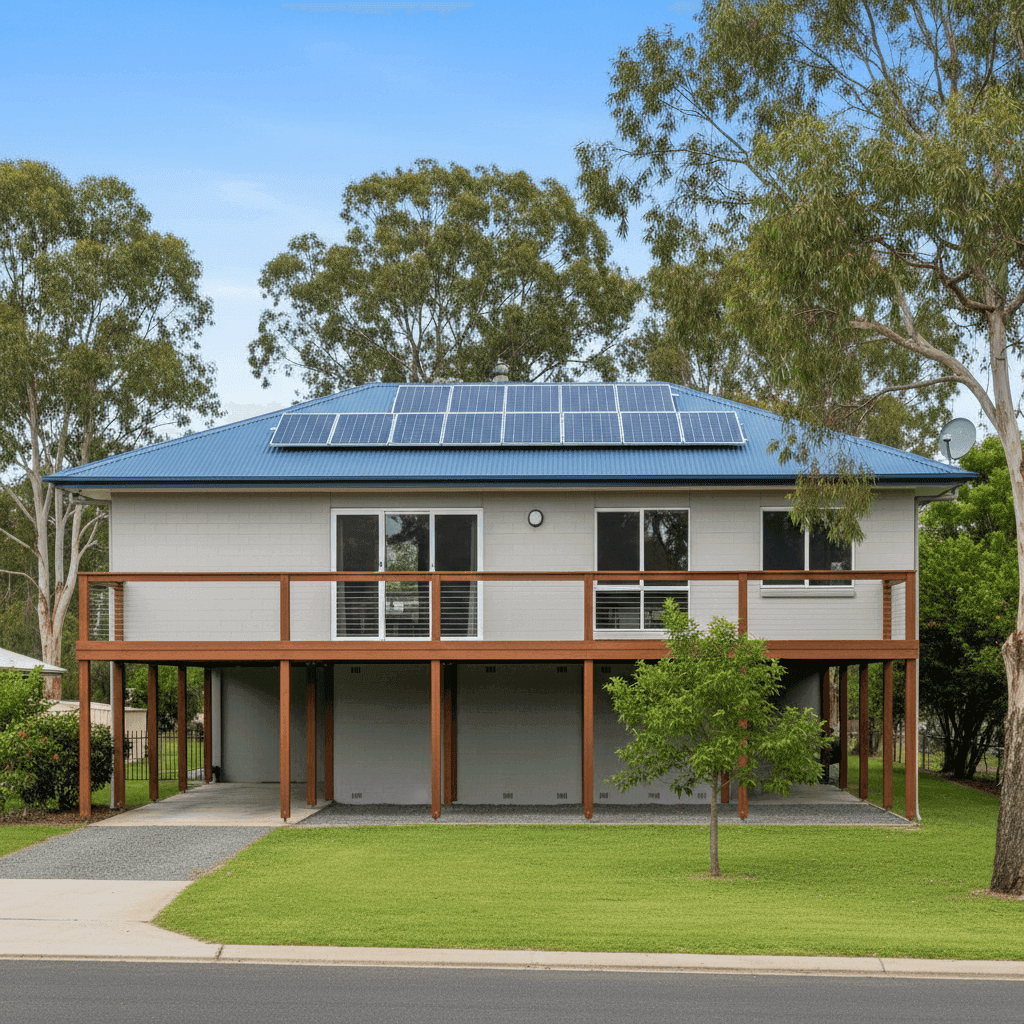
Gin Gin is a quiet rural town in Queensland's North Burnett region, roughly 100 kilometres inland from Bundaberg. It's the kind of place where properties tend to be generous in size and character — and this five-bedroom, free-standing home is no exception. With 205 square metres of living space, a Hebel exterior, Colorbond roof, and timber flooring throughout, it's a well-built home with a few features that insurers pay close attention to. This article breaks down a real home and contents insurance quote for a property like this, and puts the $2,011 annual premium in context against local, state, and national benchmarks.
---
Is This Quote Fair?
The short answer: yes, broadly speaking. This quote has been rated Fair (Around Average) — meaning it sits comfortably within the normal range for the suburb, without being a standout bargain or an obvious overpayment.
At $2,011 per year (or around $203 per month), the premium covers:
- Building sum insured: $831,000
- Contents value: $50,000
- Building excess: $3,000
- Contents excess: $1,000
The relatively high building excess of $3,000 is worth noting — a higher excess typically reduces your annual premium, so if that excess were lower, the annual cost would likely be higher. For homeowners who are comfortable self-insuring smaller claims, this is a reasonable trade-off.
The contents cover of $50,000 is on the modest side for a five-bedroom home. It's worth reviewing whether that figure accurately reflects the replacement value of furniture, appliances, clothing, and other belongings across the property.
---
How Gin Gin Compares
To understand whether this quote represents good value, it helps to look at the broader data. You can explore full pricing trends on the Gin Gin suburb stats page.
| Benchmark | Premium |
|---|---|
| This quote | $2,011/yr |
| Gin Gin suburb average | $2,377/yr |
| Gin Gin suburb median | $2,113/yr |
| Gin Gin 25th percentile | $1,545/yr |
| Gin Gin 75th percentile | $3,186/yr |
| North Burnett LGA average | $3,499/yr |
| QLD state average | $9,129/yr |
| QLD state median | $3,903/yr |
| National average | $5,347/yr |
| National median | $2,764/yr |
(Based on a sample of 10 quotes in the Gin Gin area.)
This quote sits below both the suburb average ($2,377) and the suburb median ($2,113), which is a positive sign. It also falls well below the North Burnett LGA average of $3,499 — suggesting this property has some characteristics that are working in the homeowner's favour.
The contrast with Queensland's state average is striking. At $9,129 per year, the QLD average is heavily skewed by high-risk coastal and cyclone-prone areas in Far North Queensland. Gin Gin, sitting outside the designated cyclone risk zone, benefits significantly from this. You can explore how this suburb compares to the rest of the state on the QLD insurance stats page, or see where it sits nationally at the national stats page.
---
Property Features That Affect Your Premium
Every insurer assesses risk differently, but certain property characteristics consistently influence premiums. Here's how this home's features stack up:
Hebel External Walls
Hebel (autoclaved aerated concrete) is generally viewed favourably by insurers. It's non-combustible, resistant to termites, and holds up well in harsh weather. Compared to weatherboard or fibre cement, Hebel can contribute to a more competitive premium.
Steel / Colorbond Roof
Colorbond roofing is a popular choice in regional Queensland for good reason — it's durable, fire-resistant, and handles heat well. Insurers typically rate steel roofing positively compared to older materials like asbestos sheeting or terracotta tiles, which can be more expensive to replace.
Elevated on Stumps (At Least 1 Metre)
This is a double-edged feature. Elevation can reduce flood risk by keeping the floor level above potential inundation — a meaningful benefit in regional Queensland. However, stumped homes can also be more expensive to repair following storm or wind events, as the subfloor structure adds complexity. The net effect on the premium depends heavily on how the insurer weights flood versus structural risk in this postcode.
Construction Year: 1970
Older homes built before modern building codes can attract higher premiums due to ageing infrastructure — wiring, plumbing, and structural components that may not meet current standards. A home built in 1970 is over 50 years old, and insurers may factor this into their risk assessment.
Solar Panels
Solar panels are increasingly common on Australian homes, and most insurers include them under building cover. However, they do add to the replacement cost of the roof and can increase the sum insured required. It's worth confirming with your insurer that panels are explicitly covered under the policy.
Timber and Laminate Flooring
Timber floors add character but can be costly to replace following water damage or flooding. This may be a factor in how the contents and building replacement values are assessed.
---
Tips for Homeowners in Gin Gin
1. Review Your Contents Sum Insured
$50,000 in contents cover for a five-bedroom home is worth scrutinising. Take stock of your furniture, whitegoods, electronics, clothing, and valuables. Underinsurance is one of the most common issues homeowners face at claim time — and it can leave you significantly out of pocket.
2. Confirm Solar Panel Coverage
Check your policy documents to ensure your solar system is explicitly listed under building cover, including inverters and mounting hardware. Some policies have sublimits or exclusions for solar equipment, so it pays to read the fine print.
3. Understand Your Flood and Storm Cover
Gin Gin sits in a region that can experience significant rainfall and localised flooding. Confirm whether your policy includes flood cover (as distinct from storm damage) and check the specific definitions used. These can vary considerably between insurers.
4. Consider Shopping Around at Renewal
With a "Fair" rating, this quote is competitive — but not necessarily the best available. Premiums can vary by hundreds of dollars for the same property across different insurers. Using a comparison tool at renewal time is one of the simplest ways to ensure you're not overpaying.
---
Compare Your Own Quote
Whether you're insuring a home in Gin Gin or anywhere else in Australia, it's worth knowing where your premium sits relative to the market. CoverClub makes it easy to compare home and contents quotes side by side, so you can make a confident, informed decision. Get a quote today and see what's available for your property.