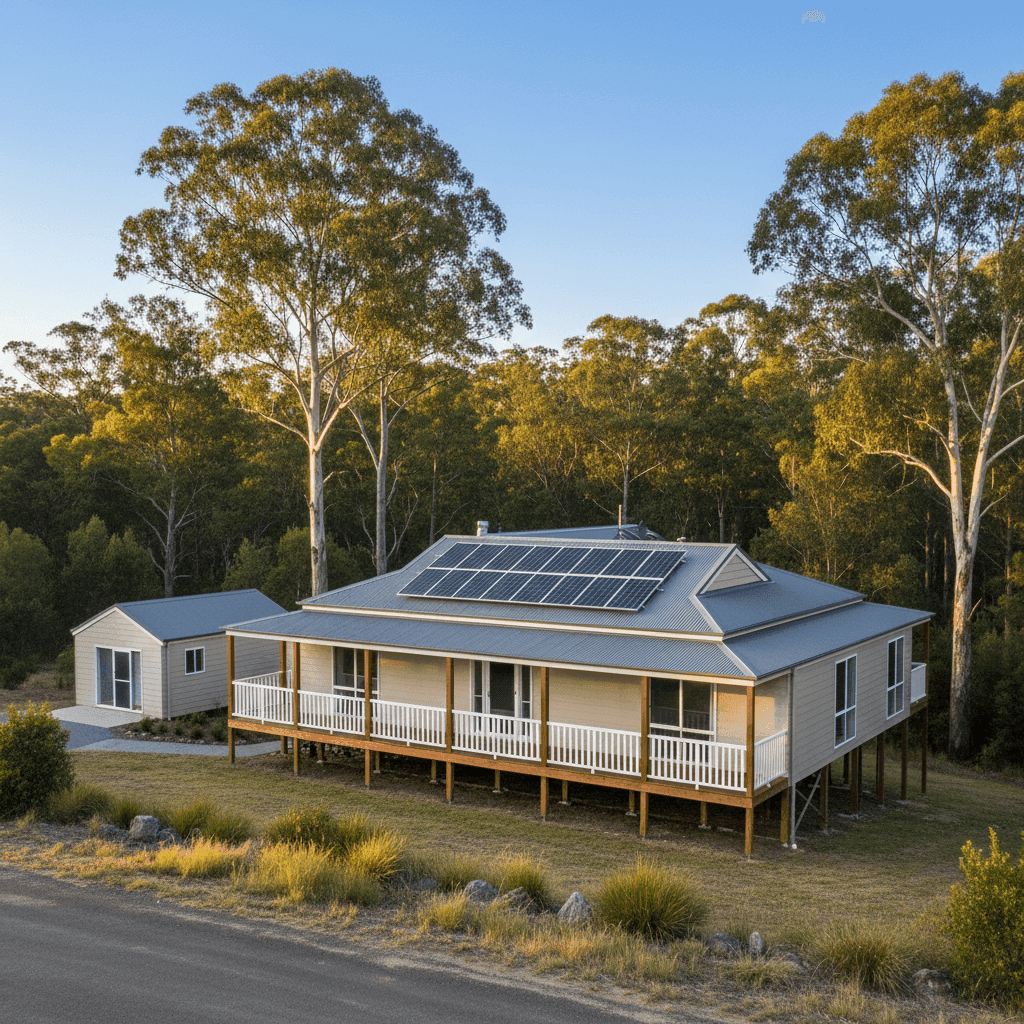
Nestled in the lush foothills of the Yarra Ranges, Gladysdale is a quiet rural-residential community in Victoria's outer east. Properties here tend to be larger, older, and set among heavily treed landscapes — all factors that shape how insurers assess risk. This article breaks down a real building insurance quote for a four-bedroom free-standing home in Gladysdale (VIC 3797), rated Fair by CoverClub's pricing engine, and explains what's driving the premium.
---
Is This Quote Fair?
The annual premium for this property came in at $2,756 per year (or $267/month), covering the building only with a $650,000 sum insured and a $5,000 excess. CoverClub's price rating system has assessed this as Fair — Around Average, which is a reasonable outcome for a property of this type in this location.
To put that in context: the quote sits 5.7% below the Victorian state average of $2,921/yr and 7% below the national average of $2,965/yr. It's slightly above the Victorian median of $2,694/yr and the national median of $2,716/yr, but not by a significant margin. For a property with several complexity factors — including elevated stumped foundations, fibre cement cladding, a granny flat, and solar panels — landing near the median is a solid result.
The $5,000 building excess is on the higher side, which is one of the levers that helps keep the annual premium more competitive. Homeowners should factor this into their budgeting: if a claim arises, you'll need to cover the first $5,000 out of pocket before the insurer steps in.
---
How Gladysdale Compares
One of the most striking data points in this analysis is the LGA-level comparison. The Yarra Ranges local government area has an average home insurance premium of $4,615 per year — meaning this quote is nearly 40% below the LGA average. That's a significant gap, and it reflects just how variable premiums can be within a single council area.
The Yarra Ranges LGA encompasses a wide range of risk profiles, from valley floors prone to flooding, to steep forested slopes with elevated bushfire exposure. Gladysdale itself sits in a bushfire-prone zone, which typically pushes premiums higher across the region. The fact that this particular quote comes in well below the LGA average suggests the property's specific characteristics — including its Colorbond roof and fibre cement walls — are working in the homeowner's favour.
For broader context, you can explore Gladysdale's local insurance statistics, compare them against Victoria-wide premium data, or view national home insurance benchmarks to see how your suburb stacks up across Australia.
---
Property Features That Affect Your Premium
Several characteristics of this home have a direct bearing on the insurance premium. Here's how each one plays out:
Hardiplank / Hardiflex Cladding Fibre cement products like Hardiplank and Hardiflex are generally viewed favourably by insurers. They're non-combustible, resistant to termite damage, and more durable than older timber weatherboard. In a bushfire-prone region like the Yarra Ranges, this can meaningfully reduce risk in an insurer's eyes.
Steel / Colorbond Roof Metal roofing is another positive risk signal. Colorbond is fire-resistant, long-lasting, and less susceptible to storm damage than tiles. For a property built in 1985, a steel roof is also a sign that the home has likely been updated since original construction — something insurers appreciate.
Elevated on Stumps The home sits elevated by at least one metre on stump foundations — a classic construction style for older Victorian country homes. While stumped homes can be more vulnerable to certain types of structural movement, the elevation also provides better airflow and can reduce moisture-related issues. It's a neutral-to-slight risk factor depending on the insurer.
Timber and Laminate Flooring Timber floors in a stumped home are standard, but they do represent a higher replacement cost than concrete slab flooring. This is partly reflected in the $650,000 sum insured, which needs to account for the full cost of rebuilding — not just the market value of the property.
Solar Panels The presence of solar panels adds a modest layer of complexity to the risk profile. Panels can be damaged by hail, fire, or storm, and their replacement cost needs to be factored into the building sum insured. Homeowners should confirm with their insurer that solar panels are explicitly covered under the building policy.
Granny Flat A secondary dwelling on the property — whether used for family, guests, or rental income — adds to the overall rebuild cost and increases the insured risk. It's important that the sum insured of $650,000 adequately reflects the combined rebuild cost of both the main home and the granny flat. Underinsurance is a common issue in properties with secondary structures.
Ducted Climate Control Ducted heating and cooling systems are a fixed building asset and should be included in the building sum insured. Their presence adds to replacement cost but is unlikely to significantly shift the premium on its own.
---
Tips for Homeowners in Gladysdale
1. Review your sum insured carefully — and include the granny flat With a granny flat on the property, $650,000 needs to cover two structures. Use a building cost calculator or speak with a quantity surveyor to confirm this figure is adequate. Underinsurance can leave you significantly out of pocket after a major claim.
2. Confirm solar panel coverage with your insurer Not all building policies automatically cover solar panels for all types of damage. Ask your insurer specifically whether panels are included, what events are covered, and whether there's a sub-limit that applies.
3. Consider the bushfire risk in your policy terms Gladysdale and the broader Yarra Ranges are designated bushfire-prone areas. Review your policy's bushfire coverage carefully, including any waiting periods, exclusions, or BAL (Bushfire Attack Level) conditions that may apply to your property.
4. Weigh up your excess vs. your premium The $5,000 excess on this policy is relatively high. If you'd prefer a lower out-of-pocket cost in the event of a claim, it's worth getting comparison quotes with a lower excess — even if it means a slightly higher annual premium. CoverClub makes it easy to compare quotes side by side.
---
Compare Your Home Insurance Today
Whether you're renewing your policy or shopping around for the first time, it pays to know where your premium sits relative to the market. CoverClub gives you real, comparable data for your suburb, state, and across Australia — so you can make a confident, informed decision. Get a home insurance quote now and see how your current cover stacks up.