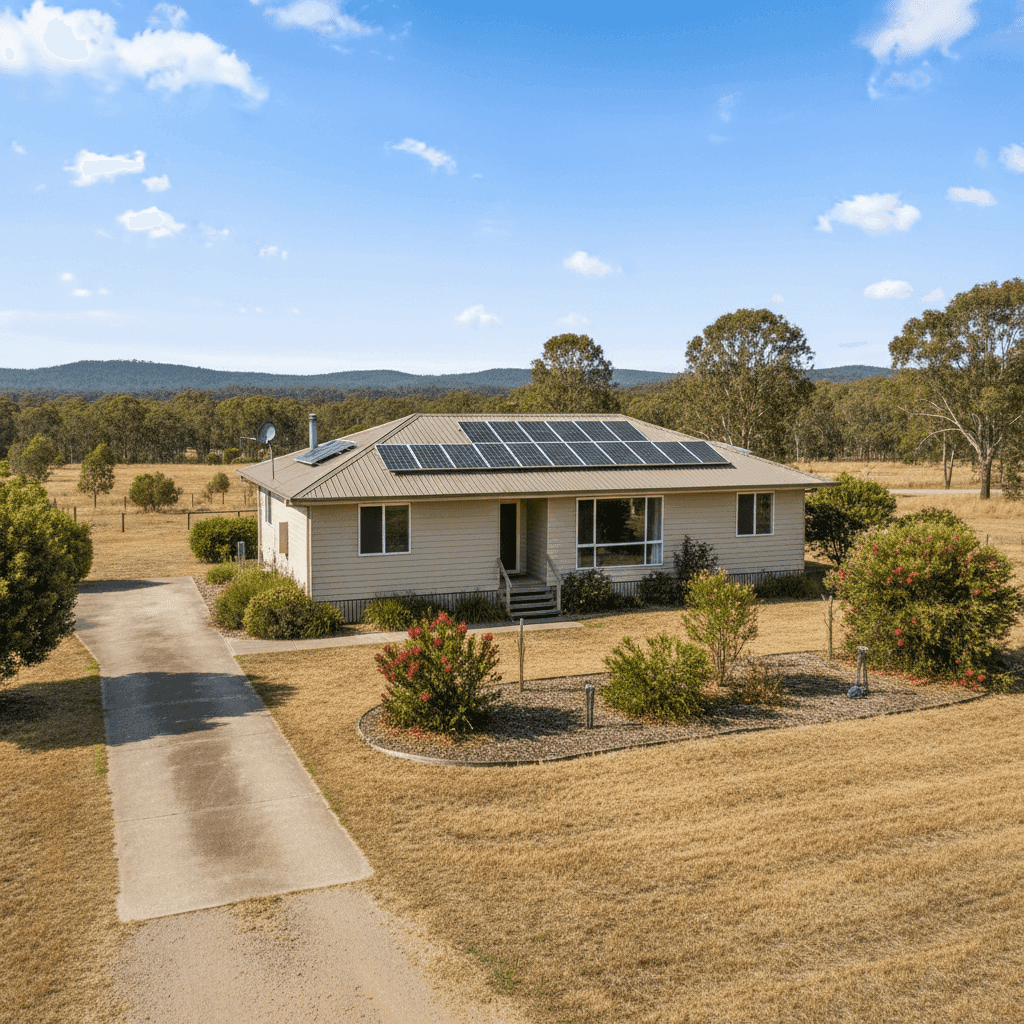
Glamorgan Vale is a quiet semi-rural locality tucked into the Scenic Rim region of South-East Queensland, roughly 60 kilometres west of Brisbane. It's the kind of area that attracts homeowners who want a bit of land and breathing room without straying too far from the city — but like many regional Queensland suburbs, it comes with its own unique insurance landscape. This article breaks down a real home and contents insurance quote for a three-bedroom, two-bathroom free-standing home in Glamorgan Vale (postcode 4306), and puts the numbers into context so you can judge whether you're paying a fair price.
---
Is This Quote Fair?
The annual premium for this property came in at $3,210 per year (or $314 per month), covering a building sum insured of $488,000 and $50,000 in contents. The building excess is $3,000 and the contents excess is $1,000.
CoverClub has rated this quote as Fair — Around Average, and the data backs that up. When compared against 45 quotes collected for Glamorgan Vale and the surrounding 4306 postcode, this premium sits just above the suburb's 25th percentile of $3,134 per year — meaning roughly three-quarters of comparable properties in the area are paying more. That's a reasonably strong position to be in.
It's worth noting the suburb's wide premium spread: the 25th percentile sits at $3,134 while the 75th percentile reaches $8,065. That's a massive range, and it reflects how sensitive insurers are to individual property characteristics in this part of Queensland. Small differences in construction type, age, or location within the postcode can push a premium dramatically higher or lower.
---
How Glamorgan Vale Compares
To put this quote in proper perspective, here's how it stacks up across three geographic levels:
| Benchmark | Average Premium | Median Premium |
|---|---|---|
| Glamorgan Vale (4306) | $5,024/yr | $5,242/yr |
| Queensland | $4,547/yr | $3,931/yr |
| National | $2,965/yr | $2,716/yr |
At $3,210 per year, this quote is:
- 36% below the Glamorgan Vale suburb average of $5,024
- 29% below the Queensland state average of $4,547
- 8% above the national average of $2,965
The national figures are pulled up by high-risk areas like Far North Queensland and northern Western Australia, so being slightly above the national average for a South-East Queensland property is entirely expected and not a cause for concern.
One figure that really stands out is the LGA (Scenic Rim) average of $8,744 per year — more than 2.7 times what this homeowner is paying. The Scenic Rim Local Government Area encompasses a broad range of properties, many of which face significant flood, storm, and bushfire exposure. This quote performing so well against that LGA benchmark is a meaningful result.
---
Property Features That Affect Your Premium
Several characteristics of this property have a direct bearing on its insurance cost — some working in the homeowner's favour, others less so.
Fibro Asbestos External Walls
This is arguably the most significant risk factor for this property. Homes built with fibro asbestos cladding — common in Queensland builds from the 1960s through to the early 1980s — carry higher rebuild and remediation costs because any damage requiring wall repair must be handled by licensed asbestos removal contractors. Insurers factor this in, and it can push premiums up meaningfully. The 1980 construction year aligns with this era.
Steel / Colorbond Roof
On the positive side, a Colorbond steel roof is generally well-regarded by insurers. It's durable, fire-resistant, and holds up well in high-wind events. Compared to older tile or iron roofing, Colorbond can contribute to a more competitive premium.
Solar Panels
The property has solar panels installed, which adds some replacement value to the roof structure. Most home insurance policies cover solar panels as part of the building, but it's worth confirming this with your insurer and ensuring the sum insured accounts for their replacement cost.
Slab Foundation and Tile Flooring
A concrete slab foundation is generally considered a lower-risk construction method — there's no subfloor cavity to worry about, and slabs tend to perform well in the event of storm or water ingress. Tile flooring similarly holds up better than carpet or timber in the event of water damage, which can reduce the severity of contents and building claims.
No Pool, No Ducted Climate Control
The absence of a swimming pool removes a common source of liability and maintenance claims. No ducted air conditioning also means fewer mechanical systems that could fail and cause damage. Both factors simplify the risk profile for insurers.
Not in a Cyclone Risk Zone
Glamorgan Vale falls outside Queensland's designated cyclone risk areas, which keeps wind-related loading off the premium. This is a meaningful advantage over coastal and far-north Queensland properties.
---
Tips for Homeowners in Glamorgan Vale
1. Get an Asbestos Assessment if You Haven't Already
If your home has fibro asbestos walls, having a professional asbestos assessment on file isn't just good for safety — it can also inform your insurer of the exact scope of the material and potentially support more accurate underwriting. Some insurers may look more favourably on properties with documented asbestos management plans.
2. Review Your Building Sum Insured Annually
Construction costs in South-East Queensland have risen sharply in recent years. The $488,000 building sum insured on this policy should be reviewed each year to ensure it reflects current rebuild costs — not just the market value of the property. Underinsurance is one of the most common and costly mistakes homeowners make.
3. Consider Raising Your Excess to Lower Your Premium
This policy carries a $3,000 building excess. If you have the financial capacity to absorb a higher out-of-pocket cost in a claim, some insurers will offer a reduced premium in exchange for a higher voluntary excess. It's worth modelling the trade-off over a three-to-five year period.
4. Compare Quotes Before Renewal
Given the wide premium spread in the 4306 postcode — from $3,134 at the 25th percentile to $8,065 at the 75th — there's clearly significant variation between what different insurers will charge for the same property. Loyalty doesn't always pay in home insurance. Shopping around at renewal time is one of the simplest ways to avoid overpaying.
---
Compare Your Home Insurance Quote Today
Whether you're a homeowner in Glamorgan Vale or anywhere else in Australia, understanding how your premium stacks up against local and national benchmarks is the first step to making a confident insurance decision. CoverClub makes it easy to get a home insurance quote and see how it compares to real data from your suburb. Take a few minutes to run your own numbers — you might be surprised what you find.