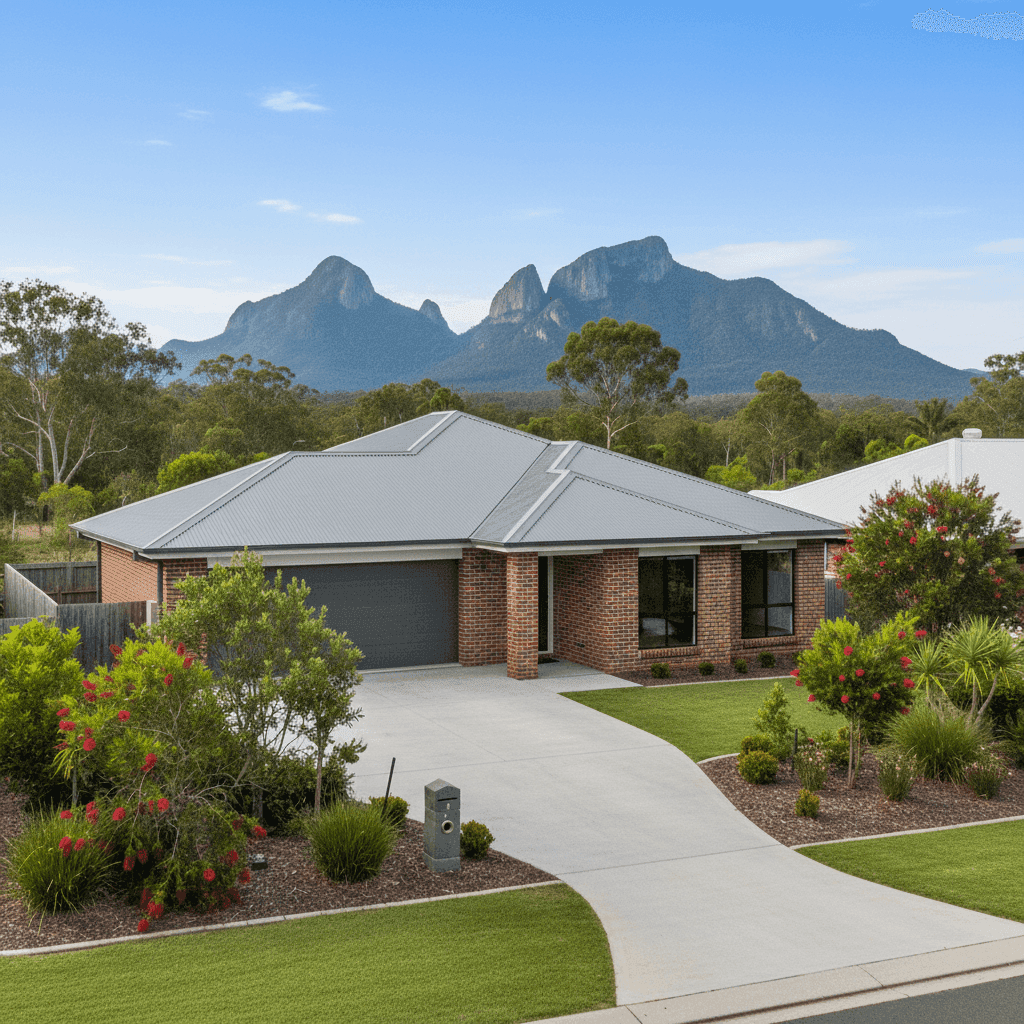
Nestled at the foot of the iconic volcanic peaks in South East Queensland, Glass House Mountains is a sought-after semi-rural community that blends stunning natural scenery with relaxed Sunshine Coast living. For homeowners in this postcode, understanding what drives your insurance premium — and whether you're getting a fair deal — can save you hundreds of dollars a year. This article breaks down a real home and contents insurance quote for a four-bedroom free standing home in Glass House Mountains QLD 4518, and puts it in context against local, state, and national benchmarks.
---
Is This Quote Fair?
The quote in question comes in at $2,751 per year (or $257/month) for combined home and contents cover, with a building sum insured of $482,000 and contents valued at $50,000. Both the building and contents excess are set at $1,000.
Based on data from CoverClub's national insurance statistics, this premium is rated CHEAP — meaning it sits below the average for the area. More specifically, it falls below the suburb average of $4,299/yr and even below the 25th percentile of $2,962/yr for Glass House Mountains. In plain terms, roughly three-quarters of comparable quotes in this suburb cost more.
For a homeowner in this postcode, that's genuinely good news. A premium under $2,800 for a four-bedroom home with $482,000 in building cover is a competitive outcome — and one worth benchmarking against any renewal notice that lands in your letterbox.
---
How Glass House Mountains Compares
Insurance pricing in Queensland can vary dramatically depending on where you live, so it's worth zooming out to get the full picture.
| Benchmark | Premium |
|---|---|
| This Quote | $2,751/yr |
| Suburb Average (Glass House Mountains) | $4,299/yr |
| Suburb Median | $3,764/yr |
| Suburb 25th Percentile | $2,962/yr |
| LGA Average (Sunshine Coast) | $7,249/yr |
| QLD State Average | $9,129/yr |
| QLD State Median | $3,903/yr |
| National Average | $5,347/yr |
| National Median | $2,764/yr |
A few things stand out here. The Queensland state average of $9,129/yr is extraordinarily high — a figure heavily skewed by Far North Queensland postcodes exposed to cyclone, flood, and storm surge risk. The state median of $3,903/yr is a far more representative figure for most Queenslanders, and this quote still comes in below that.
Compared to the broader Sunshine Coast LGA average of $7,249/yr, this quote is remarkably affordable. The Glass House Mountains suburb itself has a median of $3,764/yr based on 95 quotes in CoverClub's suburb dataset, so sitting below even that median is a strong result.
At the national level, the Australian average premium sits at $5,347/yr, with a national median of $2,764/yr. This quote is closely aligned with the national median — reinforcing that it represents fair value on a broad scale.
---
Property Features That Affect Your Premium
Every property is different, and insurers weigh up a range of construction and location factors when calculating your premium. Here's how the features of this particular home are likely influencing the price:
Brick Veneer Walls Brick veneer is generally viewed favourably by insurers. It offers solid fire resistance and structural durability, which can help keep premiums lower compared to timber-framed or clad exteriors.
Steel / Colorbond Roof Colorbond steel roofing is a popular choice in Queensland for good reason — it's lightweight, durable, and performs well in high-wind events. Insurers typically regard it as a lower-risk roofing material compared to older tile or asbestos-cement sheeting.
Concrete Slab Foundation A slab foundation reduces the risk of subfloor moisture damage, pest ingress, and certain types of structural movement. This is a positive factor from an underwriting perspective.
Tile Flooring Tiled floors are resistant to water damage and don't contribute to fire spread, which can marginally reduce the risk profile of a home compared to carpet or timber flooring throughout.
1990 Construction Homes built in 1990 sit in a middle ground — old enough to potentially have some wear, but generally built to standards that predate the more problematic construction periods of the early-to-mid 20th century. Regular maintenance is key for homes of this age.
No Pool, Solar, or Ducted Climate Control The absence of a pool removes a significant liability risk. No solar panels means one less potential source of electrical fault claims, and the lack of ducted air conditioning reduces the chance of costly mechanical breakdown or water damage from leaking ducts.
Not in a Cyclone Risk Zone This is a meaningful factor. Much of Queensland's insurance cost burden stems from cyclone-exposed postcodes in the north. Glass House Mountains sits outside the designated cyclone risk area, which keeps premiums considerably more manageable.
---
Tips for Homeowners in Glass House Mountains
1. Review Your Building Sum Insured Regularly Construction costs have risen sharply across Australia in recent years. A sum insured of $482,000 for 139 sqm works out to roughly $3,468/sqm — which is reasonable but worth revisiting annually. Underinsurance is one of the most common and costly mistakes homeowners make.
2. Check What's Included in Your Contents Cover $50,000 in contents cover can disappear quickly when you start itemising furniture, appliances, clothing, and valuables. Walk through your home and do a rough tally — many households find they're underinsured on contents even when their building cover is adequate.
3. Consider Your Excess Level Both excesses on this policy are set at $1,000. Opting for a higher excess can reduce your annual premium, but make sure you can comfortably cover that amount out of pocket in the event of a claim. Conversely, a lower excess may be worth the slightly higher premium for peace of mind.
4. Don't Auto-Renew Without Comparing Even if your current premium is below average, insurance markets shift. Insurers regularly reprice risk, and a better deal may be available elsewhere. Using a comparison tool at renewal time takes minutes and could save you hundreds.
---
Compare Your Own Quote at CoverClub
Whether you're a first-time buyer or a long-term Glass House Mountains resident, it pays to know where your premium stands. CoverClub makes it easy to benchmark your home insurance cost against real data from your suburb, your state, and across Australia. Get a quote today and find out if you're paying a fair price — or if there's a better deal waiting for you.