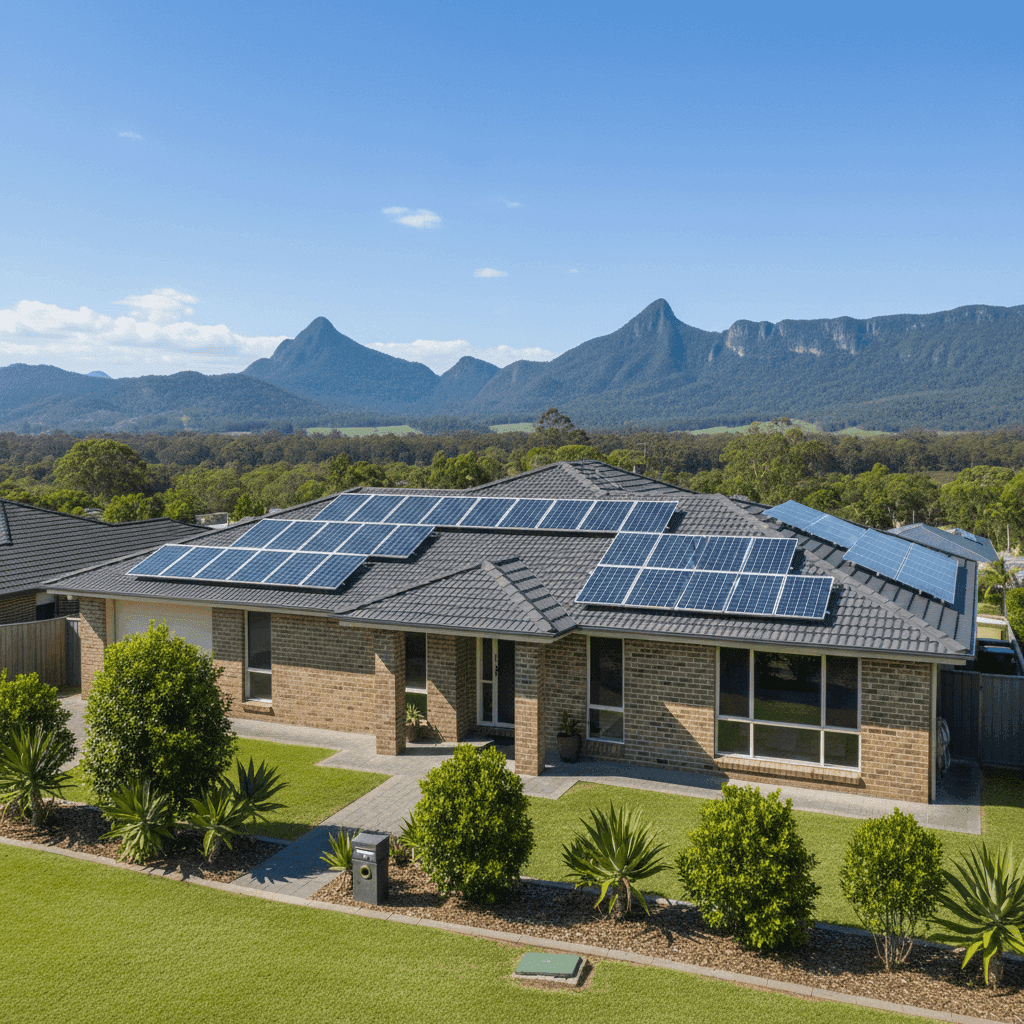
If you own a free standing home in Glass House Mountains, QLD 4518, you're living in one of South East Queensland's most scenic and sought-after pockets — nestled at the foot of the iconic volcanic plugs on the Sunshine Coast hinterland. It's a beautiful place to call home, but like anywhere in Queensland, making sure your property is properly protected matters. This article breaks down a real home and contents insurance quote for a four-bedroom property in the area, and puts it in context against local, state, and national benchmarks.
---
Is This Quote Fair?
The quote in question comes in at $2,794 per year (or $268/month) for a combined home and contents policy, covering a building sum insured of $861,000 and contents valued at $70,000, each with a $1,000 excess.
Our rating? Cheap — below average. That's a strong result for a homeowner.
To put it in perspective, the suburb average for Glass House Mountains sits at $4,299/year, and the median is $3,764/year. This quote falls well below both figures — and it's even under the 25th percentile of $2,962/year, meaning it's cheaper than at least 75% of quotes recorded in the area. For a property with a high building sum insured of $861,000, that represents genuinely good value.
It's worth noting that a lower premium doesn't automatically mean inferior cover — it can simply reflect a well-matched policy for the property's specific risk profile. That said, homeowners should always read the Product Disclosure Statement (PDS) carefully to confirm the inclusions, exclusions, and any sub-limits on contents cover.
---
How Glass House Mountains Compares
Understanding where your premium sits relative to broader benchmarks helps you judge whether you're getting a fair deal — or overpaying.
| Benchmark | Premium |
|---|---|
| This Quote | $2,794/yr |
| Suburb Average (Glass House Mountains) | $4,299/yr |
| Suburb Median | $3,764/yr |
| Suburb 25th Percentile | $2,962/yr |
| LGA Average (Sunshine Coast) | $7,249/yr |
| QLD State Average | $9,129/yr |
| QLD State Median | $3,903/yr |
| National Average | $5,347/yr |
| National Median | $2,764/yr |
A few things stand out here. First, the QLD state average of $9,129/year is dramatically higher than both the suburb average and this quote — a figure heavily skewed by high-risk coastal and cyclone-prone areas in Far North Queensland. The state median of $3,903/year is a more useful reference point for most South East Queensland homeowners.
Interestingly, the national median of $2,764/year is actually close to this quote, suggesting the property's risk profile aligns more with the typical Australian home than with the broader Queensland market. The Sunshine Coast LGA average of $7,249/year reflects the wide diversity of properties and risk levels across the region — from beachside homes to hinterland properties like this one.
You can explore more localised data on the Glass House Mountains suburb stats page, or compare across all of QLD and nationally.
---
Property Features That Affect Your Premium
Every property has a unique combination of features that insurers weigh up when calculating risk. Here's how the characteristics of this particular home likely influence its premium:
Brick Veneer Walls & Tiled Roof Brick veneer is one of the most common — and insurer-friendly — construction types in Australia. It offers solid fire resistance and durability, which typically attracts more competitive premiums compared to timber-framed or clad homes. A tiled roof similarly signals longevity and weather resilience to underwriters.
Concrete Slab Foundation A slab-on-ground foundation is generally considered low-risk from a structural perspective. It eliminates the underfloor moisture and pest risks associated with raised timber stumps, which can be a positive factor in premium calculations.
Timber & Laminate Flooring While attractive and popular, timber and laminate floors can be more costly to repair or replace after water damage events compared to tiles. This may have a minor upward influence on contents or building repair estimates, though the effect is usually modest.
Solar Panels This property has solar panels installed, which are typically covered under building insurance but can add to the overall replacement cost. Homeowners should confirm their policy explicitly covers solar panel damage — including storm, hail, and fire — and that the sum insured adequately reflects their value.
Ducted Climate Control Ducted air conditioning systems are a significant fixed asset and part of the building sum insured. Their inclusion is another reason the $861,000 building cover figure is well-considered — these systems can be expensive to repair or replace.
No Pool, Not in a Cyclone Risk Zone The absence of a pool removes a common liability and maintenance risk factor. Crucially, Glass House Mountains falls outside designated cyclone risk zones, which is a meaningful premium advantage compared to properties in North Queensland. This is likely one of the key reasons this quote performs so favourably against the state average.
2000 Build Year A home built in 2000 is relatively modern — post the major building code updates of the 1990s — which means it should meet contemporary construction standards. Homes of this era are generally viewed positively by insurers compared to older dwellings that may have outdated wiring, plumbing, or roofing.
---
Tips for Homeowners in Glass House Mountains
1. Review your building sum insured annually Construction costs in Queensland have risen sharply in recent years. With a building sum insured of $861,000, it's important to ensure this figure reflects current rebuilding costs — not just market value. Use a building cost calculator or consult a quantity surveyor to stay accurate.
2. Confirm your solar panels are explicitly covered Not all policies treat rooftop solar the same way. Check your PDS to confirm panels are included under building cover, and that the sum insured accounts for their replacement cost. Some insurers require a separate endorsement.
3. Don't overlook storm and water damage cover While Glass House Mountains isn't in a cyclone zone, the hinterland can experience intense summer storms, heavy rainfall, and localised flooding. Make sure your policy includes storm damage and check whether flood cover (from rising water) is included or needs to be added.
4. Consider a higher excess to reduce your premium further This quote already carries a competitive $1,000 excess on both building and contents. If you have a healthy emergency fund, opting for a higher excess at renewal could push your annual premium even lower — a worthwhile conversation to have with your insurer or broker.
---
Compare and Save with CoverClub
Whether you're reviewing an existing policy or shopping for cover for the first time, it pays to compare. CoverClub makes it easy to see how quotes in your area stack up — so you're never paying more than you should. Get a home insurance quote today and find out where your premium sits against the market.