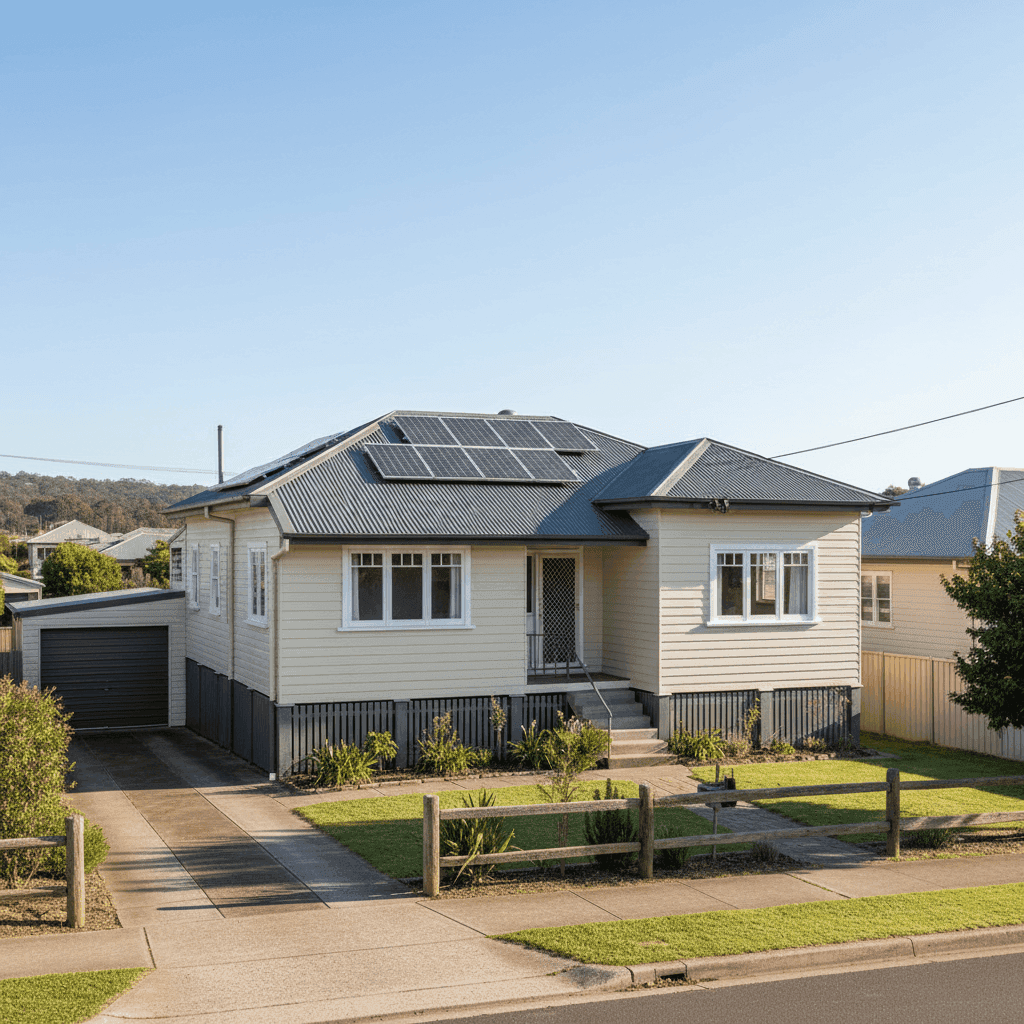
Glen Innes is a charming New England Tablelands town in northern New South Wales, known for its Celtic heritage, cool climate, and wide open landscapes. For homeowners in this region, understanding what you should be paying for home insurance — and why — can make a real difference to your household budget. In this article, we break down a recent home and contents insurance quote for a three-bedroom, two-bathroom free standing home in Glen Innes (NSW 2370), and put it in context against local, state, and national benchmarks.
---
Is This Quote Fair?
The annual premium for this property came in at $1,364 per year (or $135/month), covering both building (sum insured: $600,000) and contents ($80,000). Our price rating for this quote is CHEAP — below average for the area.
To put that in perspective:
- The suburb average for Glen Innes is $2,573/year
- The suburb median sits at $2,115/year
- Even the 25th percentile — meaning only 25% of quotes are cheaper — is $1,404/year
This quote lands below the cheapest quarter of all quotes sampled in the suburb, which is a genuinely strong result. Homeowners paying close to the suburb average are spending nearly $1,200 more per year for comparable cover. Over a decade, that's a significant sum.
It's worth noting that the building excess on this policy is $3,000, and the contents excess is $1,000. Higher excesses are one of the levers insurers use to reduce premiums — so while the upfront cost is low, you'd be out of pocket more if you needed to make a claim. That trade-off is worth factoring into your decision, particularly if you're on a tighter budget or your contents are harder to replace quickly.
---
How Glen Innes Compares
Glen Innes sits in an interesting position when you zoom out to state-level data for NSW and national benchmarks.
| Benchmark | Average Premium | Median Premium |
|---|---|---|
| Glen Innes (suburb) | $2,573/yr | $2,115/yr |
| NSW (state) | $3,801/yr | $3,410/yr |
| National | $2,965/yr | $2,716/yr |
| Armidale LGA | $5,846/yr | — |
A few things stand out here. First, Glen Innes premiums are notably lower than both the NSW state average and the national average — suggesting the area carries a comparatively moderate risk profile in the eyes of insurers. This is somewhat surprising given that regional NSW properties often attract higher premiums due to limited insurer competition and elevated risk factors like bushfire and storm exposure.
Second, the Armidale LGA average of $5,846/year is eye-opening — more than double the Glen Innes suburb average. This likely reflects a broader spread of higher-risk properties across the LGA, or simply greater variability in the types of homes being insured. Glen Innes itself appears to be a relative bright spot within the region.
You can explore the full Glen Innes suburb insurance statistics here, including premium distributions and insurer availability.
---
Property Features That Affect Your Premium
Every property has its own risk fingerprint, and insurers price accordingly. Here's how the specific features of this home are likely influencing the premium:
Weatherboard Timber Walls
Weatherboard construction is one of the most common external wall types in older Australian homes, and it does carry a higher fire risk compared to brick or rendered masonry. Insurers typically price this in — so it's notable that this quote remains competitive despite the timber cladding.
Steel/Colorbond Roof
Colorbond roofing is generally viewed favourably by insurers. It's durable, low-maintenance, and performs well in high-wind and hail events compared to terracotta or concrete tiles. This is likely a positive factor keeping the premium down.
Stump Foundation
The home sits on stumps, which is a classic construction style for older Australian homes — particularly in regional areas with reactive soils or sloped terrain. Stumped foundations can be a mixed signal for insurers: they allow for good underfloor ventilation (reducing moisture damage risk), but may be flagged for structural movement or pest access. Overall, this is unlikely to be a major premium driver here.
Built in 1960
At over 60 years old, this is a well-aged property. Older homes can attract higher premiums due to the cost of like-for-like replacement using period-appropriate materials, as well as the potential for ageing electrical, plumbing, or structural systems. The $600,000 building sum insured reflects the full replacement cost, not the market value — which is the correct approach.
Solar Panels
Solar panels are listed as a feature of this property. Many insurers now include solar panels under standard building cover, but it's worth confirming this explicitly with your insurer. Panels can be costly to replace after a hail storm or fire, and some policies have sub-limits or exclusions that apply.
Timber/Laminate Flooring
Timber floors are a common feature of homes this age and can be expensive to repair or replace if water damage occurs. Ensuring your building sum insured adequately accounts for flooring replacement is a smart move.
---
Tips for Homeowners in Glen Innes
Whether you're renewing your policy or shopping around for the first time, here are four practical tips tailored to homeowners in this part of NSW:
- Review your building sum insured regularly. Construction costs have risen sharply in recent years. A sum insured that was adequate three years ago may no longer cover a full rebuild today. Use a building cost calculator or speak with a quantity surveyor if you're unsure.
- Confirm solar panel coverage. Given this property has solar panels, ask your insurer directly whether they're covered under the building policy, what the sub-limit is (if any), and whether accidental damage is included. Don't assume — the answer varies between insurers.
- Consider your excess carefully. This policy carries a $3,000 building excess. If you can comfortably self-insure smaller claims, a higher excess in exchange for a lower premium is a sensible strategy. But if a $3,000 out-of-pocket cost would be a stretch, it may be worth paying a little more for a lower excess option.
- Shop around at renewal time. The spread of premiums in Glen Innes is wide — from $1,404 at the 25th percentile to $3,242 at the 75th percentile. That's nearly $1,840 difference for the same suburb. Loyalty doesn't always pay with home insurance, so comparing quotes annually is one of the easiest ways to keep costs in check.
---
Compare Your Home Insurance Quote
Whether you're a long-time Glen Innes local or new to the area, it pays to know where your premium sits relative to others. CoverClub makes it easy to compare home and contents insurance quotes in minutes. Get a quote today at CoverClub and see how much you could save — or simply confirm that the deal you already have is as good as it looks.