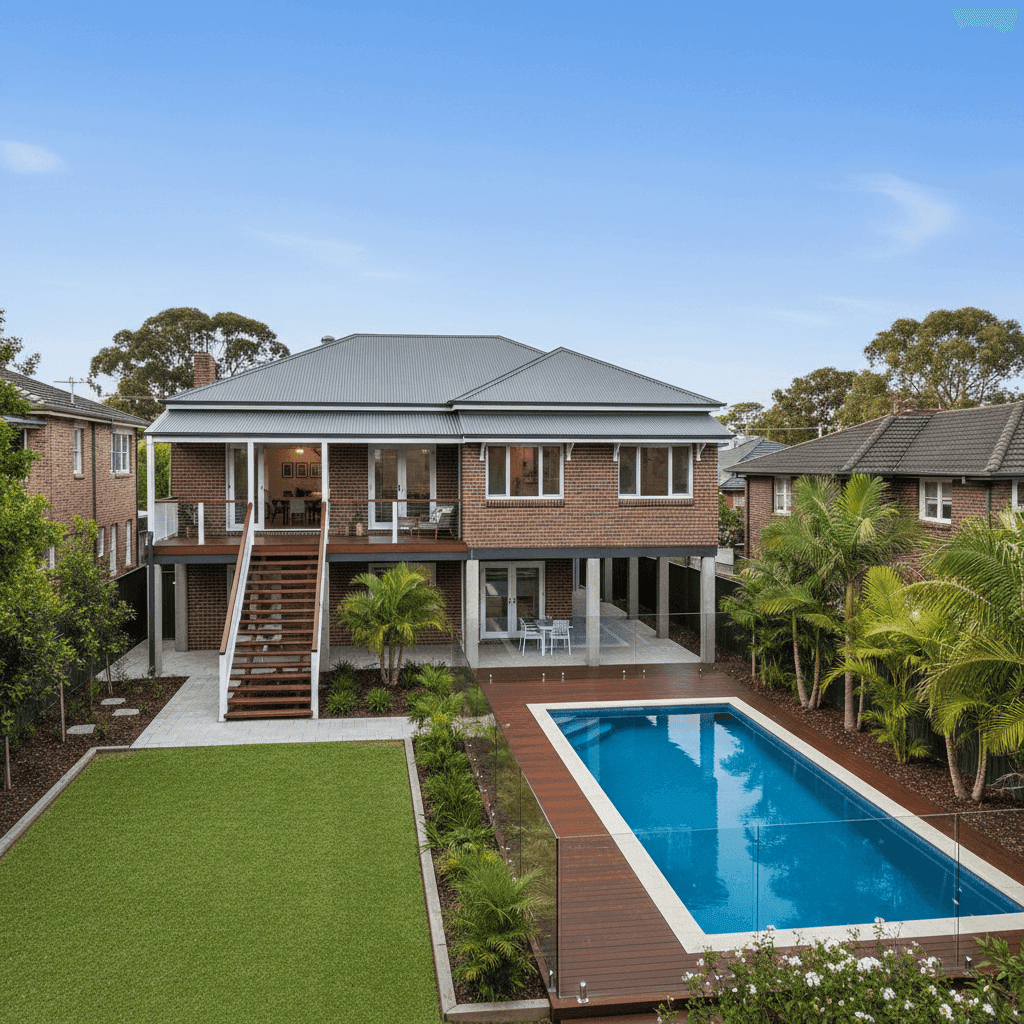
Glen Iris is one of Melbourne's most sought-after inner-eastern suburbs — a leafy, well-established neighbourhood in the City of Stonnington known for its period architecture, tree-lined streets, and strong property values. If you own a free-standing home here, you're likely sitting on a significant asset, which makes getting your home and contents insurance right all the more important.
This article breaks down a real home and contents insurance quote for a 4-bedroom, 3-bathroom free-standing home in Glen Iris (VIC 3146), examining whether the premium stacks up against what other homeowners in the suburb, state, and across Australia are paying.
---
Is This Quote Fair?
The quote in question comes in at $3,571 per year (or $319/month) for a combined home and contents policy, covering a building sum insured of $1,900,000 and contents valued at $160,000. Both the building and contents excess are set at $1,000.
Our pricing analysis rates this quote as Expensive — above average for the Glen Iris area.
To put that in perspective: the suburb average annual premium sits at $2,075, and the median is $1,879. This quote is roughly 72% above the suburb average and nearly double the suburb median. Even at the 75th percentile of Glen Iris premiums — meaning only 25% of quotes are higher — the figure is $2,621, still well below this quote's $3,571.
So what's driving the higher price? The answer lies largely in the property itself — a high sum insured, premium fittings, and several features that insurers weigh carefully. We'll unpack those shortly.
---
How Glen Iris Compares
Understanding your premium in isolation only tells part of the story. Here's how Glen Iris premiums sit relative to broader benchmarks, based on 69 quotes sampled in the suburb:
| Benchmark | Annual Premium |
|---|---|
| Glen Iris 25th Percentile | $1,490 |
| Glen Iris Median | $1,879 |
| Glen Iris Average | $2,075 |
| Glen Iris 75th Percentile | $2,621 |
| LGA (Stonnington) Average | $2,235 |
| VIC State Average | $3,000 |
| VIC State Median | $2,718 |
| National Average | $5,347 |
| National Median | $2,764 |
A few things stand out here. Glen Iris is actually quite affordable relative to the Victorian state average of $3,000 — suggesting the suburb benefits from relatively low risk factors like minimal flood or bushfire exposure. The national average of $5,347 is skewed heavily upward by high-risk regions (think cyclone-prone Queensland or flood-affected parts of NSW), so that figure should be interpreted with caution.
At $3,571, this quote sits above the Victorian state average but well below the national average — which reflects the fact that while the property itself commands a high sum insured, the suburb's risk profile remains relatively benign.
---
Property Features That Affect Your Premium
Several characteristics of this property are likely contributing to a higher-than-typical premium for the area:
High Building Sum Insured
At $1,900,000, the building sum insured is substantial — and for good reason. A 235 sqm home built in 2008 with above-average fittings in Glen Iris would cost a significant amount to fully rebuild. Insurers price premiums proportionally to the rebuild cost, so a higher sum insured will naturally push the premium up.
Above-Average Fittings Quality
The property features above-average fittings, which signals to insurers that fixtures, finishes, and appliances are of higher value and more expensive to repair or replace. Think stone benchtops, quality cabinetry, premium tapware, and high-end flooring — all of which increase the cost of any claim.
Brick Veneer Construction
Brick veneer external walls are generally well-regarded by insurers. They offer solid fire resistance and durability compared to weatherboard or cladding alternatives. This is a neutral-to-positive factor for your premium.
Steel/Colorbond Roof
A Colorbond steel roof is considered low-maintenance and resilient, particularly against hail and wind. Insurers typically view this favourably, and it's unlikely to be adding to your premium.
Elevated Foundation (Stumps)
The home is elevated by at least 1 metre on stumps, which is a notable feature. While elevation can reduce flood risk by keeping the floor level above potential inundation, it also introduces specific risks — subfloor exposure, potential for structural movement, and greater vulnerability to wind uplift. Insurers factor this in when calculating premiums.
Swimming Pool
A pool on the property adds to the contents and liability risk profile. While the pool itself may not be covered under a standard policy, its presence can influence the overall premium, particularly around public liability coverage.
Ducted Climate Control
Ducted climate control is a significant fixed asset in the home. These systems are expensive to repair or replace and are typically covered under the building policy, contributing to the higher sum insured and premium.
Tile Flooring
Tiles throughout the home are generally durable and straightforward to replace compared to timber or carpet. This is a minor positive factor from an insurer's perspective.
---
Tips for Homeowners in Glen Iris
If you're looking to ensure you're getting the best value on your home and contents insurance, here are some practical steps worth taking:
1. Review your sum insured regularly Building costs fluctuate, and it's easy to end up either over- or under-insured. Use a quantity surveyor or an online rebuild cost calculator to verify your $1,900,000 sum insured reflects current construction costs — not just your property's market value.
2. Shop around at renewal time Loyalty rarely pays in insurance. Insurers often offer their best pricing to new customers, so it's worth comparing quotes annually. Even a modest saving of 10–15% on a premium like this one translates to $350–$535 back in your pocket each year.
3. Consider your excess strategically Both the building and contents excess on this policy are set at $1,000. Opting for a higher excess (say, $2,000 or $2,500) can meaningfully reduce your annual premium. If you're unlikely to make small claims, a higher excess is often the smarter financial choice.
4. Bundle your cover thoughtfully A combined home and contents policy can offer convenience and sometimes a discount. However, it's worth checking whether separate policies from different insurers might actually deliver better value — particularly if your contents needs are straightforward relative to your high building sum insured.
---
Compare Your Options with CoverClub
Whether this quote reflects fair value for your specific circumstances or there's room to save, the best way to know for certain is to compare. At CoverClub, you can get a home and contents insurance quote tailored to your Glen Iris property in minutes — and see how it stacks up against the market. Don't settle for the first number you're given; a few minutes of comparison could make a meaningful difference to what you pay.