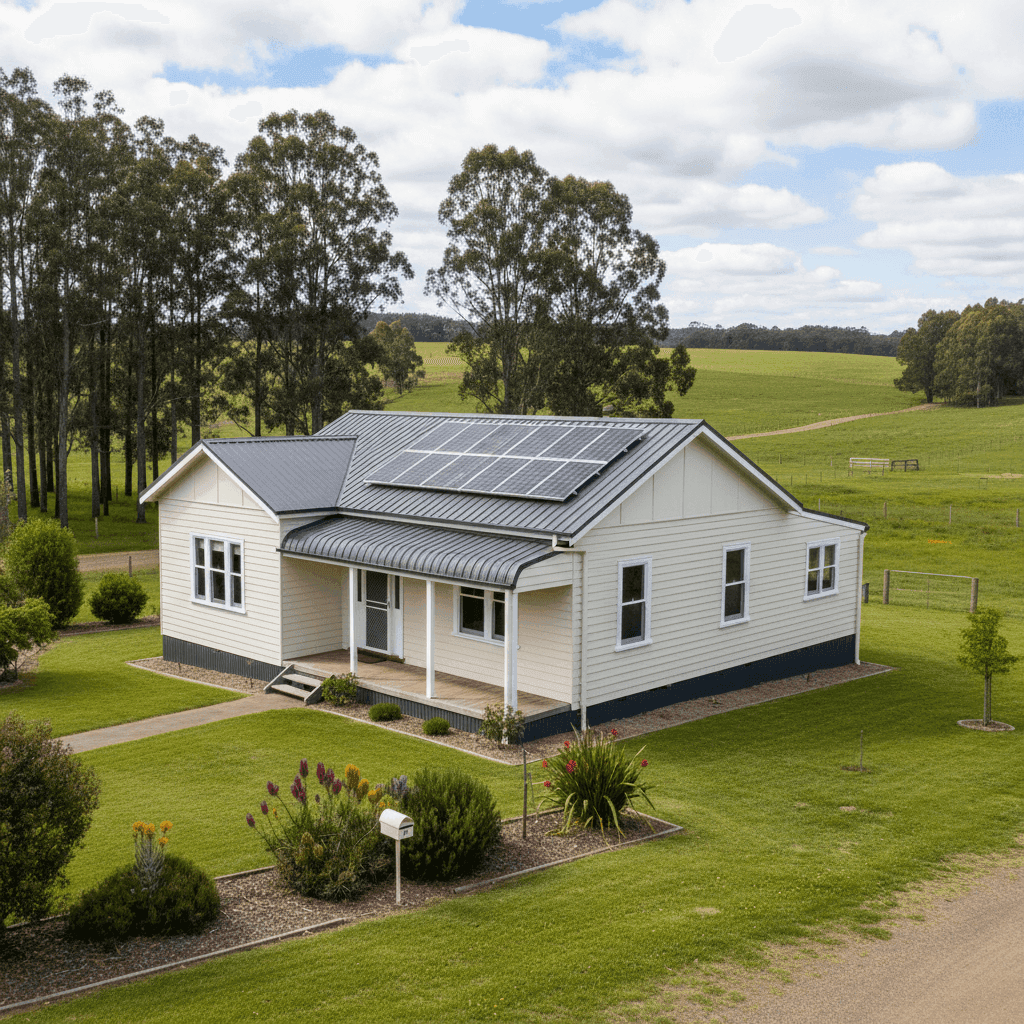
Glenburn is a quiet rural township nestled in the foothills of the Great Dividing Range in Victoria's Mitchell Shire — and like many semi-rural communities in this part of the state, home insurance here comes with its own unique set of considerations. This article takes a close look at a real home and contents insurance quote for a three-bedroom, free-standing home in Glenburn (postcode 3717), breaking down what's driving the cost and what homeowners can do about it.
---
Is This Quote Fair?
The quote in question comes to $4,280 per year (or $419/month) for combined home and contents cover, with a building sum insured of $450,000 and contents valued at $50,000. The building excess sits at $3,000, and the contents excess at $1,000.
Our price rating for this quote is EXPENSIVE — above average — and the numbers back that up clearly.
Compared to the Victorian state average of $2,921/year, this quote is roughly 46% higher. Against the national average of $2,965/year, it's still about 44% above what most Australian homeowners are paying. Even measured against the Mitchell LGA average of $2,950/year, this quote stands well above the local benchmark.
That said, "expensive" doesn't necessarily mean "wrong." Glenburn's location, the age and construction type of the property, and several other factors can legitimately push premiums higher than metropolitan or coastal benchmarks. The real question is whether this quote is competitive for this specific property — and whether there's room to find better value elsewhere.
---
How Glenburn Compares
Without suburb-level data available for Glenburn specifically, we can draw on broader regional and national comparisons to give context. You can explore Glenburn-specific insurance statistics on CoverClub as more data becomes available for the area.
| Benchmark | Annual Premium |
|---|---|
| This Quote | $4,280 |
| Mitchell LGA Average | $2,950 |
| VIC State Average | $2,921 |
| National Average | $2,965 |
| VIC State Median | $2,694 |
| National Median | $2,716 |
The gap between this quote and the state median ($2,694) is particularly striking — a difference of over $1,500 per year. For a fuller picture of how Victorian premiums stack up, visit the VIC insurance stats page, or compare against national home insurance data.
It's worth noting that medians are often more telling than averages, since they're less distorted by outlier properties with very high or very low premiums. The fact that both the state and national medians sit well below this quote reinforces the "expensive" rating.
---
Property Features That Affect Your Premium
Several characteristics of this property are likely contributing to the elevated premium. Understanding them helps homeowners make informed decisions.
Weatherboard Timber Walls
Weatherboard construction is one of the most common building types in regional Victoria, but it carries a higher fire risk than brick or rendered concrete. Timber walls are more susceptible to ember attack and radiant heat — a serious concern in bushfire-prone areas like the ranges around Glenburn. Insurers factor this in heavily when calculating premiums.
Bushfire Exposure
Glenburn sits in a region with significant bushfire risk. The Yea and Kinglake areas nearby were severely impacted during the 2009 Black Saturday fires, and the broader Mitchell Shire remains a high-risk zone. Insurers price this risk into every policy written for properties in these foothills, regardless of individual property condition.
Construction Year (1986)
A home built in 1986 is approaching 40 years old. While many homes of this era are structurally sound, insurers may apply age loadings due to the likelihood of older wiring, plumbing, and roofing materials. The steel/Colorbond roof is a positive — it's durable and performs well in bushfire conditions — but the overall age of the dwelling still plays a role.
Solar Panels
The presence of solar panels adds replacement value to the property and can slightly increase the complexity of a claim (particularly for roof damage). Most insurers include solar panels under building cover, but it's always worth confirming this is reflected in your sum insured.
Slab Foundation & Timber/Laminate Flooring
A concrete slab foundation is generally considered low-risk and resilient. However, timber and laminate flooring can be more vulnerable to water damage than tiles, which may influence contents or building claim costs.
Sum Insured
At $450,000 for a 130 sqm home, the building sum insured is on the higher end per square metre. While it's always better to be adequately covered than underinsured, it's worth periodically reviewing your sum insured against current construction costs to ensure you're not over-insuring — which directly affects your premium.
---
Tips for Homeowners in Glenburn
1. Compare Multiple Quotes — Every Year
Insurance premiums can vary dramatically between providers for the same property. Given this quote sits well above the regional and national averages, shopping around is strongly recommended. Use a comparison tool like CoverClub to see what other insurers would charge for the same level of cover.
2. Review Your Bushfire Preparedness
Some insurers offer discounts or more competitive pricing for properties that meet certain bushfire mitigation standards — such as maintained ember guards, cleared gutters, and defensible space around the home. Investing in these measures not only protects your family but can also work in your favour at renewal time.
3. Check Your Sum Insured Carefully
Underinsurance is a genuine risk, particularly in regional areas where rebuilding costs can be high. But overinsurance costs you money too. Use a building cost calculator or speak with a local builder to get a realistic estimate of what it would cost to rebuild your home from scratch — and make sure your sum insured reflects that figure, not the property's market value.
4. Consider Your Excess Strategy
This policy carries a $3,000 building excess. Opting for a higher excess is one of the most effective ways to reduce your annual premium — but only if you're confident you could cover that cost out of pocket in the event of a claim. If $3,000 already feels like a stretch, a lower excess with a slightly higher premium may be the smarter trade-off.
---
Ready to Find a Better Deal?
If this quote feels steep, you're not alone — and you don't have to accept the first number you're given. CoverClub makes it easy to compare home and contents insurance quotes from multiple Australian insurers, so you can see exactly where your money is going and whether you can do better. Get a quote today at CoverClub and find out what fair home insurance looks like for your Glenburn property.