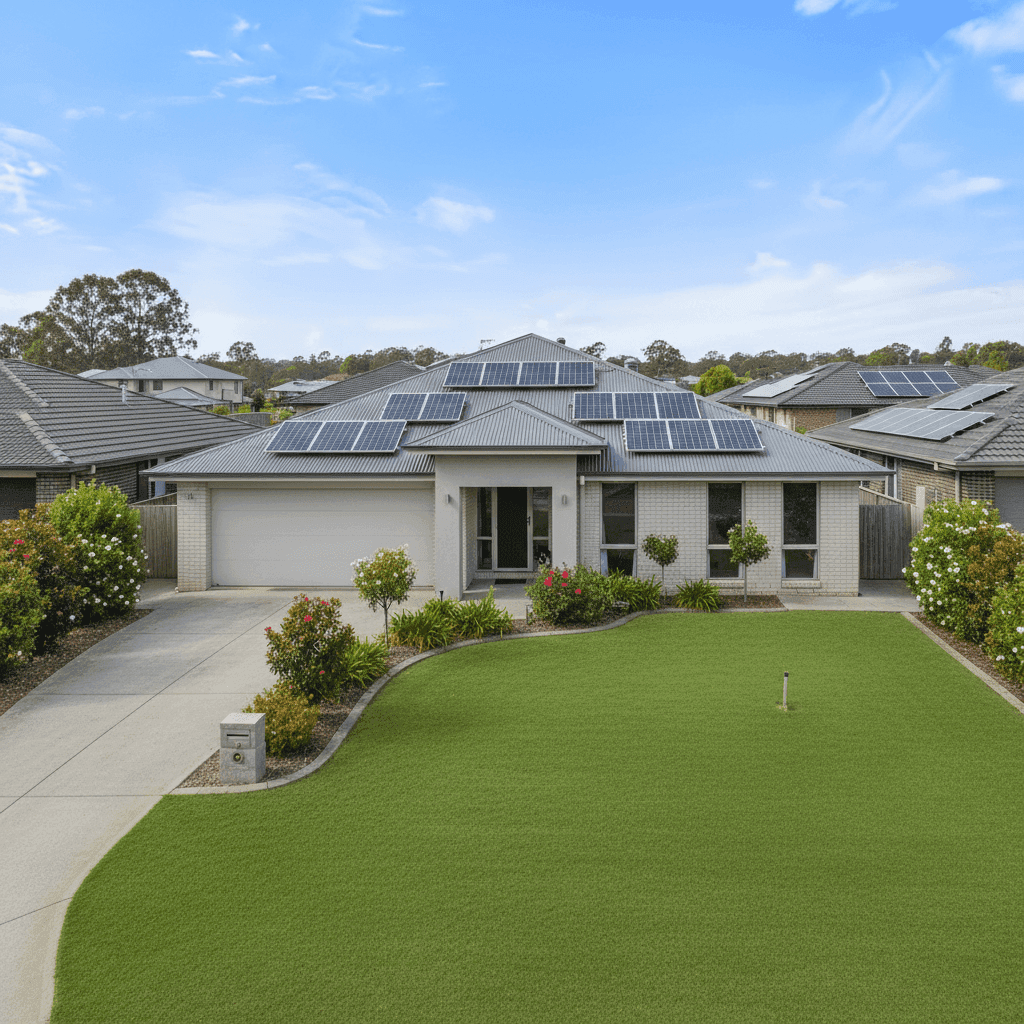
Gleneagle is a quiet residential suburb nestled in the Logan region of South East Queensland, attracting families drawn to its leafy streets, semi-rural feel, and relative affordability compared to Brisbane's inner suburbs. If you own — or are considering buying — a free standing home in this area, understanding what you should expect to pay for home and contents insurance is an important piece of the financial puzzle. This article breaks down a real quote for a four-bedroom, two-bathroom home in Gleneagle and puts it in context against local, state, and national benchmarks.
---
Is This Quote Fair?
The short answer: yes — and then some. The quote in question comes in at $1,549 per year (or roughly $156 per month) for a combined home and contents policy, covering a building sum insured of $825,000 and contents valued at $70,000. Our price rating for this quote is CHEAP, meaning it sits well below the average for the area.
To put that in perspective, the suburb average for Gleneagle sits at $2,636 per year, and the median is even higher at $2,752. That means this particular quote is coming in at roughly 41% below the suburb average — a significant saving for what is a well-specified, newly built home. Even at the 25th percentile (the cheapest quarter of quotes in the suburb), premiums average around $2,109 — still considerably more than this figure.
For a homeowner budgeting for ongoing costs, a saving of over $1,000 per year compared to the local average is genuinely meaningful. Over a decade, that's potentially $10,000+ staying in your pocket rather than going to an insurer.
---
How Gleneagle Compares
To truly appreciate this quote, it helps to zoom out and look at the broader picture. You can explore the full data on the Gleneagle insurance stats page, but here's a quick summary:
| Benchmark | Annual Premium |
|---|---|
| This Quote | $1,549 |
| Gleneagle Suburb Average | $2,636 |
| Gleneagle Suburb Median | $2,752 |
| LGA (Logan) Average | $4,617 |
| QLD State Average | $9,129 |
| QLD State Median | $3,903 |
| National Average | $5,347 |
| National Median | $2,764 |
The figures above tell an interesting story. Queensland's state average premium of $9,129 is extraordinarily high — driven largely by Far North Queensland and cyclone-prone coastal areas where premiums can reach eye-watering levels. The QLD state stats reflect this skew heavily. When you strip out those extreme markets and look at the median ($3,903), Gleneagle still comes out looking very competitive.
Nationally, the picture is similar. The national average of $5,347 is inflated by high-risk regions, but even the national median of $2,764 is nearly double this quote. Gleneagle, it seems, is a relatively insurer-friendly suburb — and this quote captures that advantage well.
It's worth noting the sample size of 29 quotes for the suburb is reasonably solid for a smaller area, giving us good confidence in the local benchmarks.
---
Property Features That Affect Your Premium
Several characteristics of this property work in its favour from an insurance pricing perspective:
Newly Built (2024) A home constructed in 2024 is built to modern Australian Standards, incorporating up-to-date fire safety, structural integrity, and weather-resistance requirements. Insurers generally view newer homes as lower risk, which tends to translate into lower premiums.
Brick Veneer Walls Brick veneer is one of the most common and well-regarded external wall materials in Australia. It offers solid fire resistance and durability, and insurers typically price it more favourably than lightweight or timber cladding alternatives.
Steel/Colorbond Roof A Colorbond steel roof is highly regarded in Australian conditions — it's lightweight, resistant to corrosion, and performs well in storms. It's also non-combustible, which is a meaningful risk factor for insurers.
Slab Foundation Concrete slab foundations are considered structurally stable and are the standard for modern Australian construction. They carry minimal risk of subsidence or pest-related structural damage compared to raised timber stumps.
Tile Flooring Tiles are durable, water-resistant, and low-maintenance — all qualities that reduce the likelihood of water damage claims, a common driver of contents and building insurance costs.
Solar Panels The property includes solar panels, which are noted on the policy. It's important to confirm with your insurer exactly what is and isn't covered — some policies include panels as part of the building sum insured, while others treat them separately. Make sure your $825,000 building cover adequately accounts for the replacement value of your system.
No Pool, No Cyclone Risk Zone The absence of a swimming pool removes a liability risk factor that can push premiums up. And importantly, Gleneagle falls outside Queensland's cyclone risk zones — a major reason why premiums here are far more manageable than in coastal Far North Queensland.
---
Tips for Homeowners in Gleneagle
1. Review your building sum insured regularly Construction costs have risen significantly in recent years. A home built in 2024 at 214 sqm should have its sum insured reviewed annually to ensure it reflects current rebuild costs — not just the original build price. Underinsurance is one of the most common and costly mistakes homeowners make.
2. Confirm solar panel coverage With solar panels on the roof, it's worth reading the fine print on what your policy covers. Ask your insurer whether panels are included in the building sum insured, whether they cover damage from storms or hail, and whether they cover inverter failure or electrical faults.
3. Don't auto-renew without comparing This quote is already competitively priced, but insurance markets change every year. Insurers adjust their risk models, and a premium that's cheap today may not be cheap at renewal. Make a habit of comparing quotes at CoverClub before each renewal to ensure you're still getting a fair deal.
4. Consider your excess carefully This policy carries a $3,000 building excess and a $1,000 contents excess. Higher excesses typically reduce your premium, but make sure you could comfortably cover those amounts out of pocket if you needed to make a claim. If $3,000 would be a financial stretch, it may be worth exploring policies with a lower building excess — even if it means a slightly higher annual premium.
---
Compare Your Own Quote
Whether you're a new homeowner in Gleneagle or simply due for a policy review, it pays to know where your premium sits relative to the market. CoverClub makes it easy to benchmark your home insurance costs against real data from your suburb, LGA, and state. Get a quote today at CoverClub and find out if you're paying a fair price — or if there's a better deal waiting for you.