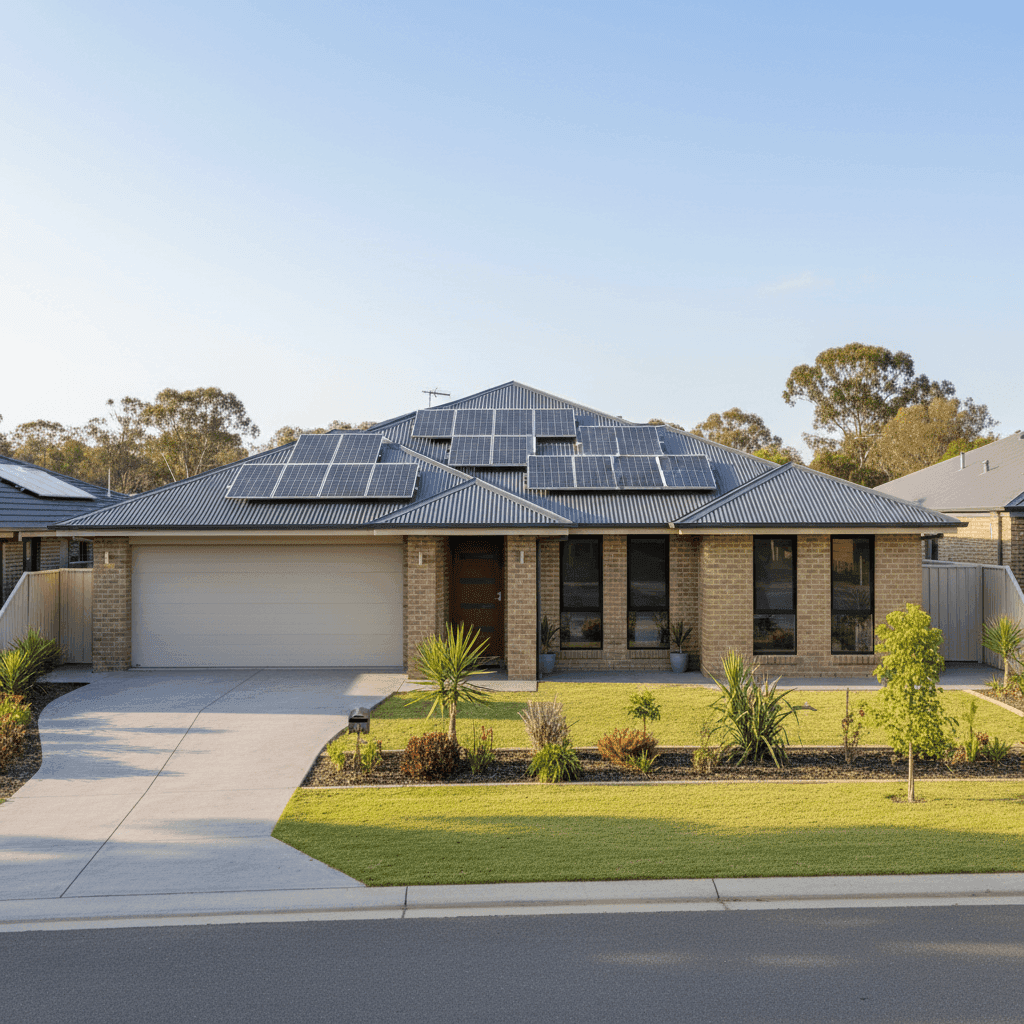
Gleneagle is a quiet, semi-rural suburb nestled in the Logan region of South East Queensland — and it's increasingly popular with families seeking a newer home with a bit of breathing room between neighbours. This article takes a close look at a real home and contents insurance quote for a four-bedroom, two-bathroom free standing home in Gleneagle (QLD 4285), breaks down what's driving the premium, and explains how it compares to local, state-wide, and national benchmarks.
---
Is This Quote Fair?
The short answer: yes — this is an exceptionally competitive quote.
At $1,204 per year (or roughly $118 per month), this home and contents policy covers a building sum insured of $822,000 and contents valued at $94,000. That's a combined insured value of over $916,000 for well under $1,300 annually — a result that sits firmly in the "Cheap" (Below Average) price category.
To put that in perspective, the suburb average for Gleneagle sits at $2,738 per year, meaning this quote comes in at less than half the local average. Even at the 25th percentile — where the cheapest quarter of Gleneagle quotes sit — premiums average $1,923 per year. This quote undercuts even that lower benchmark by more than $700.
For a newly built home with a solid construction profile, this outcome makes sense, but it's still an impressive result that demonstrates just how much variation exists in the insurance market. Shopping around clearly pays off.
---
How Gleneagle Compares
Understanding where Gleneagle sits in the broader insurance landscape helps contextualise just how well this quote performs.
| Benchmark | Average Premium |
|---|---|
| This Quote | $1,204/yr |
| Gleneagle (suburb avg.) | $2,738/yr |
| Logan LGA average | $3,411/yr |
| QLD state average | $4,547/yr |
| QLD state median | $3,931/yr |
| National average | $2,965/yr |
| National median | $2,716/yr |
A few things stand out here. First, Queensland's state average of $4,547 per year is remarkably high — nearly 70% above the national average of $2,965. This reflects the significant weather and natural hazard exposure across much of the state, including cyclone risk in the north, flooding in river corridors, and severe storm activity throughout South East Queensland.
Gleneagle's own suburb average of $2,738 is considerably more modest than the QLD state figure, suggesting the area carries a lower risk profile than many other parts of the state. The Logan LGA average of $3,411 is higher than the suburb figure, which may reflect more flood- or storm-prone pockets within the broader council area pulling the LGA number upward.
At $1,204, this particular quote sits 56% below the Gleneagle suburb average and 74% below the QLD state average — a remarkable outcome by any measure. You can explore more local data on the Gleneagle suburb stats page.
---
Property Features That Affect Your Premium
Several characteristics of this property work in the homeowner's favour when it comes to insurance pricing.
Brand new construction (2024) Insurers generally reward newer homes with lower premiums. A 2024 build means all plumbing, electrical, and structural components are modern, up to code, and far less likely to cause a claim. There's no ageing wiring, no deteriorating roof flashing, and no legacy plumbing issues — all common sources of claims in older properties.
Brick veneer walls Brick veneer is one of the most insurer-friendly external wall materials available. It offers strong fire resistance, durability against impact, and good thermal performance. Compared to timber weatherboard or fibre cement cladding, brick veneer typically attracts lower premiums.
Steel/Colorbond roof Colorbond steel roofing is highly regarded by insurers for its resilience in Australian conditions. It handles heat, heavy rain, and hail far better than older materials like terracotta tiles, and it's significantly lighter than concrete tiles — reducing structural load and storm-related risk.
Concrete slab foundation A slab foundation is considered low-risk from an insurance perspective. It eliminates the underfloor moisture, pest, and structural movement issues that can affect homes on stumps or piers, particularly in Queensland's humid climate.
Solar panels This property has solar panels installed, which adds a modest amount to the insured value and can slightly increase premiums. However, the impact is generally small, and the energy savings typically far outweigh any marginal premium increase. It's worth confirming with your insurer that the solar system is explicitly covered under your building policy.
No pool, no cyclone zone The absence of a swimming pool removes a meaningful liability exposure that can add to premiums. Being outside a designated cyclone risk area also keeps the premium lower — a significant factor for Queensland properties closer to the coast or further north.
Standard fittings, tiled flooring Standard-quality fittings mean replacement costs are predictable and reasonable. Tiled flooring throughout is durable and relatively inexpensive to replace compared to hardwood timber or premium stone finishes, which can significantly inflate contents and building replacement estimates.
---
Tips for Homeowners in Gleneagle
1. Review your sum insured annually Construction costs in South East Queensland have risen sharply in recent years. Your building sum insured of $822,000 should reflect the full cost to rebuild — not the market value of the land. Check this figure each year at renewal, especially as labour and materials costs continue to fluctuate. Underinsurance is one of the most common and costly mistakes homeowners make.
2. Protect your solar panels explicitly Solar panel systems represent a significant investment. Make sure your policy documentation specifically lists them as covered under your building insurance. Some policies include them automatically; others require you to declare them. Damage from hail, storm, or electrical fault should be covered — confirm this with your insurer before you need to make a claim.
3. Don't overlook contents coverage At $94,000, this contents sum may be appropriate — but it's worth doing a room-by-room audit periodically. Electronics, appliances, furniture, clothing, and tools can add up quickly in a four-bedroom home. A contents calculator can help ensure you're not left short after a burglary or fire.
4. Consider your excess settings carefully This policy carries a $2,000 building excess and a $1,000 contents excess. Choosing a higher excess is a common way to reduce your annual premium, but make sure you're comfortable covering that amount out of pocket if a claim arises. For a newer home with lower claim likelihood, a higher excess can be a smart trade-off — but it needs to suit your financial situation.
---
Compare Quotes and See What You Could Save
Whether you're buying, building, or simply up for renewal, it pays to compare. The difference between the cheapest and most expensive quotes in Gleneagle spans thousands of dollars per year — and the right policy for your property might be very different from your neighbour's. Get a home insurance quote at CoverClub and see how your current premium stacks up against the market in minutes.