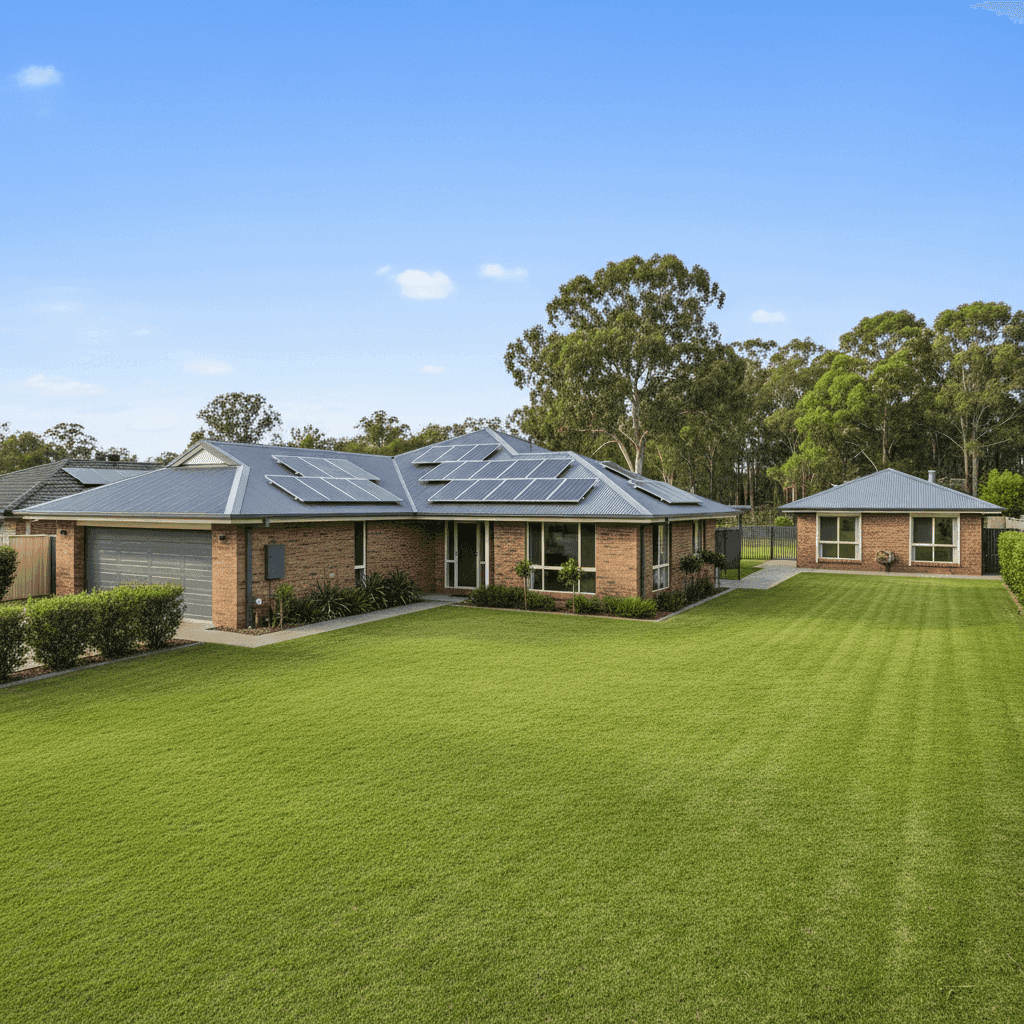
Gleneagle is a quiet, semi-rural suburb nestled in the City of Logan, about 50 kilometres south of Brisbane. Known for its spacious blocks and family-friendly atmosphere, it attracts homeowners who want room to breathe without straying too far from the South East Queensland corridor. If you own a free-standing home here, understanding what you should be paying for building insurance — and why — is an important part of protecting one of your biggest assets.
This article breaks down a real building-only insurance quote for a six-bedroom, three-bathroom home in Gleneagle, compares it against local, state, and national benchmarks, and offers practical advice for homeowners in the area.
---
Is This Quote Fair?
The quote in question comes in at $2,683 per year (or $257 per month) for building-only cover on a home with a sum insured of $952,000 and a standard $1,000 excess. Our analysis rates this as FAIR — around average.
That rating holds up when you dig into the numbers. The suburb average for Gleneagle sits at $2,636 per year, meaning this quote is only $47 above what most comparable properties in the area are paying. It also falls comfortably within the interquartile range for the suburb — between the 25th percentile of $2,109 and the 75th percentile of $3,170 — which is exactly where you'd hope to land.
In short, this isn't a bargain, but it's not an overpriced outlier either. For a large, well-appointed home with a high sum insured, sitting close to the local average is a reasonable result.
---
How Gleneagle Compares
To put this quote in broader context, it helps to look at Gleneagle's suburb-level insurance data alongside Queensland state figures and national benchmarks.
| Benchmark | Average Premium | Median Premium |
|---|---|---|
| Gleneagle (4285) | $2,636/yr | $2,752/yr |
| LGA (Logan) | $4,617/yr | — |
| Queensland | $9,129/yr | $3,903/yr |
| National | $5,347/yr | $2,764/yr |
A few things stand out here. The Queensland average of $9,129 looks alarming at first glance, but the median of $3,903 tells a more grounded story. The large gap between Queensland's mean and median is largely driven by high-risk coastal and cyclone-prone areas in Far North Queensland, which push the average up significantly. Gleneagle is not a cyclone risk area, so those extreme premiums don't apply here.
Compared to the Logan LGA average of $4,617, this quote looks genuinely competitive — roughly $1,900 cheaper per year. And against the national median of $2,764, the Gleneagle quote of $2,683 is actually slightly below, which is a positive sign for local homeowners.
The takeaway: Gleneagle is a relatively affordable suburb for home insurance by both state and national standards, and this quote reflects that.
---
Property Features That Affect Your Premium
Several characteristics of this property influence what insurers charge. Here's how the key features play out:
Size and sum insured At 354 square metres with six bedrooms and three bathrooms, this is a large home. The $952,000 sum insured reflects the cost to rebuild — not the market value — and at this scale, that figure is substantial. A higher sum insured directly increases the premium, so it's important the figure is accurate: too low and you risk being underinsured; too high and you're overpaying unnecessarily.
Brick veneer construction with Colorbond roof Brick veneer walls and a steel Colorbond roof are a popular and well-regarded combination in Queensland. Brick veneer offers solid fire and weather resistance, while Colorbond is durable, lightweight, and performs well in heat. Insurers generally view this combination favourably, which can help moderate premiums compared to less resilient materials.
Slab foundation A concrete slab foundation, standard for homes built in this era and region, is considered low-risk by most insurers. It eliminates concerns around subfloor flooding or pest damage that can affect raised homes.
Built in 2015 A relatively modern construction date works in the homeowner's favour. Homes built after significant updates to the Queensland Development Code benefit from improved structural standards, better cyclone tie-downs (even in non-cyclone zones), and more resilient materials — all of which insurers take into account.
Solar panels Solar panels add replacement value to a home and are increasingly factored into building sums insured. If the panels aren't explicitly included in the sum insured, it's worth checking with your insurer to confirm they're covered under the building policy.
Ducted climate control Ducted air conditioning is a fixed building feature and should be included in the building sum insured. Given the Queensland climate, this is a meaningful asset worth protecting.
Granny flat The presence of a granny flat adds both value and complexity to a building policy. Homeowners should confirm with their insurer that the secondary dwelling is explicitly covered under the policy, as some insurers treat it separately or apply sub-limits.
---
Tips for Homeowners in Gleneagle
1. Review your sum insured regularly Building costs in South East Queensland have risen considerably in recent years due to labour shortages and material price increases. A sum insured set a few years ago may no longer reflect the true cost to rebuild. Use a building cost calculator or speak to a quantity surveyor to ensure your coverage keeps pace with reality.
2. Confirm your granny flat is covered Not all standard building policies automatically extend full cover to secondary dwellings. Read your Product Disclosure Statement carefully and, if in doubt, ask your insurer directly. Some policies require you to declare the granny flat separately or increase your sum insured to account for it.
3. Check your solar panel coverage Solar panels are now a common feature in Gleneagle and across Logan, but coverage can vary. Some policies cover panels as part of the building; others treat them as an optional extra. Make sure your policy explicitly includes them and that the sum insured accounts for their replacement cost.
4. Compare quotes before renewing Loyalty doesn't always pay in insurance. Premiums can shift significantly from year to year, and insurers don't always pass on their best rates to existing customers. Running a comparison before your renewal date — even if you ultimately stay with your current provider — is one of the simplest ways to avoid overpaying.
---
Compare Home Insurance Quotes in Gleneagle
Whether you're reviewing an existing policy or shopping for the first time, comparing quotes is the best way to make sure you're getting value. At CoverClub, you can enter your property details and see how your premium stacks up against real data from your suburb and beyond. It takes just a few minutes and could save you hundreds of dollars a year.