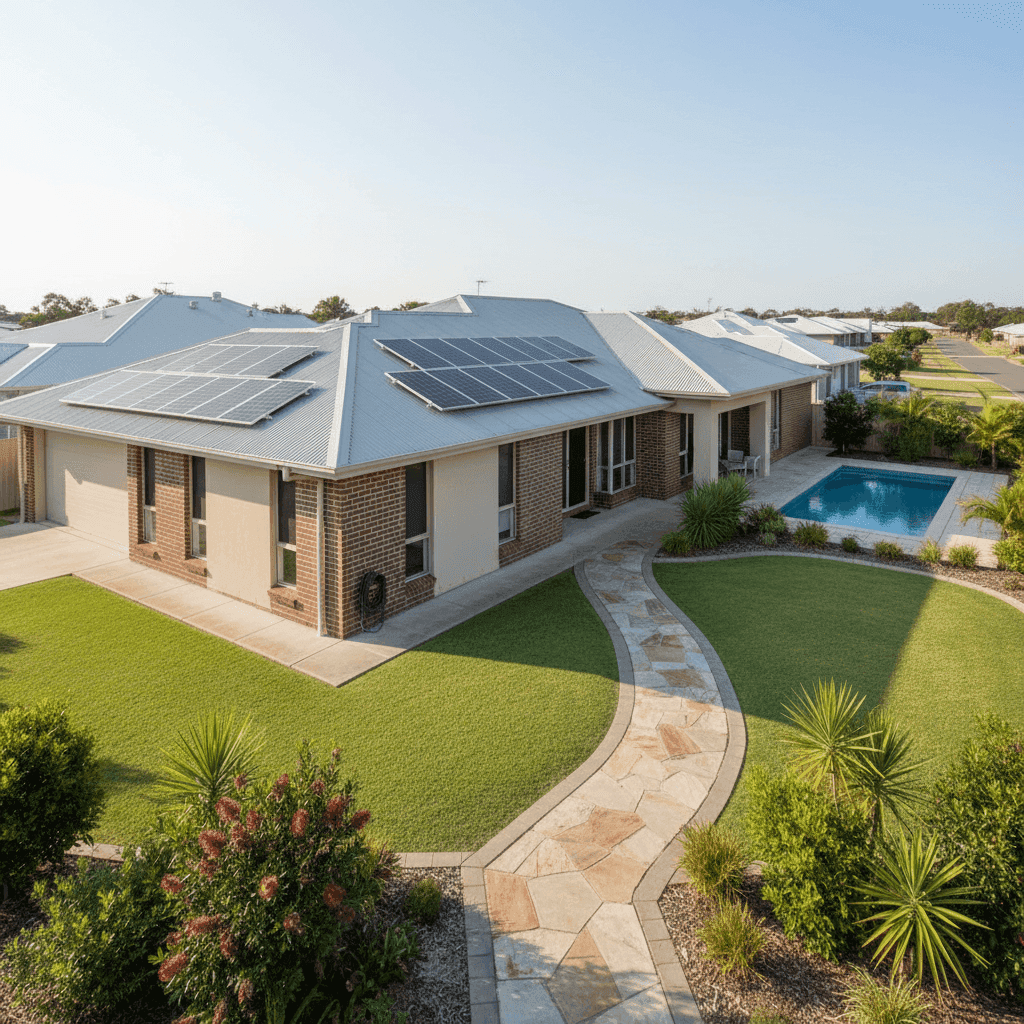
If you own a free standing home in Glenella, QLD 4740, you're probably well aware that insurance premiums in the Mackay region can be a serious line item in your household budget. Cyclone risk, summer storms, and the general cost of rebuilding in regional Queensland all push premiums higher than the national norm. That's why it's worth taking a close look whenever a quote lands in your inbox — and this one is particularly interesting. A combined home and contents policy covering a four-bedroom, two-bathroom brick veneer home came in at $2,937 per year (or $282/month). Here's what the data says about whether that's a good deal.
---
Is This Quote Fair?
The short answer: yes — this is a genuinely cheap quote for Glenella. CoverClub rates it as Below Average in price, meaning it sits well under what most comparable homeowners in the suburb are paying.
To put it in perspective:
- The suburb average for Glenella is $4,843/year
- The suburb median sits even higher at $5,280/year
- Even the 25th percentile — the cheapest quarter of quotes in the area — comes in at $3,350/year
This quote at $2,937 falls below the cheapest 25% of premiums recorded in the suburb. That's a meaningful result. For a property insured at $809,000 (building) and $108,000 (contents), paying less than $3,000 annually represents strong value relative to the local market.
It's also worth noting that the LGA average for Mackay sits at $5,218/year — nearly 78% more than this quote. Across the broader Queensland market, the average premium is $4,547/year, and the median is $3,931/year. By every local and state benchmark, this quote is competitively priced.
---
How Glenella Compares
Understanding where Glenella sits in the wider insurance landscape helps explain why premiums here tend to run high — and why finding a below-average quote matters even more.
| Benchmark | Annual Premium |
|---|---|
| This Quote | $2,937 |
| Glenella Suburb Average | $4,843 |
| Glenella Suburb Median | $5,280 |
| Glenella 25th Percentile | $3,350 |
| Glenella 75th Percentile | $6,034 |
| Mackay LGA Average | $5,218 |
| QLD State Average | $4,547 |
| QLD State Median | $3,931 |
| National Average | $2,965 |
| National Median | $2,716 |
(Based on 32 quotes recorded for the Glenella suburb. [View full suburb stats](https://coverclub.com.au/stats/QLD/4740/glenella).)
One striking takeaway: Glenella's suburb median of $5,280 is nearly double the national median of $2,716. This reflects the elevated risk profile of coastal and near-coastal Queensland properties — particularly those within cyclone-designated zones. Interestingly, this quote is actually close to the national average of $2,965, which is remarkable given the property's location and the heightened risks that come with it.
You can explore Queensland-wide insurance data or national benchmarks to see how your own property stacks up.
---
Property Features That Affect Your Premium
Several characteristics of this home work together to shape the final premium — some push costs up, others help keep them down.
🔴 Factors That Increase Risk (and Cost)
Cyclone risk area: This is the single biggest premium driver for properties in the Mackay region. Insurers apply significant loadings to homes in cyclone-designated zones due to the potential for catastrophic wind and water damage. It's a key reason Glenella premiums sit so far above the national average.
Swimming pool: A pool adds to the insured value of the property and introduces liability considerations, both of which can nudge premiums upward.
Above-average fittings: With fittings rated as above average, the cost to repair or replace internal fixtures — think quality cabinetry, tapware, and finishes — is higher than a standard build, which is reflected in the sum insured and the premium.
Building sum insured ($809,000): This is a substantial insured value, appropriate for a 214 sqm home with quality fittings in regional Queensland where building costs can be elevated.
🟢 Factors That May Help Reduce Risk
Brick veneer construction: Brick veneer walls offer better fire resistance and structural integrity compared to timber or weatherboard, which insurers generally view more favourably.
Steel/Colorbond roof: Colorbond roofing is widely used in Queensland precisely because it performs well in high-wind and cyclone conditions. It's durable, lightweight, and less prone to the kind of damage that can drive large claims.
Concrete slab foundation: Slab-on-ground construction is considered stable and low-risk compared to older stumped or suspended floor systems.
Built in 2010: A relatively modern build means the home was constructed under more recent building codes, which include cyclone-rated construction standards — a significant factor for insurers in this region.
Solar panels: While solar panels add some replacement value, many insurers now treat them as a standard feature of modern homes and factor them into building cover without a large additional loading.
Tile flooring: Tiles are durable, water-resistant, and low-maintenance — a practical choice in Queensland's humid climate and one that reduces the risk of moisture-related claims.
---
Tips for Homeowners in Glenella
Whether you're reviewing your current policy or shopping for a new one, here are some practical steps to get the most out of your home insurance in Glenella.
1. Don't underinsure — especially in a cyclone zone. It can be tempting to lower your sum insured to reduce premiums, but in a cyclone-prone area the risk of a total loss is real. Make sure your building sum insured reflects the actual cost to rebuild — not the market value of the property. A $809,000 building cover for a 214 sqm home with above-average fittings in regional QLD is a reasonable starting point, but it's worth reviewing annually as construction costs change.
2. Compare quotes every year. The spread between the cheapest and most expensive quotes in Glenella is enormous — from $3,350 at the 25th percentile to $6,034 at the 75th percentile. That $2,683 gap shows just how much insurers can differ in how they price the same risk. Loyalty doesn't always pay in insurance; shopping around does.
3. Check your cyclone excess carefully. Many policies in Queensland include a separate, higher excess specifically for cyclone-related claims. This is distinct from the standard building excess ($3,000 in this case) and can sometimes be expressed as a percentage of the sum insured. Make sure you understand what you'd actually be out of pocket before a claim is paid.
4. Review your contents cover regularly. With $108,000 in contents cover, it's worth doing a room-by-room audit every couple of years. Electronics, furniture, appliances, and personal items accumulate quickly — and underinsuring contents is one of the most common mistakes homeowners make. If you've made significant purchases since your last policy renewal, adjust your cover accordingly.
---
Compare Your Own Quote
Wondering how your premium stacks up? CoverClub makes it easy to benchmark your home insurance against real quotes from across your suburb, state, and nationally. Whether you're in Glenella or anywhere else in Australia, you can get a quote and compare in minutes. With premiums in the Mackay region running well above the national average, even a small difference in the rate you're paying can add up to thousands of dollars over the life of your policy.