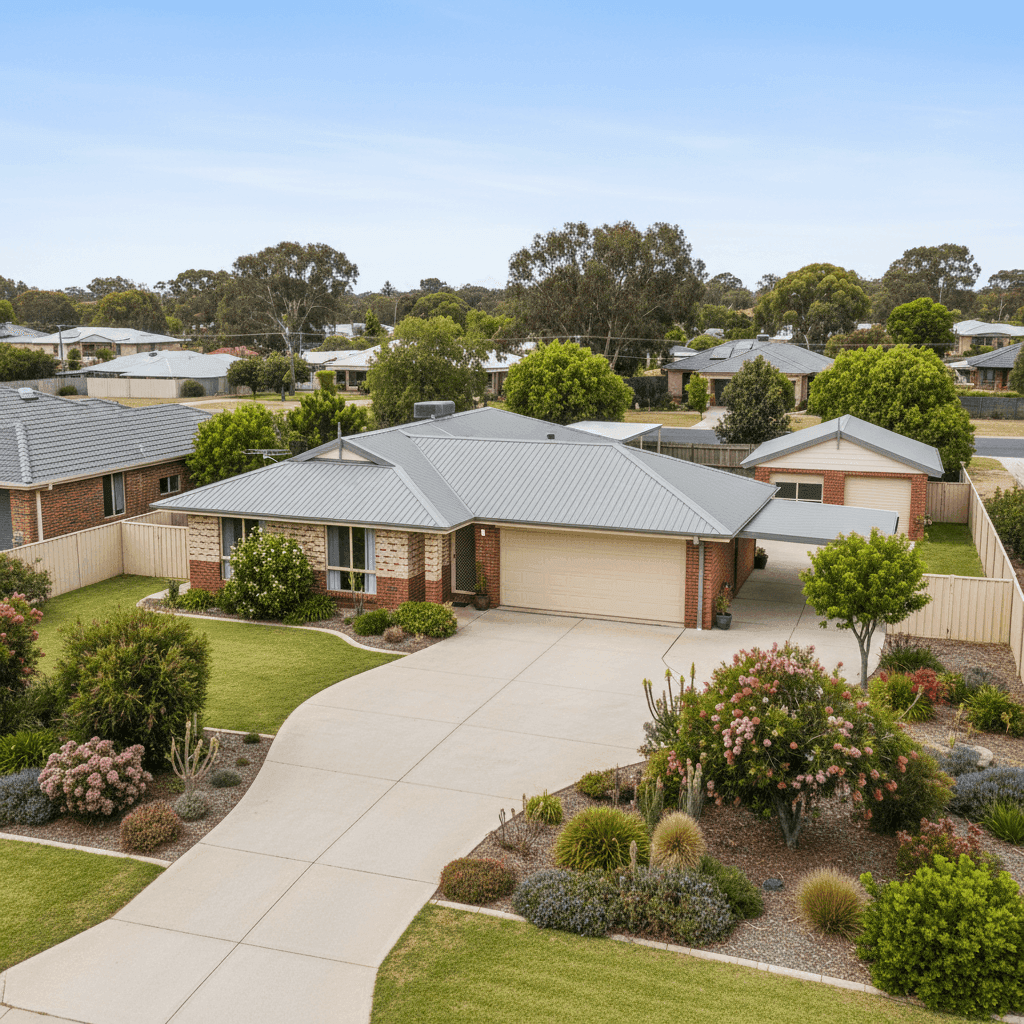
If you own a free standing home in Glenfield, WA 6532, you're probably wondering whether the premium you've been quoted is competitive — or whether you're leaving money on the table. This article breaks down a real home and contents insurance quote for a four-bedroom, two-bathroom brick veneer property in Glenfield, benchmarking it against suburb, state, and national data so you can make a genuinely informed decision.
---
Is This Quote Fair?
The quote in question comes to $3,798 per year (or $357 per month) for combined home and contents cover, with a $700,000 building sum insured and $130,000 in contents cover. Both the building and contents excesses are set at $500.
Our price rating for this quote is FAIR — Around Average, and the data backs that up. At $3,798 per year, this premium sits comfortably within the middle of the range for comparable properties in Glenfield. It's notably below the suburb average of $4,267 and the suburb median of $4,425, which means the policyholder is actually doing better than most of their neighbours. However, it does exceed the suburb's 25th percentile of $3,539 — so there's still some room to explore whether a sharper price is achievable with a different insurer.
In short: this isn't a bargain, but it's not an overpriced policy either. It's a reasonable premium for the coverage on offer.
---
How Glenfield Compares
Understanding where your premium sits relative to broader benchmarks is one of the most useful things you can do as a homeowner. Here's how Glenfield stacks up:
| Benchmark | Premium |
|---|---|
| This Quote | $3,798/yr |
| Glenfield Suburb Average | $4,267/yr |
| Glenfield Suburb Median | $4,425/yr |
| Glenfield 25th Percentile | $3,539/yr |
| Glenfield 75th Percentile | $4,961/yr |
| WA State Average | $2,811/yr |
| WA State Median | $2,127/yr |
| National Average | $5,347/yr |
| National Median | $2,764/yr |
| Shark Bay LGA Average | $5,859/yr |
(Based on [15 quotes collected for Glenfield](https://coverclub.com.au/stats/WA/6532/glenfield). View [WA state stats](https://coverclub.com.au/stats/WA) or [national stats](https://coverclub.com.au/stats/national).)
A few things stand out here. First, Glenfield premiums are noticeably higher than the broader WA state average — the suburb average of $4,267 is more than 50% above the state average of $2,811. This reflects the specific risk profile of the region, including its coastal proximity and the general characteristics of older housing stock in the area.
Second, the Shark Bay LGA average of $5,859 per year is a striking figure — well above both the suburb and national averages. This suggests that properties across the broader LGA carry elevated risk in the eyes of insurers, making this particular quote of $3,798 look even more competitive by comparison.
On a national level, this quote actually comes in well below the national average of $5,347, though it exceeds the national median of $2,764 — which reflects the fact that many lower-risk, lower-value properties across Australia pull that median down.
---
Property Features That Affect Your Premium
Several characteristics of this property directly influence what insurers are willing to charge. Here's what's most relevant:
Brick Veneer Walls & Colorbond Roof Brick veneer is generally viewed favourably by insurers — it's durable, fire-resistant, and widely used across Australian suburbs. Combined with a steel Colorbond roof, this property has a construction profile that tends to attract standard or below-average risk ratings. Colorbond roofing in particular is well-regarded for its longevity and resistance to corrosion, which matters in coastal and semi-coastal environments like Glenfield.
Construction Year: 1976 At nearly 50 years old, this home is considered an older build. Older properties can attract higher premiums due to the increased likelihood of wear in plumbing, wiring, and structural components. Insurers may price in a greater risk of claims related to these systems, so keeping up with maintenance is genuinely important — not just for safety, but for your insurability.
Slab Foundation & Tile Flooring A concrete slab foundation is a solid, low-maintenance option that insurers generally view as low-risk. Tiled flooring throughout is similarly low-maintenance and resistant to water damage, which can work in your favour when it comes to contents and building claims.
214 sqm Building Size At 214 square metres, this is a comfortably sized family home. The $700,000 building sum insured reflects the cost to rebuild at current construction rates — a figure that's worth reviewing annually given how significantly building costs have risen in recent years across regional WA.
Granny Flat The presence of a granny flat adds complexity to the insurance picture. Whether it's used for family, rented out, or simply used as additional living space, it adds to the total rebuild cost and may affect contents coverage. It's worth confirming with your insurer that the granny flat is explicitly included in your policy — not all standard policies cover secondary dwellings without an endorsement.
Ducted Climate Control Ducted air conditioning is a meaningful fixed asset that contributes to the building's insured value. It also represents a potential claim risk if it fails due to a covered event, so ensuring it's adequately covered under your building sum insured is worthwhile.
---
Tips for Homeowners in Glenfield
1. Review your building sum insured annually Construction costs in regional WA have climbed significantly. A sum insured that was accurate two or three years ago may now leave you underinsured. Use a building cost calculator or speak with a local builder to sanity-check your $700,000 figure — especially given the granny flat adds to your total rebuild exposure.
2. Confirm granny flat coverage explicitly Don't assume your granny flat is automatically covered. Ask your insurer directly whether the secondary dwelling is included in the building sum insured and whether any contents within it are covered under your contents policy. If it's rented out, you may need a separate landlord policy for that structure.
3. Shop around — even when your quote seems fair A "fair" rating means you're around the average, not at the best available price. Given the 25th percentile for Glenfield sits at $3,539 per year, there's a meaningful gap between what you're paying and what the most competitive quotes in your suburb look like. Comparing quotes at CoverClub takes only a few minutes and could surface a better deal.
4. Maintain the property to protect your claims history Older homes like this one benefit enormously from proactive upkeep. Keeping gutters clear, maintaining the roof, and ensuring plumbing and electrical systems are up to date can reduce the likelihood of claims — and a clean claims history often translates to lower premiums over time.
---
Ready to Compare?
Whether you're renewing your current policy or shopping for the first time, it pays to see what else is available. At CoverClub, you can get a home and contents insurance quote in minutes and compare it against real data from your suburb. With Glenfield premiums ranging from $3,539 to $4,961 depending on the insurer, the difference between the cheapest and most expensive options is significant — and the only way to know where you stand is to compare.