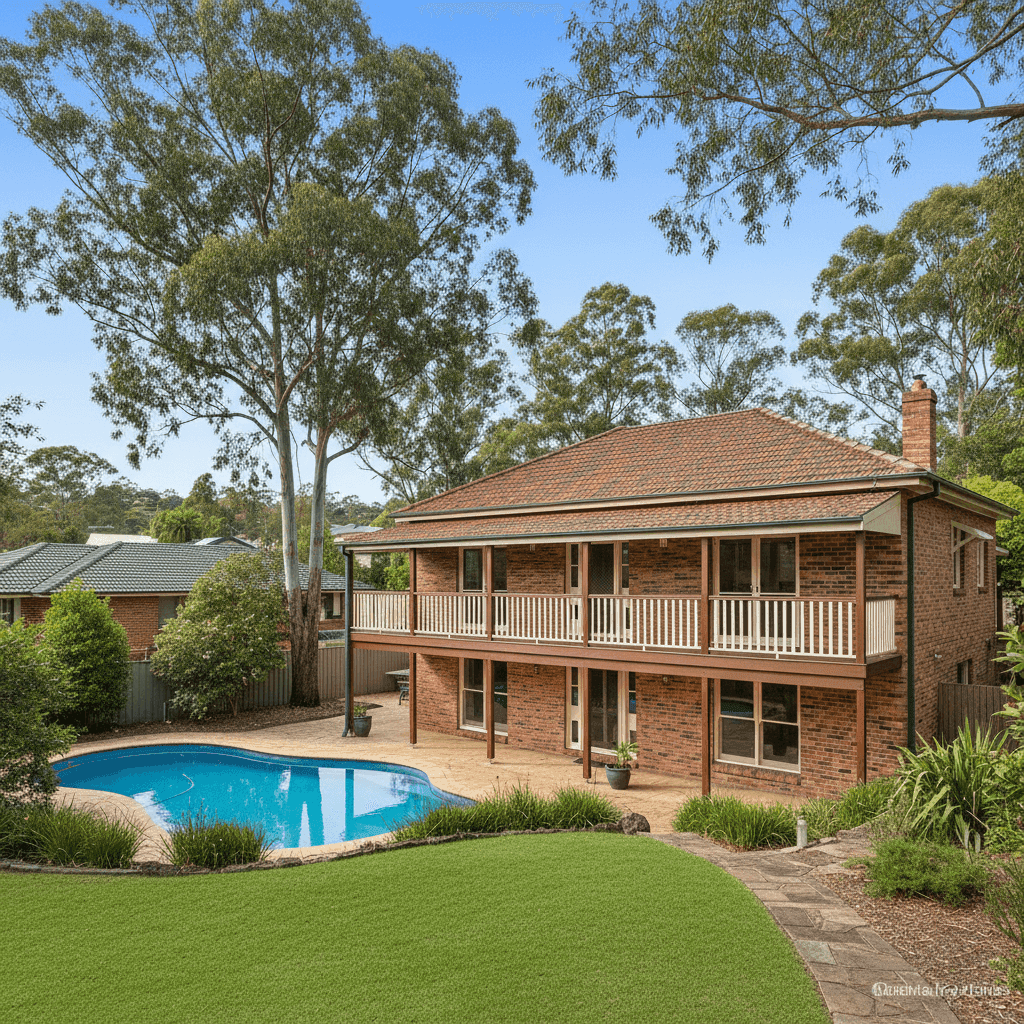
If you own a free standing home in Glenhaven, NSW 2156, you'll know that this leafy Hills District suburb commands a premium lifestyle — and, as it turns out, a premium insurance bill to match. This article breaks down a real home and contents insurance quote for a four-bedroom, four-bathroom brick veneer property in Glenhaven, compares it against local, state and national benchmarks, and offers practical advice for keeping your cover costs in check.
---
Is This Quote Fair?
The quote in question comes in at $6,868 per year (or $696/month) for combined home and contents cover, with a building sum insured of $1,363,000 and contents valued at $80,000. The building excess is $2,500 and the contents excess $500.
Our price rating for this quote is Expensive — Above Average.
To understand why, it helps to look at the numbers in context. The average home insurance premium across Glenhaven sits at $4,655 per year, with a median of $4,678. This quote lands well above both figures — and even clears the suburb's 75th percentile of $5,802/yr, meaning it's pricier than at least three-quarters of comparable quotes in the area.
That said, "expensive" doesn't automatically mean "wrong." A building sum insured of $1,363,000 is substantial, and several features of this property — discussed below — legitimately push premiums upward. The key question every homeowner should ask is: am I paying more than I need to for the cover I actually have?
---
How Glenhaven Compares
Understanding where Glenhaven sits in the broader insurance landscape is useful context for any homeowner reassessing their policy.
| Benchmark | Average Premium | Median Premium |
|---|---|---|
| Glenhaven (NSW 2156) | $4,655/yr | $4,678/yr |
| Hornsby LGA | $3,958/yr | — |
| NSW (State) | $9,528/yr | $3,770/yr |
| National | $5,347/yr | $2,764/yr |
(Based on [Glenhaven suburb data](https://coverclub.com.au/stats/NSW/2156/glenhaven), [NSW state data](https://coverclub.com.au/stats/NSW), and [national benchmarks](https://coverclub.com.au/stats/national) from CoverClub.)
A few things stand out here. NSW's average premium of $9,528 is dramatically higher than the median of $3,770 — a classic sign that a relatively small number of high-value properties or high-risk locations are pulling the average up significantly. Glenhaven's figures are more tightly clustered (average $4,655 vs median $4,678), suggesting a fairly consistent risk profile across the suburb.
Compared to the broader Hornsby LGA average of $3,958, Glenhaven premiums run slightly higher — likely reflecting the area's larger homes, elevated land values, and the higher rebuild costs that come with them.
At the national level, the median of $2,764 is a reminder of just how much location matters in Australian home insurance pricing. Homeowners in coastal, bushfire-prone, or flood-affected areas routinely pay multiples of what someone in a low-risk metropolitan suburb might pay.
---
Property Features That Affect Your Premium
Several characteristics of this particular property help explain why its quote sits above the suburb average.
High building sum insured ($1,363,000) This is arguably the single biggest driver. A larger sum insured means greater potential liability for the insurer, and premiums scale accordingly. For a 244 sqm home with above-average fittings, this figure reflects the true cost of rebuilding to the same standard — not the market value of the property.
Above-average fittings quality Kitchens, bathrooms and fixtures that exceed the standard specification cost more to replace. With four bathrooms in this home, that exposure is compounded. Insurers price this risk into the premium.
Elevated foundation (stumps, at least 1m) Homes on stumps or raised foundations are more exposed to underfloor damage, particularly from moisture, pests and movement. Some insurers apply a loading for this build type, especially in combination with timber and laminate flooring, which can be more susceptible to water ingress.
Swimming pool A pool adds to the insured value of the property and introduces additional liability considerations, contributing modestly to the overall premium.
Brick veneer construction with tiled roof (built 1985) Brick veneer is generally well-regarded by insurers for its fire resistance and durability, which helps moderate the premium. However, a home built in 1985 is now approaching 40 years old, and insurers may apply age-related loadings for older properties, particularly around plumbing, electrical systems and roofing integrity.
No cyclone risk, no solar panels On the positive side, Glenhaven is not in a cyclone risk zone, and the absence of solar panels removes one potential source of claims complexity. These factors help keep the premium lower than it might otherwise be.
---
Tips for Homeowners in Glenhaven
1. Review your building sum insured regularly Construction costs have risen sharply in recent years. If your sum insured hasn't been updated to reflect current rebuild costs, you could be underinsured — or, conversely, paying premiums on an inflated figure. Use a quantity surveyor or your insurer's calculator to validate the number annually.
2. Consider a higher excess to reduce your premium The building excess on this policy is $2,500. If you have the financial buffer to absorb a larger out-of-pocket cost in the event of a claim, opting for a higher excess can meaningfully reduce your annual premium. This is especially worth considering for a well-maintained property where major claims are less likely.
3. Ask about discounts for security and safety features Many insurers offer reduced premiums for homes with monitored alarm systems, deadbolts, or fire suppression equipment. If your home has these features, make sure your insurer knows — and if it doesn't, some modest upgrades could pay for themselves in premium savings over time.
4. Compare quotes before your renewal date Loyalty doesn't always pay in the insurance market. Insurers frequently offer their best rates to new customers, meaning long-term policyholders can end up paying significantly more than necessary. Shopping the market annually — ideally a few weeks before renewal — gives you the best chance of finding a competitive rate without any gap in cover.
---
Ready to See What You Could Be Paying?
Whether you think your current premium is fair or suspect you're paying too much, the best way to know for certain is to compare. CoverClub makes it easy to benchmark your home insurance against real quotes from across Australia — no obligation, no jargon.