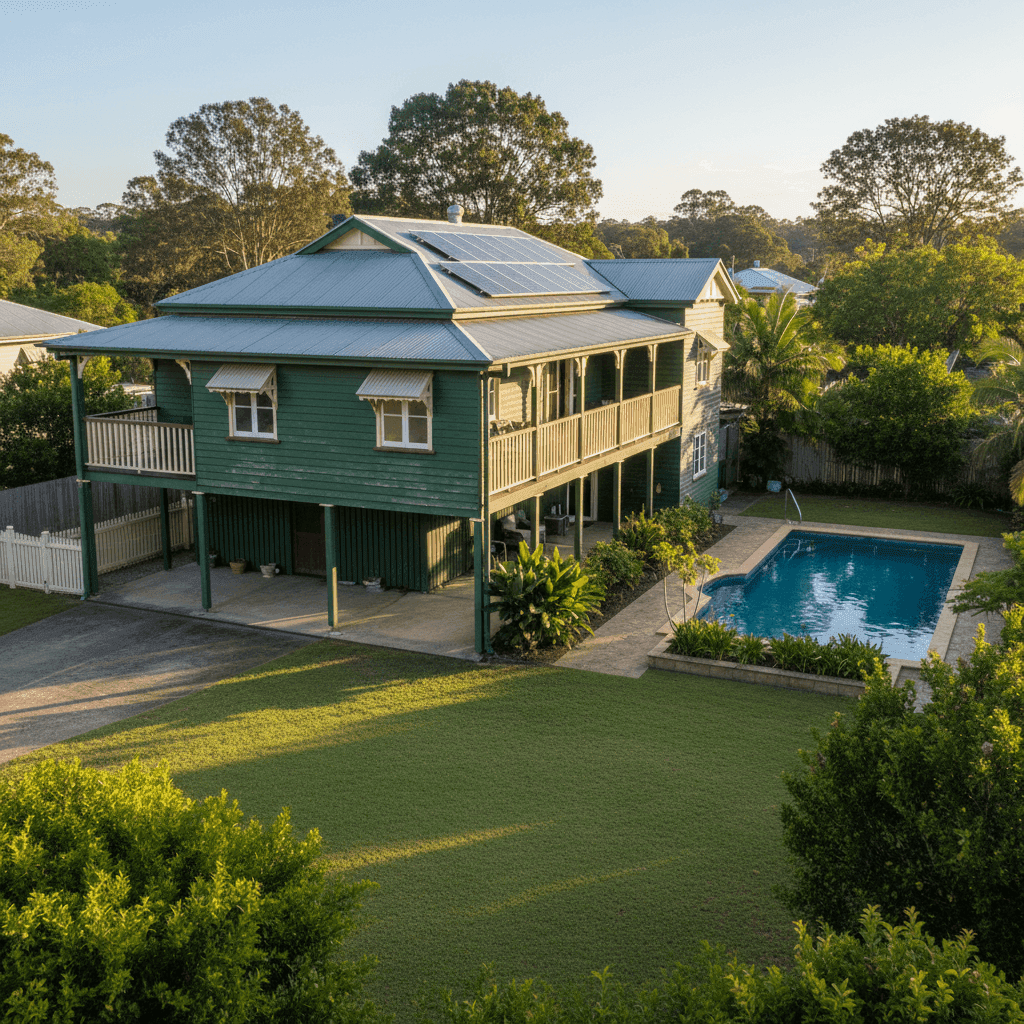
Glenlogan is a quiet residential suburb in the City of Logan, southeast Queensland, known for its leafy streets and family-friendly atmosphere. If you own a four-bedroom free standing home here — particularly one built in the late 1990s with weatherboard timber walls, a Colorbond roof, and elevated stumped foundations — understanding what you should be paying for home and contents insurance is genuinely valuable. This article breaks down a real quote of $4,371 per year (or $412/month) for a property in postcode 4280, comparing it against local, state, and national benchmarks to help you make a more informed decision.
---
Is This Quote Fair?
The short answer: this quote is rated Expensive — above average for the Glenlogan area.
At $4,371 annually, this premium sits noticeably above the suburb average of $2,612/yr and the suburb median of $2,408/yr. In fact, it lands well above the 75th percentile for the suburb, which sits at $3,413/yr — meaning this quote is pricier than at least three-quarters of comparable quotes in the area.
That said, context matters. The sum insured for the building is set at $1,120,000, and contents are covered for $200,000 — both of which are on the higher end and will naturally push the premium up. The property also has several features (more on those below) that insurers typically price as higher risk or higher replacement cost. So while the headline figure looks steep compared to local norms, it's not necessarily out of line once the full picture is considered.
Both the building and contents excess are set at $1,000, which is a fairly standard level. Opting for a higher excess could bring the annual premium down if cash flow is a priority.
---
How Glenlogan Compares
To put this quote in perspective, here's how it stacks up across different geographic benchmarks:
| Benchmark | Average Premium | Median Premium |
|---|---|---|
| Glenlogan (4280) | $2,612/yr | $2,408/yr |
| LGA – Logan | $4,617/yr | — |
| Queensland | $9,129/yr (avg) | $3,903/yr |
| National | $5,347/yr (avg) | $2,764/yr |
(Based on a sample of 19 quotes in the Glenlogan suburb. See [QLD insurance stats](https://coverclub.com.au/stats/QLD) and [national insurance stats](https://coverclub.com.au/stats/national) for broader context.)
A few things stand out here. Queensland's average premium of $9,129/yr is dramatically higher than the median of $3,903/yr — a sign that a relatively small number of very expensive properties (think flood-prone areas, cyclone zones, or high-value homes on the coast) are pulling the average up significantly. The median is almost always a more reliable guide for typical homeowners.
Against the Logan LGA average of $4,617/yr, this quote of $4,371/yr is actually slightly below average — which reframes things somewhat. Logan as a local government area tends to attract higher premiums than the Glenlogan suburb specifically, likely due to greater flood and weather risk exposure across the broader region.
Nationally, the median sits at $2,764/yr, so this quote is above the typical Australian homeowner's experience — but again, the property's high sum insured and specific features play a meaningful role.
---
Property Features That Affect Your Premium
Several characteristics of this property are likely contributing to a higher-than-average premium. Here's what insurers are likely factoring in:
Weatherboard timber walls are a known risk factor. Timber is more susceptible to fire, termite damage, and general wear than brick veneer or double brick construction. Insurers typically charge more to cover timber-framed homes, and replacement costs can be significant.
Elevated on stumps is a double-edged sword. On one hand, being elevated by at least one metre can reduce flood inundation risk — a real concern in parts of Logan. On the other, stumped foundations add complexity to building repairs and can mean higher labour and material costs if structural work is needed.
Steel/Colorbond roof is generally viewed favourably by insurers. It's durable, fire-resistant, and performs well in storms compared to older tile roofs. This likely has a neutral-to-positive effect on the premium.
Above-average fittings quality directly increases the cost to rebuild or repair. High-spec kitchens, quality flooring, and premium fixtures all lift the sum insured — and by extension, the premium.
Swimming pool adds liability exposure and increases the insured value of the property. Most insurers factor this into their pricing.
Solar panels represent a significant asset that needs to be covered. At current prices, a full solar system can cost $10,000–$20,000 or more to replace, which is reflected in the sum insured.
Ducted climate control is another high-value fixture. Ducted systems are expensive to repair or replace and are typically included in the building sum insured.
Timber/laminate flooring is generally less costly to replace than stone or tiles, but still adds to overall contents and building value.
Taken together, this is a well-appointed, elevated timber home with a pool, solar, and ducted air conditioning — exactly the kind of property that attracts a premium above the suburb median.
---
Tips for Homeowners in Glenlogan
1. Review your sum insured carefully A sum insured of $1,120,000 is substantial. Make sure it reflects the actual cost to rebuild — not the market value of the property. Over-insuring inflates your premium without adding real benefit. Use a building cost calculator or get a professional assessment to verify the figure is appropriate.
2. Compare at least three quotes With only 19 quotes in the suburb sample, there's meaningful variation in what different insurers will charge for the same property. Prices at the 25th percentile in Glenlogan are as low as $1,884/yr — a significant gap from the 75th percentile of $3,413/yr. Shopping around via a comparison platform like CoverClub can surface materially cheaper options.
3. Consider your excess level The current excess is set at $1,000 for both building and contents. Increasing this to $2,000 or more can reduce your annual premium noticeably. If you have an emergency fund and are unlikely to make small claims, a higher excess is often a smart trade-off.
4. Check what's included for your pool and solar Not all policies treat pools and solar panels the same way. Some insurers include them automatically in the building sum insured; others require specific endorsements. Read your Product Disclosure Statement (PDS) carefully to confirm these assets are fully covered — and that the coverage limits are adequate given current replacement costs.
---
Compare Your Options with CoverClub
Whether this quote feels right or a little steep, it's always worth seeing what else is available. CoverClub makes it easy to compare home and contents insurance quotes from multiple Australian insurers in one place — so you can see exactly where your premium sits and whether there's a better deal out there. Get a quote today and find out what Glenlogan homeowners are actually paying.