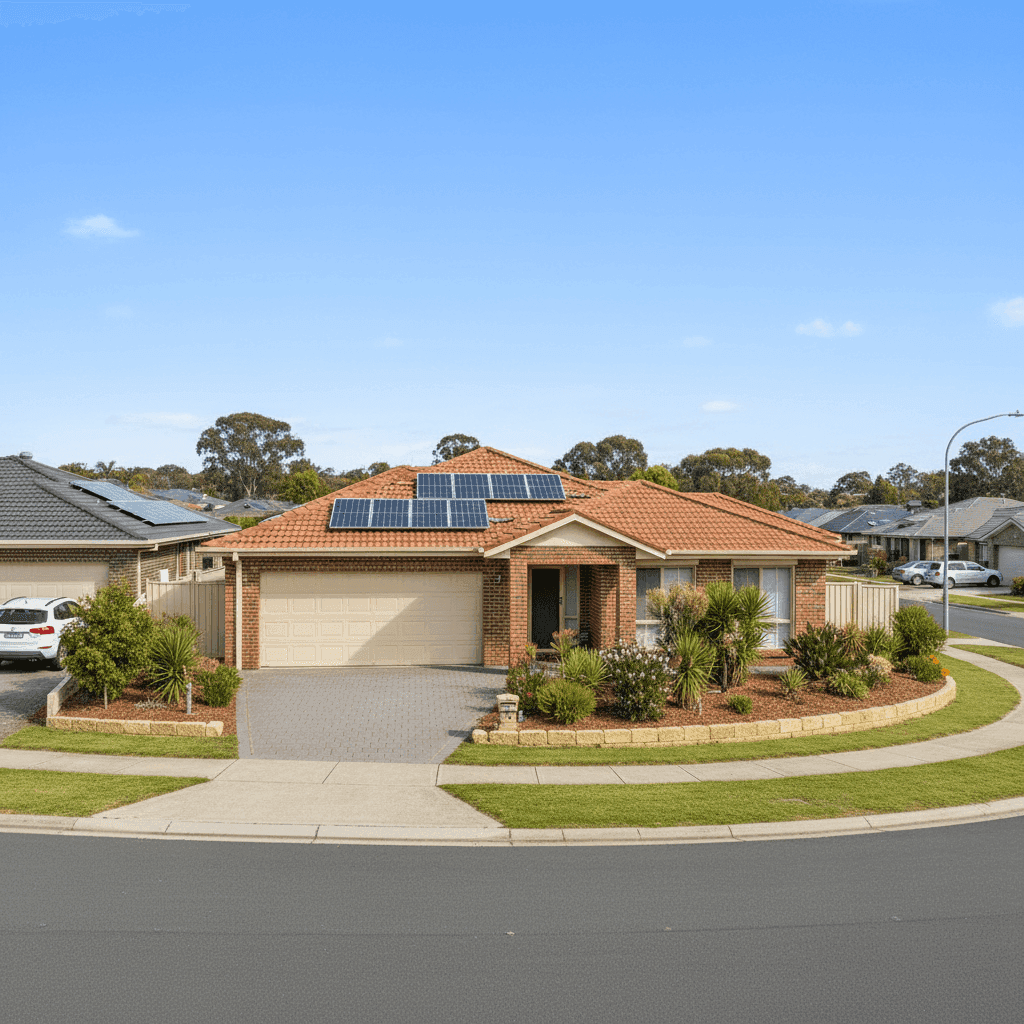
Glenmore Park is one of Western Sydney's most popular family-friendly suburbs, sitting at the foot of the Blue Mountains in the Penrith local government area. With its mix of well-established brick homes, good schools, and easy motorway access, it's a suburb that attracts plenty of owner-occupiers — and with that comes the important question of how much you should expect to pay for home and contents insurance.
This article breaks down a recent insurance quote for a five-bedroom free standing home in Glenmore Park (postcode 2745), comparing it against local, state, and national benchmarks to help you understand whether you're getting a fair deal.
---
Is This Quote Fair?
The quote in question comes in at $1,819 per year (or $176/month) for combined home and contents cover, with a building sum insured of $501,000 and contents valued at $175,000. Both the building and contents excess sit at $1,000.
Our price rating for this quote is FAIR — Around Average.
That assessment holds up well under scrutiny. The premium sits below the suburb average of $2,005/yr and below the suburb median of $1,948/yr, meaning this homeowner is paying less than what most comparable properties in Glenmore Park are quoted. It's not in the cheapest bracket — the 25th percentile for the suburb sits at $1,458/yr — but it's comfortably within the middle range, which is exactly what "fair" means in practice.
For a five-bedroom home with a sizeable building sum insured and a solid contents value, landing below the local average is a reasonable outcome.
---
How Glenmore Park Compares
To put this quote in proper context, it helps to zoom out and look at the broader picture. Here's how the $1,819/yr premium stacks up across different comparison points:
| Benchmark | Premium |
|---|---|
| This Quote | $1,819/yr |
| Glenmore Park Suburb Average | $2,005/yr |
| Glenmore Park Suburb Median | $1,948/yr |
| Glenmore Park 25th Percentile | $1,458/yr |
| Glenmore Park 75th Percentile | $2,583/yr |
| Wollondilly LGA Average | $3,670/yr |
| NSW State Average | $3,801/yr |
| NSW State Median | $3,410/yr |
| National Average | $2,965/yr |
| National Median | $2,716/yr |
The standout figure here is just how much lower Glenmore Park premiums are compared to the rest of NSW. The NSW state average sits at $3,801/yr — more than double what this homeowner is paying. Even the national average of $2,965/yr is significantly higher than the local suburb median.
This reflects the relatively low-risk profile of the Glenmore Park area. It's not prone to cyclones, it sits outside the major flood corridors that drive up premiums in many parts of NSW, and the suburb's housing stock is generally modern and well-constructed. Homeowners in Glenmore Park are, broadly speaking, benefiting from a favourable risk environment.
It's also worth noting the Wollondilly LGA average of $3,670/yr. While Glenmore Park falls within the Penrith LGA rather than Wollondilly, this figure is a useful reminder that not all Western Sydney and Greater Blue Mountains postcodes are treated equally by insurers. Explore detailed suburb-level stats for Glenmore Park here.
---
Property Features That Affect Your Premium
Every insurer assesses risk based on the specific characteristics of a property, and this home has a profile that generally works in the owner's favour.
Brick veneer construction is one of the most common wall types in Australian suburban homes, and insurers tend to treat it favourably. It's durable, relatively fire-resistant, and widely understood in terms of repair and replacement costs — all of which can keep premiums in check compared to, say, weatherboard or lightweight cladding.
Tiled roofing similarly signals lower risk to underwriters. Tiles are long-lasting and perform well in most weather conditions, unlike older corrugated iron or asphalt shingles that may require more frequent attention.
A concrete slab foundation, combined with tiled flooring throughout, rounds out a construction profile that is straightforward for insurers to price. There are no heritage complications, no unusual materials, and no elevated subfloor to worry about.
The home also features solar panels and ducted climate control — both of which add value to the property and are worth ensuring are properly covered under the building sum insured. Solar panel systems can cost $8,000–$20,000 or more to replace, so it's important to verify that your policy explicitly covers them (most standard home insurance policies do, but it's worth confirming).
The 1999 construction year places this home in a cohort that is modern enough to meet reasonably contemporary building standards, but old enough that some components — roofing, hot water systems, electrical — may be approaching the end of their useful life. This is something to keep in mind when reviewing your sum insured over time.
At 214 sqm, this is a generously sized home for a suburban block, and the $501,000 building sum insured reflects that scale. It's always worth cross-checking your sum insured against current construction costs, which have risen sharply in recent years.
---
Tips for Homeowners in Glenmore Park
1. Review your building sum insured annually Construction costs in NSW have increased significantly since 2020. A sum insured that was appropriate a few years ago may no longer be sufficient to fully rebuild your home today. Use a building cost calculator or speak with a quantity surveyor if you're unsure — underinsurance is one of the most common and costly mistakes homeowners make.
2. Confirm your solar panels are covered Solar panel systems are a meaningful asset, and not all policies treat them the same way. Check whether your insurer covers panels as part of the building, whether storm or hail damage is included, and what the claim process looks like. If your policy documentation is vague on this point, it's worth calling your insurer directly.
3. Consider the value of a higher excess The $1,000 excess on this policy is standard, but opting for a higher excess (say, $2,000 or $2,500) can meaningfully reduce your annual premium. If you have the financial buffer to absorb a larger out-of-pocket cost in the event of a claim, this trade-off can make good sense — particularly for a property in a relatively low-risk suburb.
4. Shop around at renewal time Insurance loyalty rarely pays off. Insurers frequently offer their best rates to new customers, meaning long-term policyholders can find themselves quietly paying above-market premiums. Set a reminder to compare quotes each year before your renewal date — even if you ultimately stick with your current insurer, you'll know you're getting a competitive rate.
---
Compare Your Home Insurance Quote
Whether you're buying a new policy or reviewing your existing cover, it pays to see what's available in the market. CoverClub makes it easy to compare home and contents insurance quotes for properties across Glenmore Park and the rest of Australia — so you can make a confident, informed decision. Get a quote today at CoverClub and see how your premium stacks up.