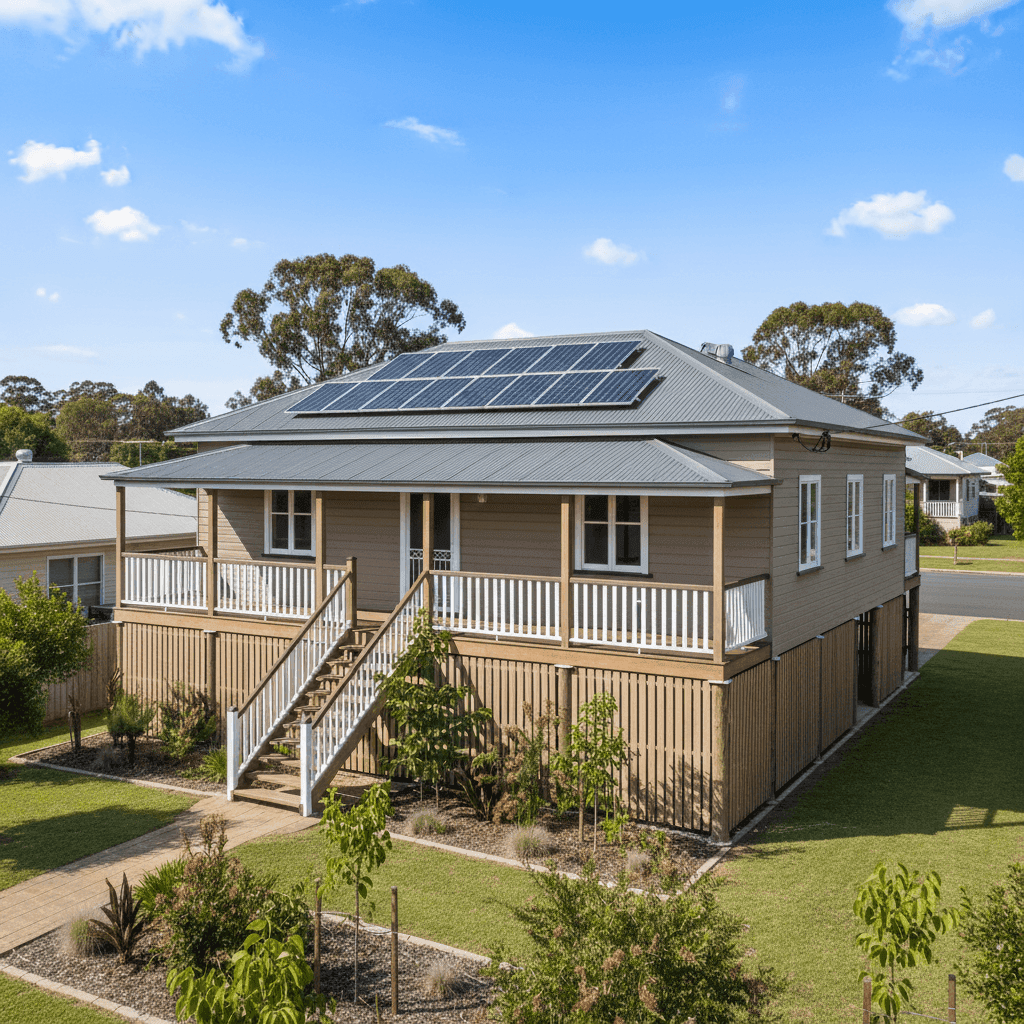
Glenreagh is a quiet rural township in the Clarence Valley region of New South Wales, sitting roughly 40 kilometres inland from Coffs Harbour. It's home to a mix of older character properties and rural lifestyle blocks — and if you own a free standing home here, understanding what you should be paying for insurance is well worth your time. This article breaks down a real home and contents insurance quote for a 3-bedroom, 2-bathroom free standing home in Glenreagh (postcode 2450), and puts the numbers in context so you can make an informed decision.
---
Is This Quote Fair?
The quote in question comes in at $4,869 per year (or $467 per month) for combined home and contents cover, with a building sum insured of $750,000 and contents valued at $489,000. Both the building and contents excess sit at $1,000.
Our price rating for this quote is FAIR — Around Average, which is a reasonable outcome for a property with this profile. It's not a bargain, but it's also not cause for concern. Given the age of the home (built in 1953), its weatherboard timber construction, and the elevated stumped foundation, insurers have a number of risk factors to weigh up — and a "fair" rating suggests this premium is broadly in line with what the market is charging for comparable properties.
That said, "fair" doesn't mean you can't do better. It simply means this quote is sitting close to the middle of the market rather than at the expensive end.
---
How Glenreagh Compares
To put this $4,869 annual premium into perspective, here's how it stacks up against suburb, state, and national benchmarks:
| Benchmark | Average | Median |
|---|---|---|
| Glenreagh (2450) | $6,032/yr | $4,964/yr |
| NSW | $9,528/yr | $3,770/yr |
| National | $5,347/yr | $2,764/yr |
| Clarence Valley LGA | $31,244/yr | — |
A few things stand out here. First, the Clarence Valley LGA average of $31,244 per year is extraordinarily high — this is almost certainly driven by flood-prone and high-risk properties within the broader LGA pulling the average up significantly. Glenreagh itself sits in a more favourable position, with a suburb average of $6,032 and a median of $4,964.
The quote of $4,869 comes in below both the suburb average and suburb median, which is a positive sign. It also sits below the NSW state average of $9,528, though it's worth noting the NSW median is $3,770 — meaning roughly half of quotes across the state come in cheaper. This reflects the enormous variation in premiums across NSW, from coastal flood zones to low-risk inland suburbs.
Nationally, the average is $5,347, so this quote is also below that benchmark. The national median of $2,764 is considerably lower, but that figure is heavily influenced by lower-risk urban properties in states like Victoria and South Australia.
The suburb's 25th–75th percentile range of $3,172 to $8,619 tells you there's a wide spread of pricing in the area. This quote sits comfortably within that band, closer to the cheaper half — which aligns with the "fair" rating.
---
Property Features That Affect Your Premium
Several characteristics of this property directly influence what insurers charge. Understanding them helps you anticipate costs and potentially reduce them.
Age and construction (1953, weatherboard timber walls) Homes built in the early 1950s are well outside the modern building code era. Weatherboard timber construction, while charming and common in regional NSW, is considered higher risk by insurers due to its susceptibility to fire, rot, and pest damage compared to brick or rendered masonry. This is one of the more significant premium drivers for this property.
Elevated on stumps Being elevated by at least one metre on a stumped foundation is actually a double-edged sword. On the positive side, it reduces flood inundation risk — water is less likely to damage the structure or floor coverings. However, stumped homes can be more vulnerable to subfloor issues, and some insurers apply loadings for this construction type. Overall, the elevation likely works in this homeowner's favour in a region where flooding is a genuine concern.
Steel/Colorbond roof A Colorbond roof is viewed favourably by most insurers. It's durable, fire-resistant, and low maintenance compared to terracotta tiles or older corrugated iron. This is likely a modest positive factor in the premium calculation.
Solar panels The presence of solar panels adds a small amount to the insured value of the property and can introduce additional risk considerations (electrical faults, storm damage). Most insurers cover rooftop solar as part of the building, but it's worth confirming this is explicitly included in your policy.
Timber and laminate flooring Timber floors in an older elevated home can be costly to repair or replace following water ingress or pest damage. With contents valued at $489,000, ensuring your policy clearly covers floor coverings and built-in fixtures is important.
No pool, no ducted climate control, not in a cyclone risk area The absence of a pool and ducted air conditioning simplifies the risk profile slightly. And being outside a designated cyclone risk zone is a meaningful advantage — cyclone premiums in northern Queensland, for example, can be many multiples of what's quoted here.
---
Tips for Homeowners in Glenreagh
1. Review your sum insured carefully A building sum insured of $750,000 for a 169 sqm home built in 1953 is on the higher end. Make sure this figure reflects the actual cost to rebuild — not the market value of the land and home combined. Overinsuring pushes your premium up unnecessarily, while underinsuring leaves you exposed. Use a building cost calculator or speak to a local builder to get a realistic estimate.
2. Shop around — especially given the LGA pricing spread The Clarence Valley LGA has enormous premium variation. With a 25th percentile of $3,172 in the suburb, there are clearly cheaper quotes available in Glenreagh. Getting at least three comparable quotes before renewing is a straightforward way to potentially save hundreds of dollars per year.
3. Check your contents valuation $489,000 in contents cover is substantial. Walk through your home and genuinely assess whether that figure is accurate. Many homeowners overestimate contents value, particularly in older homes with standard fittings. Reducing contents cover to a realistic amount can meaningfully lower your premium.
4. Ask about discounts for property improvements If you've recently updated the electrical wiring, plumbing, or roof of this older home, some insurers will factor that in. Security upgrades like deadbolts, security screens, and monitored alarms can also attract discounts. It's always worth asking directly.
---
Compare Home Insurance Quotes in Glenreagh
Whether you're reviewing an existing policy or shopping for the first time, comparing quotes is the single most effective way to ensure you're not overpaying. CoverClub makes it easy to see multiple quotes side by side, tailored to your property's specific features. Get a home insurance quote now and see how your current premium stacks up — you might be surprised at what's available.
For more local data, explore Glenreagh suburb insurance stats or browse NSW home insurance benchmarks to understand the broader pricing landscape.