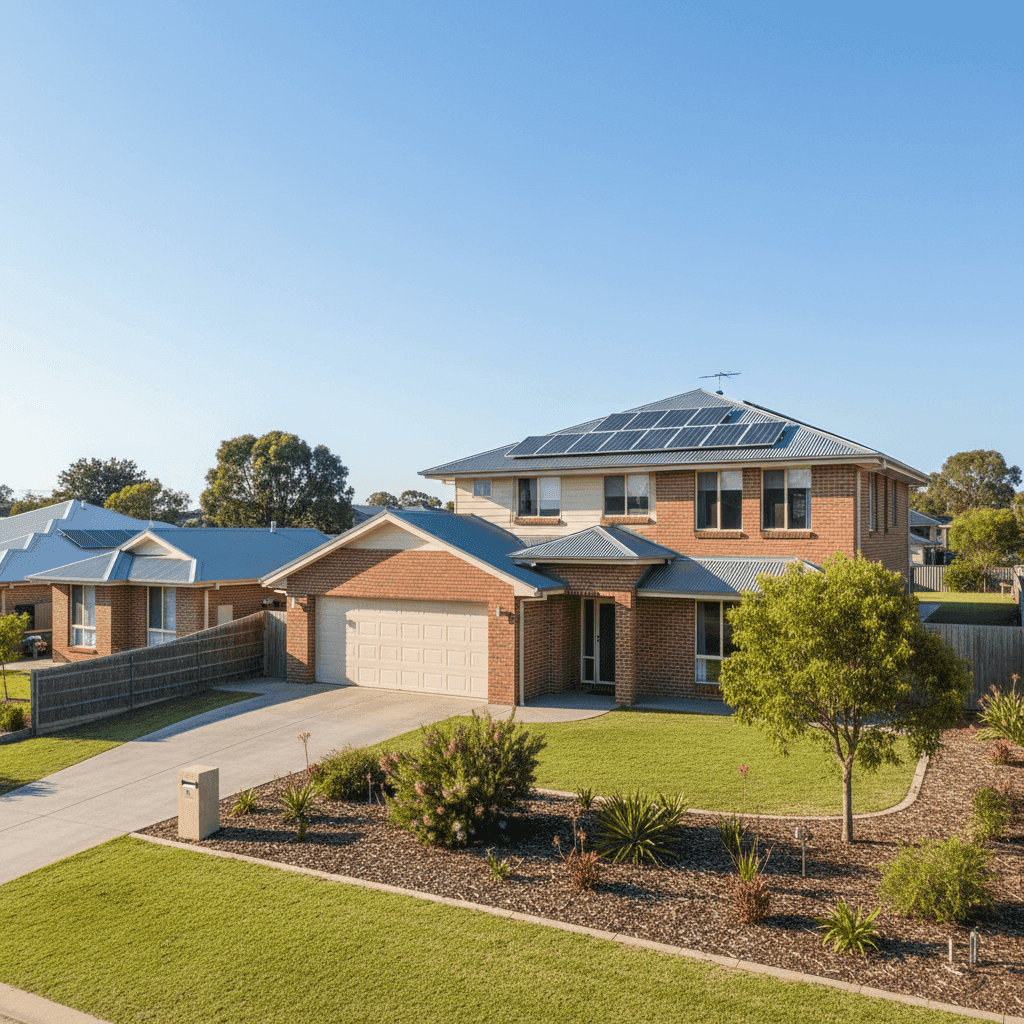
Glenvale is a well-established residential suburb on the western fringe of Toowoomba, known for its spacious family homes and relatively calm weather compared to much of Queensland. If you own a free standing home here — particularly a larger property — understanding what drives your insurance premium can save you hundreds of dollars a year. This article breaks down a real home and contents insurance quote for a 5-bedroom, 4-bathroom property in Glenvale (postcode 4350), comparing it against local, state, and national benchmarks so you know exactly where you stand.
---
Is This Quote Fair?
The quote in question comes in at $3,002 per year (or $281 per month), covering both building and contents for a sizeable home in Glenvale. Our price rating for this quote is Expensive — above average for the suburb.
To put that in perspective, the suburb average premium sits at $1,910 per year, with a median of $1,892. This quote lands well above the 75th percentile for the area ($2,361/yr), meaning it is more expensive than roughly three-quarters of comparable quotes we've seen in this postcode.
That said, context matters enormously here. This is a large home — 334 square metres across five bedrooms and four bathrooms — with a building sum insured of $1,212,000 and $200,000 in contents cover. Both figures are substantially higher than what a typical Glenvale property might be insured for, which naturally pushes the premium upward. A higher replacement value means a higher risk exposure for the insurer, and that's reflected in the price.
So while the premium is above average for the suburb, it's not necessarily unfair given the scale and value of the property being protected. The key question is whether you're getting the right cover at the most competitive price — and that's where shopping around makes a real difference.
---
How Glenvale Compares
Zooming out to a broader view, Glenvale and the wider Toowoomba region are actually among the more affordable areas in Queensland for home insurance — a meaningful advantage given the state's reputation for weather-related risk.
Here's how the numbers stack up:
| Benchmark | Annual Premium |
|---|---|
| Glenvale suburb average | $1,910 |
| Glenvale suburb median | $1,892 |
| Toowoomba LGA average | $2,479 |
| QLD state average | $9,129 |
| QLD state median | $3,903 |
| National average | $5,347 |
| National median | $2,764 |
| This quote | $3,002 |
The contrast with Queensland's state average ($9,129) is striking. Much of that figure is driven by high-risk coastal and cyclone-prone regions in North Queensland, where premiums can be eye-watering. Glenvale, by comparison, is not classified as a cyclone risk area, which keeps local premiums far more manageable.
Even against the national median of $2,764, this quote is only modestly higher — and again, the property's size and sum insured go a long way toward explaining the gap.
You can explore more local data on the Glenvale suburb insurance stats page, compare against the Queensland state overview, or see how it measures up on the national insurance stats page.
---
Property Features That Affect Your Premium
Every property is different, and insurers assess a range of physical characteristics when calculating your premium. Here's how the features of this particular home play into the pricing:
Brick veneer construction and Colorbond roof Brick veneer walls are generally viewed favourably by insurers — they're durable, fire-resistant, and weather-resilient. A steel Colorbond roof is similarly regarded as a solid, low-maintenance roofing material that holds up well in Australian conditions. Together, these materials typically attract more competitive premiums than, say, weatherboard or fibrous cement.
Concrete slab foundation A slab foundation is standard for homes built in this era and region. It offers good structural stability and is less susceptible to subsidence or termite ingress than older suspended timber floors, which can be a positive signal to underwriters.
Tile flooring Tiles are a practical and durable flooring choice, particularly in Queensland's warmer climate. From an insurance perspective, they're relatively low-risk compared to hardwood or carpet, which can be more costly to replace after a water damage event.
Solar panels This property has solar panels installed, which adds a layer of complexity to the building sum insured. Solar systems can cost anywhere from $5,000 to $20,000 or more to replace, and they need to be factored into your building cover. It's worth confirming with your insurer that your panels are explicitly covered under your policy.
Ducted climate control Ducted air conditioning is a significant fixed asset — typically worth $10,000–$25,000 installed. Like solar panels, this should be reflected in your building sum insured to avoid being underinsured in the event of a total loss.
Granny flat The presence of a granny flat adds meaningful value to the property and increases the overall replacement cost. Whether it's used for extended family, rental income, or as a guest space, it must be included in your building sum insured. Some policies treat secondary dwellings differently, so it's worth reading the fine print carefully.
No pool, no cyclone risk zone The absence of a swimming pool removes one source of liability and maintenance risk. And being outside a designated cyclone risk area is a significant premium advantage for Glenvale homeowners compared to their North Queensland counterparts.
---
Tips for Homeowners in Glenvale
1. Review your sum insured annually With a building sum insured of $1,212,000, it's important to ensure this figure keeps pace with construction costs. Building costs in Queensland have risen sharply in recent years, and being underinsured — even slightly — can leave you significantly out of pocket after a major claim. Use a building cost calculator or speak to a quantity surveyor if you're unsure.
2. Confirm your granny flat and solar panels are covered Not all policies automatically extend full cover to secondary structures or rooftop solar systems. Check your Product Disclosure Statement (PDS) carefully, and if in doubt, call your insurer directly to confirm what's included.
3. Shop around at renewal time Insurance loyalty rarely pays. Insurers often offer their best rates to new customers, meaning long-term policyholders can end up paying a premium for staying put. Even if you're happy with your current insurer, getting a comparison quote annually is a simple way to keep your costs in check.
4. Consider your excess strategy This policy carries a $1,000 excess on both building and contents. Opting for a higher excess can meaningfully reduce your annual premium — but make sure the amount is one you could comfortably cover in an emergency. Run the numbers to see if a higher excess makes financial sense for your situation.
---
Find a Better Deal with CoverClub
Whether you're reviewing an existing policy or shopping for cover on a new property, CoverClub makes it easy to compare home and contents insurance quotes tailored to your suburb and property type. With real pricing data from across Australia, you can see exactly how your quote stacks up — and find a better deal if one exists. Get a quote today at CoverClub and make sure your Glenvale home is protected at the right price.