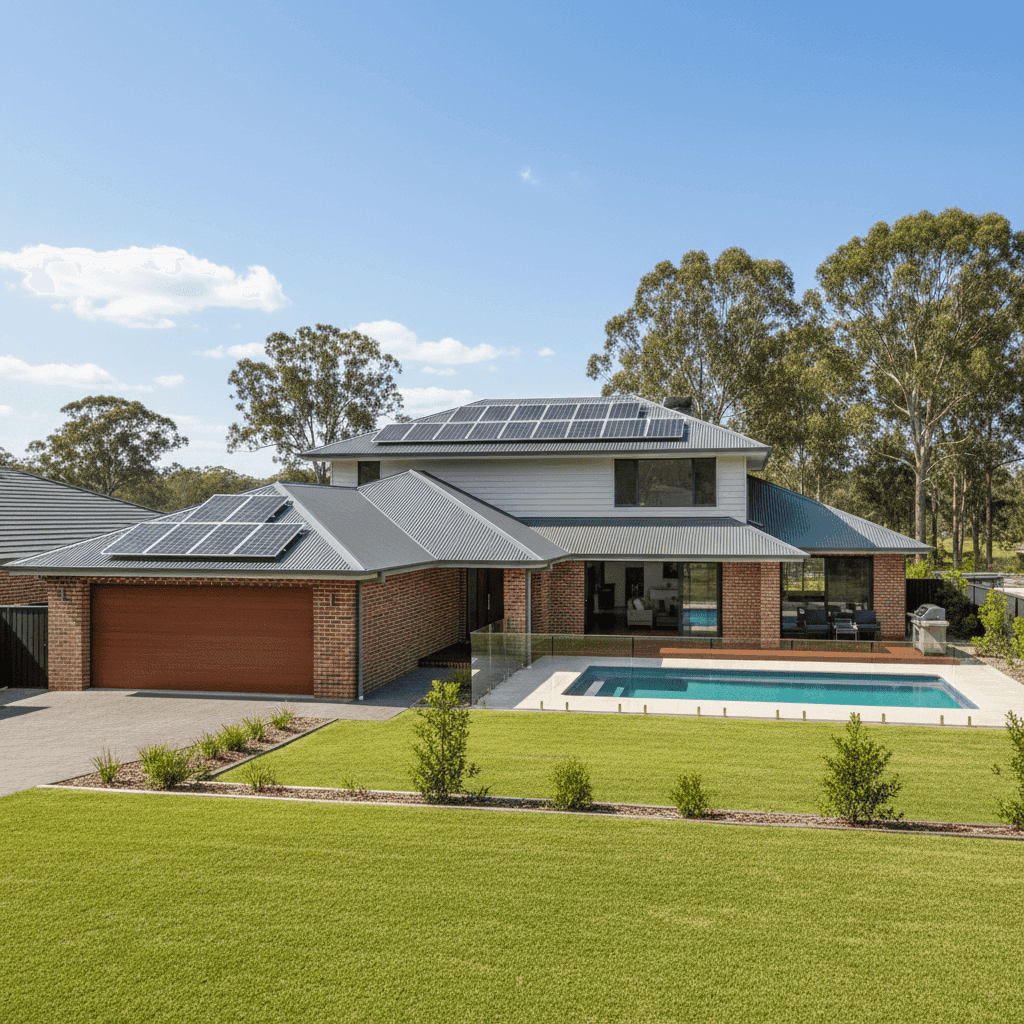
If you own a free standing home in Glenview, QLD 4553, you're probably well aware that home insurance can be a significant household expense — particularly in South East Queensland, where weather events and market pressures keep premiums elevated. This article takes a close look at a real home and contents insurance quote for a four-bedroom, two-bathroom brick veneer home in Glenview, breaking down whether the price stacks up and what factors are likely driving the cost.
---
Is This Quote Fair?
The quote in question comes in at $3,827 per year (or $360/month) for combined home and contents cover, with a building sum insured of $800,000 and contents valued at $50,000. Both the building and contents excess are set at $500.
Our price rating for this quote is FAIR — Around Average.
That assessment holds up well under scrutiny. The quote sits just above the Glenview suburb 25th percentile of $3,735/year, meaning it's slightly more competitive than the cheapest quarter of quotes seen in the area, but still well below the suburb average and median. In other words, this isn't a bargain-basement price, but it's far from the top of the market either — and for a property of this size and value, it represents reasonable value.
When you consider that some Glenview homeowners are paying upwards of $9,342/year (the 75th percentile), this quote looks increasingly attractive. The wide spread of premiums in the suburb reflects just how much individual property characteristics and insurer pricing models can vary.
---
How Glenview Compares
To put this quote in proper context, it helps to see how Glenview sits within the broader insurance landscape:
| Benchmark | Average Premium | Median Premium |
|---|---|---|
| Glenview (4553) | $6,670/yr | $7,393/yr |
| Queensland | $4,547/yr | $3,931/yr |
| National | $2,965/yr | $2,716/yr |
| Sunshine Coast LGA | $4,608/yr | — |
A few things stand out here. First, Glenview's suburb averages are notably higher than both the Queensland state average of $4,547/year and the national average of $2,965/year. This reflects the elevated risk profile of the Sunshine Coast hinterland region — bushfire exposure, storm activity, and the higher rebuild costs associated with larger, well-appointed homes all play a role.
Second, the quote of $3,827/year sits below both the Queensland and Glenview averages, which is a solid outcome for a 214 sqm home insured for $800,000. It's worth noting that the suburb sample size is relatively small (5 quotes), so the averages should be treated as indicative rather than definitive — but the directional story is clear.
For a deeper look at local pricing trends, visit the Glenview suburb stats page.
---
Property Features That Affect Your Premium
Every property is different, and insurers weigh up a range of characteristics when calculating your premium. Here's how this particular home's features are likely influencing the cost:
Brick Veneer Walls & Colorbond Roof
Brick veneer construction is generally viewed favourably by insurers — it's durable, fire-resistant, and relatively low-maintenance. Combined with a steel Colorbond roof, this home has a construction profile that tends to attract more competitive premiums compared to, say, weatherboard or fibro homes. Colorbond roofing is also well-regarded for its resilience in storm conditions.
Slab Foundation
A concrete slab foundation is a standard and stable choice, particularly for homes built in Queensland's subtropical climate. It carries minimal additional risk from an insurance perspective and is unlikely to be a premium driver.
Pool
A swimming pool is a feature insurers pay attention to. Pools add to the replacement cost of the property and can introduce liability considerations. Homeowners with pools should ensure their policy explicitly covers pool infrastructure — including the shell, filtration systems, and fencing — and that public liability cover is adequate.
Solar Panels
Solar panels are an increasingly common feature on Queensland homes, but they do add to the insured value of the property. It's important to confirm that your policy covers panels for damage from storms, hail, or fire, and that the sum insured reflects the cost of replacing the system. Given Queensland's hail risk, this is worth checking carefully.
2002 Construction
Homes built in 2002 are generally well-regarded — they predate some modern energy efficiency requirements but were built under solid construction standards. At around 22 years old, the property may be approaching the age where some systems (roofing, plumbing, electrical) could start requiring attention, which can subtly influence underwriting decisions.
Standard Fittings
With standard-quality fittings, the home avoids the premium loading that often applies to high-end or custom fixtures. This is a modest but real factor in keeping the quote competitive.
---
Tips for Homeowners in Glenview
Whether you're reviewing an existing policy or shopping around for the first time, here are four practical steps Glenview homeowners can take to get better value from their home insurance:
- Review your sum insured regularly. Building costs have risen sharply in recent years. Make sure your $800,000 sum insured still reflects the true cost to rebuild your home from scratch — including demolition, professional fees, and any upgrades made since the policy was first taken out. Underinsurance is a serious and common problem in Australia.
- Check your pool and solar are explicitly covered. Don't assume these features are automatically included. Review your Product Disclosure Statement (PDS) to confirm coverage for pool infrastructure and solar panel systems, including storm and hail damage.
- Consider your excess strategically. A $500 excess is relatively modest. If you're financially comfortable absorbing a higher out-of-pocket cost in the event of a claim, increasing your excess to $1,000 or more can meaningfully reduce your annual premium.
- Shop around at renewal time. Insurer loyalty rarely pays off in Australia's competitive home insurance market. Premiums can vary dramatically between providers for the same property — as the suburb data above clearly shows. Use a comparison platform to benchmark your renewal quote before accepting it.
---
Compare Your Home Insurance Quote
Wondering whether you're getting a fair deal on your Glenview home insurance? CoverClub makes it easy to compare quotes from multiple insurers in minutes. Whether you're insuring a new purchase or reviewing your existing cover, get a quote at CoverClub and see how your premium stacks up against the suburb, state, and national benchmarks.