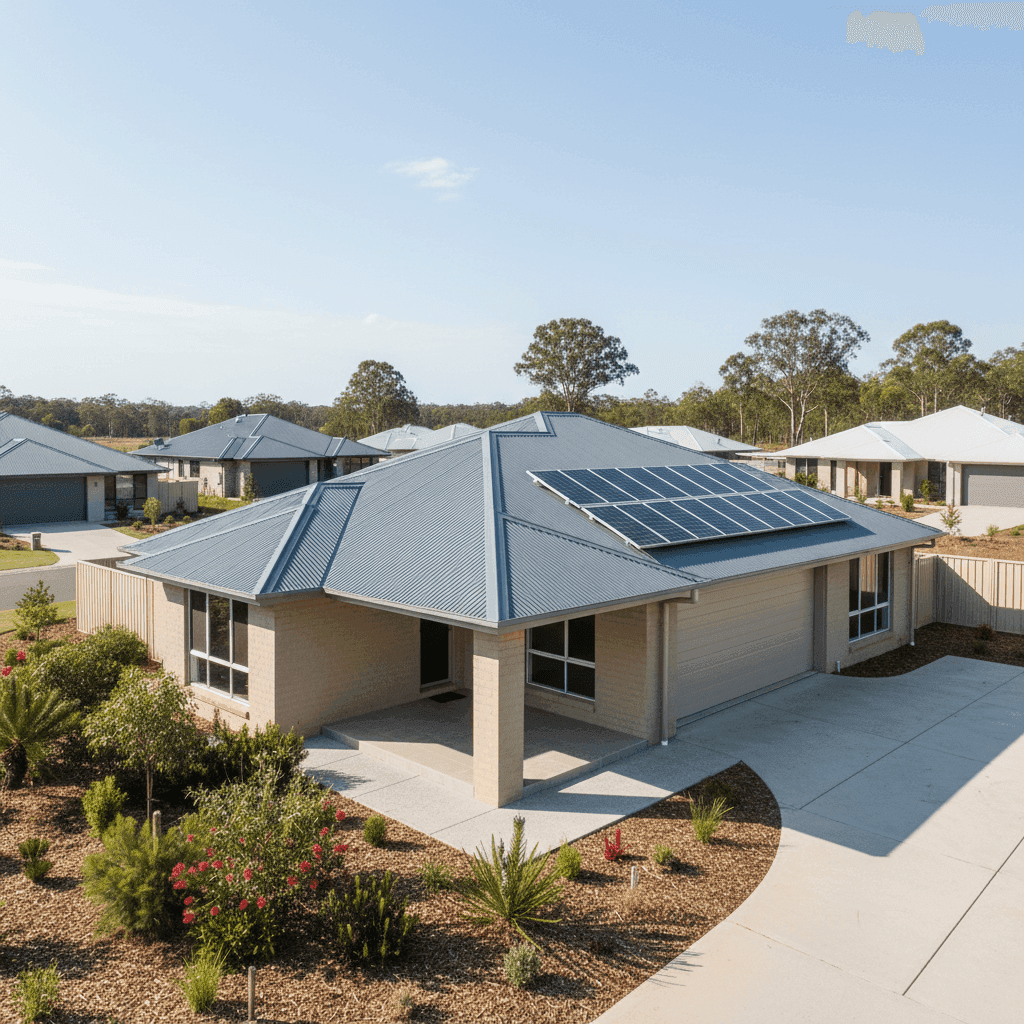
If you own a free standing home in Glenwood, QLD 4570, you might be wondering whether you're paying a fair price for building insurance — or quietly overpaying while your insurer pockets the difference. This article breaks down a real building-only insurance quote for a three-bedroom home in the area, benchmarks it against local, state, and national data, and offers practical tips to help you get better value.
---
Is This Quote Fair?
The quote in question comes in at $1,497 per year (or roughly $137 per month) for building-only cover on a 130 sqm concrete-walled home with a Colorbond roof, built in 1995, with a $2,000 building excess. Our analysis rates this quote as FAIR — around average for the area.
That "fair" rating is worth unpacking. It doesn't mean you can't do better, but it does mean this premium sits in a reasonable range relative to what other Glenwood homeowners are being quoted. Based on 83 quotes collected for the Glenwood suburb, the local average sits at $2,460 per year and the median is $2,149 per year — meaning this quote comes in noticeably below both benchmarks. In fact, at $1,497, it falls between the suburb's 25th percentile ($1,330/yr) and the median, suggesting roughly 25–50% of Glenwood homeowners are being quoted less, and the majority are paying more.
So while there may be room to shave a little off the premium, this is far from a bad result — particularly in a Queensland market where insurance costs have surged in recent years.
---
How Glenwood Compares
To put this quote in proper context, it helps to zoom out and look at the bigger picture. Here's how Glenwood stacks up against broader benchmarks:
| Benchmark | Average Premium |
|---|---|
| Glenwood (suburb average) | $2,460/yr |
| Glenwood (suburb median) | $2,149/yr |
| Fraser Coast LGA average | $3,385/yr |
| Queensland state average | $4,547/yr |
| Queensland state median | $3,931/yr |
| National average | $2,965/yr |
| National median | $2,716/yr |
The figures tell a striking story. Queensland's average home insurance premium of $4,547 per year is substantially higher than the national average of $2,965 — a gap driven largely by the state's exposure to extreme weather events, including floods, storms, and cyclones. Yet Glenwood's suburb average of $2,460 sits well below both the state and national averages, suggesting it's a comparatively lower-risk pocket within QLD.
The quote of $1,497 is 46% below the Glenwood suburb average, 67% below the Queensland state average, and 49% below the national average. Even accounting for the fact that this is building-only cover (which typically costs less than a combined building and contents policy), these are meaningful savings.
You can explore more local data on the Glenwood suburb insurance stats page, compare it against the Queensland state overview, or see where it sits on the national insurance landscape.
---
Property Features That Affect Your Premium
Insurance premiums aren't pulled from thin air — they're calculated based on a range of property-specific risk factors. Here's how the features of this particular home likely influence its pricing:
Concrete external walls are viewed favourably by insurers. Concrete is highly resistant to fire, termites, and storm damage, which reduces the likelihood of a major claim. This is one of the more significant premium-reducing features a property can have.
Steel/Colorbond roofing is another tick in the right column. Colorbond is lightweight, durable, and performs well in high-wind conditions. It's far less susceptible to storm damage than older terracotta or cement tile roofs, and insurers generally price this in.
Slab foundation is standard for Queensland homes of this era and presents no unusual risk. Combined with tile flooring, there's less exposure to water damage from flooding seeping into timber subfloors — a relevant consideration in regional QLD.
Solar panels, while a modern asset, can slightly increase the insured value of a home because they add to the cost of rebuilding or replacing the structure. It's worth confirming with your insurer that solar panels are explicitly covered under your building policy.
Ducted climate control is another feature that adds replacement value to the property. Ducted systems are expensive to install and, if damaged, costly to repair — so they're a factor insurers consider when calculating appropriate sum insured levels.
The $200,000 sum insured on a 130 sqm home built in 1995 should be reviewed periodically to ensure it reflects current construction costs, which have risen sharply in recent years across Queensland.
---
Tips for Homeowners in Glenwood
1. Review your sum insured annually Construction costs in regional Queensland have climbed significantly since the pandemic. A sum insured set a few years ago may no longer cover the full cost of rebuilding your home from scratch. Use a building cost calculator or speak to a local builder to get a realistic estimate, and adjust your cover accordingly.
2. Confirm solar panels are explicitly covered Not all standard building policies automatically cover solar panel systems. Check your Product Disclosure Statement (PDS) to confirm your panels — and any associated inverters or battery storage — are included in your building cover. If not, ask your insurer about an extension.
3. Shop around at renewal time Loyalty doesn't always pay in the insurance industry. Insurers often offer sharper pricing to new customers, so it's worth comparing quotes each year rather than simply accepting your renewal notice. Even a "fair" quote like this one could potentially be improved with a bit of shopping around.
4. Consider your excess carefully This policy carries a $2,000 building excess. A higher excess generally results in a lower premium, but make sure you're comfortable covering that amount out of pocket in the event of a claim. If $2,000 would be a financial stretch, it may be worth comparing quotes with a lower excess to find the right balance.
---
Ready to Compare?
Whether you're happy with your current quote or suspect you could be paying less, it always pays to compare. CoverClub makes it easy to benchmark your home insurance against real quotes from across Australia. Get a quote today and see exactly where you stand.