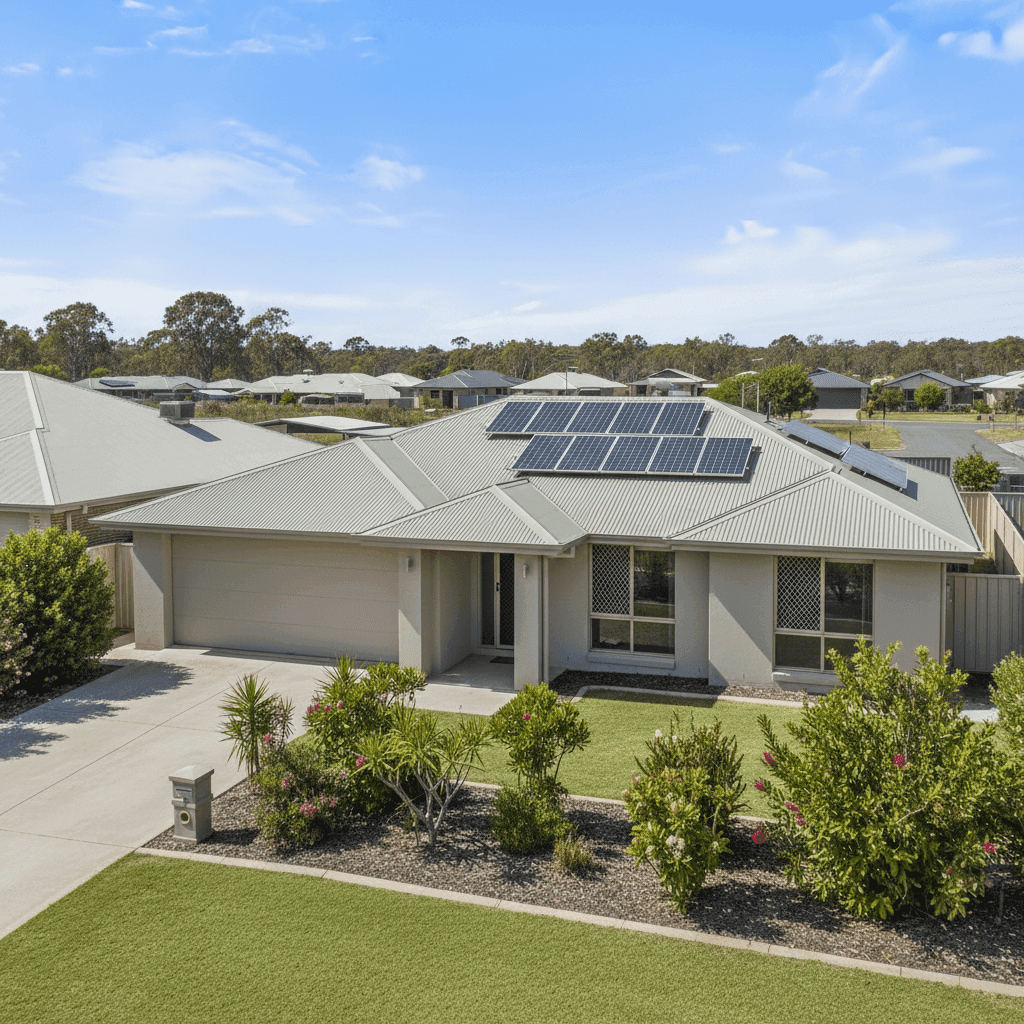
If you own a free standing home in Glenwood, QLD 4570, you're likely curious about whether you're paying a fair price for building insurance — or leaving money on the table. This article breaks down a real building-only insurance quote for a three-bedroom, one-bathroom home in Glenwood, and puts it into context against suburb, state, and national benchmarks. Whether you're renewing your policy or shopping around for the first time, the numbers here should give you a clearer picture of where you stand.
---
Is This Quote Fair?
The quote in question comes in at $1,513 per year (or roughly $134 per month) for building-only cover on a 130 sqm free standing home, with a sum insured of $200,000 and a $1,000 building excess.
Our price rating for this quote? CHEAP — below average. That's a strong result.
To put it plainly: this homeowner is paying significantly less than most of their neighbours for comparable cover. Based on 53 quotes collected for the Glenwood area, the suburb average sits at $3,032 per year, meaning this quote is roughly 50% below the local average. Even compared to the suburb's 25th percentile — the point at which only one in four quotes are cheaper — this premium of $1,513 still comes in well under the $2,066 mark.
That's a meaningful saving, and it reflects a combination of favourable property characteristics and a competitive insurer selection.
---
How Glenwood Compares
Understanding your quote in isolation only tells part of the story. Here's how Glenwood stacks up against broader benchmarks:
| Benchmark | Average Premium | Median Premium |
|---|---|---|
| Glenwood (suburb) | $3,032/yr | $2,879/yr |
| Fraser Coast LGA | $4,810/yr | — |
| Queensland (state) | $9,129/yr | $3,903/yr |
| National | $5,347/yr | $2,764/yr |
A few things stand out here. First, Queensland's average premium of $9,129 per year is extraordinarily high — heavily skewed by cyclone-prone coastal and far-north Queensland postcodes where insurers price in significant catastrophe risk. The state median of $3,903 is a more realistic reflection of what most Queenslanders pay.
Glenwood's suburb average of $3,032 sits below both the state median and the national average of $5,347, which is encouraging. It suggests the area benefits from relatively moderate risk profiles compared to many other Queensland locations. The Fraser Coast LGA average of $4,810 is notably higher than the Glenwood suburb figure, which may reflect higher-risk pockets within the broader region pulling that number up.
The national median of $2,764 is actually slightly below Glenwood's suburb median of $2,879 — a reminder that while Glenwood is reasonably priced by Queensland standards, it's not dramatically cheaper than the national middle ground.
---
Property Features That Affect Your Premium
Several characteristics of this particular property work in the homeowner's favour when it comes to pricing:
Concrete external walls are regarded by insurers as a resilient construction material. Concrete is highly resistant to fire, termites, and impact damage — all of which reduce the likelihood and severity of a claim. This typically translates to lower premiums compared to timber-framed homes.
Steel/Colorbond roofing is another tick in the right column. Colorbond is durable, lightweight, and performs well in high-wind events. It's also non-combustible, which matters in bushfire-adjacent areas. Insurers generally view it more favourably than older roofing materials like terracotta tiles or fibrous cement sheeting.
Slab foundation offers structural stability and is less susceptible to subsidence or moisture-related damage than raised timber stumps — a common feature in older Queensland homes.
Tile flooring is highly durable and resistant to water damage, which reduces the risk of costly floor replacement claims.
Solar panels are worth noting. While they add value to the property and are generally covered under building insurance, some insurers factor in the additional replacement cost. It's worth confirming your sum insured of $200,000 adequately accounts for the panels.
Ducted climate control is another fixed building feature that should be reflected in your sum insured. These systems can be expensive to repair or replace, so ensuring your coverage is adequate is important.
The property was built in 1995, placing it in a relatively modern bracket. Homes from this era were built to improved standards compared to pre-1980s construction, and replacement costs are generally more predictable.
Notably, this property is not in a cyclone risk zone — a significant factor in Queensland. Cyclone-rated premiums can be several times higher than standard premiums, so being outside that risk band is a meaningful advantage.
---
Tips for Homeowners in Glenwood
1. Review your sum insured annually A sum insured of $200,000 for a 130 sqm home may be adequate today, but building costs in regional Queensland have risen considerably in recent years. Use a building cost calculator — many insurers offer these for free — to ensure you're not underinsured. Don't forget to include fixed assets like solar panels and ducted air conditioning in your estimate.
2. Compare quotes at renewal time Even if you're happy with your current insurer, the home insurance market is competitive. Premiums can shift significantly between providers for the same property. Given that the Glenwood suburb average is over $3,000 per year, there's clearly a wide spread of pricing in the area — shopping around could save you hundreds.
3. Understand your excess before you claim This policy carries a $1,000 building excess. Before lodging a claim for minor damage, consider whether the repair cost meaningfully exceeds your excess. Making small claims can sometimes affect your renewal premium or claims history, so it's worth weighing up the numbers first.
4. Check what's excluded Building-only cover protects the structure of your home but does not cover your belongings. If you have valuable contents — furniture, appliances, electronics — consider whether a separate contents policy or a combined building and contents policy makes sense for your situation.
---
Compare Your Home Insurance Options
Whether this quote reflects your own situation or you're simply benchmarking what's available in Glenwood, it pays to compare. CoverClub makes it easy to see how different insurers price your specific property — so you can make a confident, informed decision rather than just accepting your renewal notice.
Get a home insurance quote for your Glenwood property →
You can also explore detailed premium data for your area on the Glenwood suburb stats page.