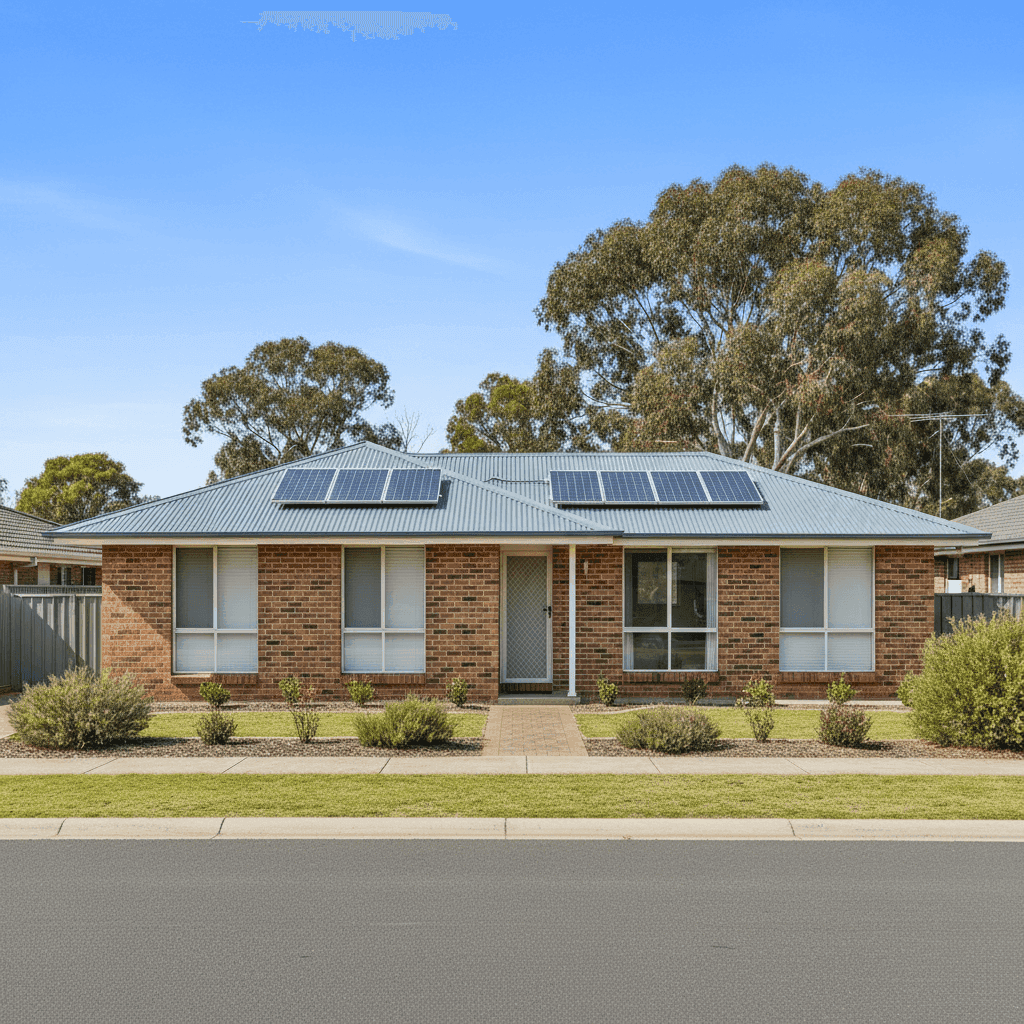
Glossodia is a quiet residential suburb on the north-western fringe of Greater Sydney, sitting within the Hawkesbury local government area. It's home to a mix of established properties, and a three-bedroom free standing home here is a fairly typical dwelling for the area. If you're a homeowner in Glossodia — or thinking of buying — understanding what you should expect to pay for home and contents insurance is an important part of managing your household budget.
This article breaks down a recent home and contents insurance quote for a 3-bedroom, 1-bathroom free standing home in Glossodia (postcode 2756), and puts the numbers into context against suburb, state, and national benchmarks.
---
Is This Quote Fair?
The quote analysed here came in at $2,468 per year (or roughly $237 per month), covering a building sum insured of $574,000 and contents valued at $140,300. Both the building and contents excess are set at $2,000 each.
Our price rating for this quote is CHEAP — below average — and the data backs that up clearly.
When you compare this figure against what other Glossodia homeowners are paying, it stands out as notably competitive. The suburb average sits at $4,655 per year, meaning this quote is roughly 47% below the local average. Even against the suburb's 25th percentile — the point at which only a quarter of quotes are cheaper — the figure of $3,317 per year is still significantly higher than this quote.
Put simply, this is a strong result. A homeowner securing cover at this price in Glossodia is doing considerably better than most of their neighbours.
---
How Glossodia Compares
To fully appreciate the value of this quote, it helps to zoom out and look at the broader picture. You can explore the full data on the Glossodia suburb stats page.
| Benchmark | Annual Premium |
|---|---|
| This quote | $2,468 |
| Glossodia suburb average | $4,655 |
| Glossodia suburb median | $4,544 |
| Glossodia 25th percentile | $3,317 |
| Glossodia 75th percentile | $5,976 |
| NSW state average | $3,801 |
| NSW state median | $3,410 |
| National average | $2,965 |
| National median | $2,716 |
| Lithgow LGA average | $5,454 |
A few things stand out here. First, Glossodia premiums are notably high — the suburb average of $4,655 is well above both the NSW state average of $3,801 and the national average of $2,965. This suggests that insurers price Glossodia properties with a degree of caution, likely reflecting factors such as the area's bushfire exposure and its semi-rural character.
The Lithgow LGA average of $5,454 is even higher, reinforcing that this broader region carries elevated risk in the eyes of insurers. Against that backdrop, landing a quote of $2,468 is a genuinely excellent outcome.
It's worth noting that the suburb sample size here is six quotes, so the local averages should be treated as indicative rather than definitive. That said, the trend is consistent — Glossodia premiums tend to run high, making a below-average result all the more valuable.
---
Property Features That Affect Your Premium
Several characteristics of this particular property likely contribute to its competitive premium. Understanding these factors can help you make smarter decisions when reviewing your own cover.
Brick Veneer Walls Brick veneer is one of the more insurer-friendly external wall materials. It offers solid fire resistance and durability, which tends to attract more favourable pricing compared to timber weatherboard or other combustible cladding types — a meaningful consideration in a region with bushfire risk.
Steel / Colorbond Roof A Colorbond steel roof is another positive signal for insurers. It's non-combustible, low-maintenance, and highly resistant to ember attack, which is particularly relevant in areas like Glossodia that sit near bushland. This roof type generally supports lower premiums compared to older materials like terracotta tiles or, especially, timber shingles.
Stumps Foundation The property sits on stumps, which is common for homes built in the 1960s in NSW. While this construction style is well understood by insurers, it can introduce some complexity — subfloor spaces may require periodic inspection for pest activity or deterioration. It's worth ensuring your policy covers relevant structural risks.
Construction Year: 1965 At roughly 60 years old, this home is well into its mature phase. Older homes can attract slightly higher premiums due to ageing wiring, plumbing, and structural components. However, a well-maintained brick veneer home of this era can still be priced competitively, as appears to be the case here.
Solar Panels The property has solar panels installed. Most insurers include solar panels under building cover, but it's worth confirming this with your insurer — particularly for the inverter and mounting hardware. Some policies treat solar as a separate item or have specific sub-limits.
Building Size: 130 sqm At 130 square metres, this is a modest-sized home, which contributes to a more manageable building sum insured and, in turn, a lower premium compared to larger properties.
---
Tips for Homeowners in Glossodia
Whether you're renewing your policy or shopping for the first time, here are a few practical steps worth taking.
1. Review your sum insured carefully A building sum insured of $574,000 for a 130 sqm home in Glossodia is worth double-checking against current construction costs. Rebuilding costs have risen sharply in recent years, and being underinsured can leave you significantly out of pocket after a major claim. Use an independent building cost calculator to sense-check the figure annually.
2. Confirm your solar panels are covered As mentioned above, solar panel coverage can vary between policies. Check whether your panels, inverter, and mounting system are included under your building cover, and whether there are any sub-limits that might apply.
3. Consider your excess level This quote carries a $2,000 excess on both building and contents. A higher excess typically reduces your premium, but make sure it's an amount you could genuinely afford to pay at short notice. If $2,000 feels like a stretch, it may be worth comparing quotes with a lower excess to find the right balance.
4. Shop around at renewal time Glossodia premiums vary widely — from $3,317 at the 25th percentile to $5,976 at the 75th percentile. The difference between the cheapest and most expensive quotes in this suburb is substantial. Don't let your policy auto-renew without first comparing alternatives. The savings can be significant.
---
Compare Your Home Insurance Quote
Glossodia homeowners are clearly paying a wide range of premiums for similar properties. Whether you're looking to benchmark your current policy or find a better deal, CoverClub makes it easy to compare home and contents insurance quotes side by side.
Get a quote today at CoverClub and see how your premium stacks up against the suburb, state, and national averages. It only takes a few minutes — and the savings could be well worth it.