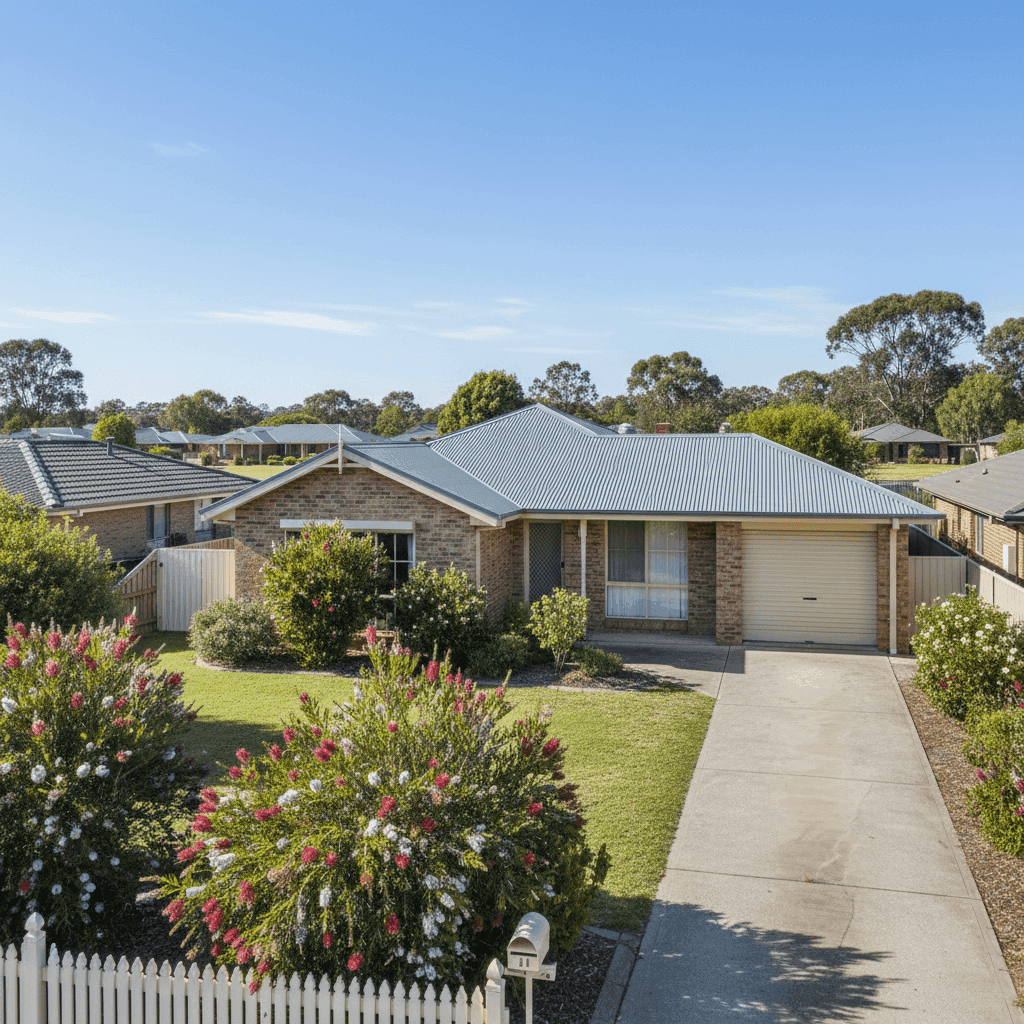
Glossodia is a quiet residential suburb on the north-western fringe of Greater Sydney, sitting within the Hawkesbury local government area. It's a semi-rural community where free standing homes on generous blocks are the norm — and where understanding the true cost of home insurance can make a real difference to your household budget. This article breaks down a recent home and contents insurance quote for a two-bedroom free standing home in Glossodia, comparing it against local, state, and national benchmarks to help you understand whether you're getting a fair deal.
---
Is This Quote Fair?
The quote in question comes in at $1,845 per year (or $174 per month) for combined home and contents cover, with a building sum insured of $701,000 and contents valued at $50,000. The building excess is set at $4,000 and the contents excess at $2,000.
Based on our pricing data, this quote is rated CHEAP — below average compared to what other Glossodia homeowners are paying. That's a strong result, and it's worth understanding just how significant the difference is.
The suburb average premium in Glossodia sits at $4,655 per year, meaning this quote is roughly 60% cheaper than the typical price being paid locally. Even the 25th percentile — the cheapest quarter of quotes in the area — comes in at $3,317 per year, which is still nearly $1,500 more expensive than this quote. In short, this is an exceptionally competitive price for the postcode.
It's worth noting that the suburb sample size is six quotes, so the local data is directionally useful but should be interpreted with some caution. That said, the gap between this quote and the suburb average is large enough to be meaningful regardless of sample size.
---
How Glossodia Compares
To put this quote in broader context, here's how Glossodia premiums stack up against state and national figures:
| Benchmark | Average Premium | Median Premium |
|---|---|---|
| Glossodia (2756) | $4,655/yr | $4,544/yr |
| NSW | $3,801/yr | $3,410/yr |
| National | $2,965/yr | $2,716/yr |
| Lithgow LGA | $5,454/yr | — |
A few things stand out here. Glossodia premiums are notably higher than both the NSW state average and the national average — suggesting that insurers view this area as carrying elevated risk. The Lithgow LGA average of $5,454 per year is even higher, indicating that parts of the broader region attract significant loading.
Against this backdrop, the $1,845 quote analysed here is not just cheap for Glossodia — it's well below the national median too. You can explore the full Glossodia suburb insurance stats to see how premiums in the area are distributed.
Why do Glossodia and the surrounding Hawkesbury region attract higher premiums? The area has a well-documented history of flooding along the Hawkesbury River, and bushfire risk is also a consideration for properties in the semi-rural outskirts. Even homes that aren't directly in a flood plain or high-risk bushfire zone can face elevated premiums simply due to postcode-level risk modelling used by insurers.
---
Property Features That Affect Your Premium
Several characteristics of this particular property are likely contributing to its favourable premium outcome.
Brick veneer construction is generally viewed positively by insurers. While not as robust as full double-brick, brick veneer offers good fire resistance and structural durability compared to weatherboard or fibre cement cladding — both of which can attract higher premiums.
Steel/Colorbond roofing is another premium-friendly feature. Colorbond is highly durable, resistant to corrosion, and performs well in both fire and storm conditions. Older tile roofs, particularly terracotta, can be more expensive to repair or replace and may attract higher loadings.
Stump foundations are common in older Australian homes and can be a mixed bag from an insurer's perspective. On the positive side, stumps allow for ventilation and can reduce moisture-related damage. However, they can also be more vulnerable to movement and may require periodic maintenance. This home was built in 1976, so the stumps would be approaching 50 years old — something worth monitoring.
Timber and laminate flooring is a standard feature in many homes of this era and doesn't typically attract significant premium loading, though it can be more susceptible to water damage than tiles.
The 214 sqm building size and standard fittings quality are also relevant. A larger home with high-end fittings would command a higher sum insured and, consequently, a higher premium. At $701,000 building sum insured, this property sits at a reasonable rebuild cost for its size and construction type in the current market.
The absence of a pool, solar panels, and ducted climate control keeps the risk profile straightforward — fewer systems means fewer things that can go wrong or need replacing under a claim.
---
Tips for Homeowners in Glossodia
1. Review your sum insured regularly Construction costs have risen sharply in recent years. Make sure your $701,000 building sum insured still reflects the true cost of rebuilding your home from scratch — including demolition, site preparation, and professional fees. Underinsurance is one of the most common and costly mistakes homeowners make.
2. Understand your flood and bushfire risk Given the Hawkesbury region's history, it's worth checking your property's specific flood overlay and bushfire attack level (BAL) rating. Some insurers exclude or limit flood cover, so read your Product Disclosure Statement carefully. You can check flood risk via the NSW Government's flood data portals.
3. Don't let your excess work against you This quote carries a $4,000 building excess and $2,000 contents excess. Higher excesses typically reduce your premium, but make sure you could comfortably cover that out-of-pocket cost in the event of a claim. If cash flow is a concern, it may be worth comparing quotes with a lower excess.
4. Shop around at renewal time Even if you're already on a competitive premium, insurers regularly reprice their books. Loyalty doesn't always pay — in fact, many insurers offer better rates to new customers. Set a reminder to compare quotes before your renewal date each year.
---
Compare Home Insurance Quotes in Glossodia
Whether you're a first-time buyer or a long-term Glossodia resident, comparing home insurance quotes is one of the simplest ways to protect your budget. CoverClub makes it easy to see real quotes side by side so you can make a confident, informed decision. Get a home insurance quote today and find out how your current premium stacks up.