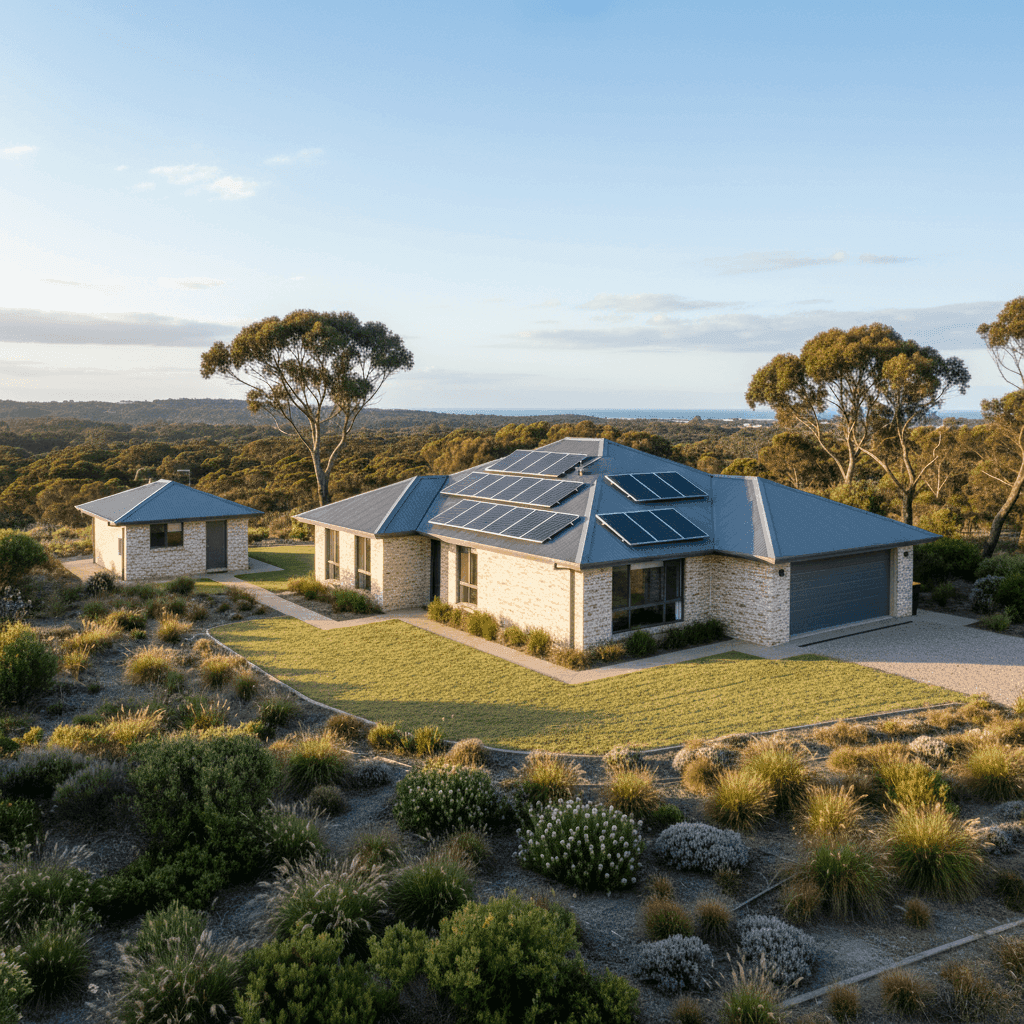
Gnarabup is one of Western Australia's most picturesque coastal communities — a quiet enclave just south of Margaret River, known for its rugged surf breaks, native bushland, and premium real estate. It's also a suburb where getting home insurance right really matters. This article analyses a real building insurance quote for a four-bedroom, four-bathroom free standing home in Gnarabup (postcode 6285) and puts the numbers into context so you can make a more informed decision about your own cover.
---
Is This Quote Fair?
The quote in question comes in at $4,025 per year (or $386 per month) for building-only cover, with a sum insured of $1,506,000 and a building excess of $5,000. Our price rating for this quote is Expensive — Above Average.
To be clear, "expensive" doesn't necessarily mean you're being ripped off. A high sum insured on a high-quality, above-average-fitted home will naturally attract a higher premium. But it does mean this quote sits well above what many comparable properties in the area are paying, and it's worth understanding why — and whether there's room to do better.
---
How Gnarabup Compares
Here's how this $4,025 annual premium stacks up against the broader market:
| Benchmark | Premium |
|---|---|
| This quote | $4,025/yr |
| Gnarabup suburb average | $1,983/yr |
| Gnarabup suburb median | $1,121/yr |
| Gnarabup 25th percentile | $938/yr |
| Gnarabup 75th percentile | $3,237/yr |
| WA state average | $2,811/yr |
| WA state median | $2,127/yr |
| National average | $5,347/yr |
| National median | $2,764/yr |
| Nannup LGA average | $2,220/yr |
A few things stand out here. First, this quote exceeds the Gnarabup suburb average of $1,983 by more than double, and sits above the suburb's 75th percentile of $3,237 — meaning it's pricier than at least three-quarters of quotes in the area. It also exceeds the WA state average of $2,811 by a meaningful margin.
That said, it's worth noting the suburb sample size is just 7 quotes, so the local averages should be interpreted with some caution — a small sample can be skewed by a single outlier in either direction. On a national scale, this quote actually sits below the national average of $5,347, which provides a useful reality check. Australia-wide, home insurance is expensive, and coastal properties in desirable lifestyle locations tend to attract above-average premiums.
The Nannup LGA average of $2,220 also provides useful regional context — this quote is nearly double that figure, reinforcing that the property's specific characteristics are driving costs upward.
---
Property Features That Affect Your Premium
Several features of this home help explain why the premium lands where it does:
High sum insured ($1,506,000) This is the single biggest driver. A rebuild cost of $1.5 million reflects a large, well-appointed home — and insurers price accordingly. At 235 sqm with above-average fittings, four bathrooms, and a granny flat, the rebuild cost is genuinely substantial.
Granny flat The presence of a granny flat adds meaningful replacement cost to the policy. Whether it's used for extended family or as a rental, it's an additional structure that must be covered under the building sum insured.
Above-average fittings quality Kitchens, bathrooms, and fixtures of above-average quality cost significantly more to replace after a claim. Insurers factor this into their pricing, as a like-for-like rebuild would involve premium materials and finishes.
Solar panels Solar panels are covered under building insurance and add to the insured value. They can also introduce additional risk factors (such as fire risk from inverter faults) that some insurers price into the premium.
Ducted climate control Ducted air conditioning systems are expensive to replace and are treated as part of the building. This adds to the overall replacement cost and, by extension, the premium.
Brick veneer construction with Colorbond roof Brick veneer walls are generally viewed favourably by insurers — they're durable and fire-resistant. A steel/Colorbond roof is similarly regarded as low-maintenance and resilient. These features likely moderate the premium compared to, say, a timber-framed home with a tiled roof.
Slab foundation Concrete slab foundations are considered structurally stable and are not associated with the subsidence or movement risks that can affect other foundation types. This is a neutral-to-positive factor for insurers.
Coastal location Gnarabup's proximity to the coast introduces exposure to salt air, wind, and storm events. Coastal properties across Australia routinely attract higher premiums, even when they're not in a designated cyclone zone.
---
Tips for Homeowners in Gnarabup
1. Review your sum insured carefully A sum insured of $1,506,000 is significant — make sure it reflects the actual cost to rebuild, not the market value of the land. Overinsuring inflates your premium without adding real benefit, while underinsuring can leave you exposed after a major claim. Consider getting a professional building valuation every few years.
2. Compare multiple insurers The gap between the cheapest and most expensive quotes in Gnarabup is substantial. With a 25th percentile of $938 and a 75th percentile of $3,237, the market is wide. Shopping around — especially for a high-value property — could save you thousands annually. Get a comparison quote at CoverClub to see what's available for your address.
3. Consider your excess strategically This policy carries a $5,000 building excess. A higher excess typically reduces your annual premium, which can make sense if you have the financial buffer to cover it in a claim scenario. If you're currently on a lower excess, ask your insurer what the premium difference would be at $5,000 — the saving is often meaningful.
4. Check what's included for the granny flat Not all policies treat secondary dwellings the same way. Confirm that your granny flat is explicitly covered under the building policy, including any fixtures, fittings, and outbuildings. Some insurers require a separate declaration or endorsement for secondary structures.
---
Ready to Find a Better Rate?
Whether you're renewing your policy or shopping for the first time, comparing quotes is the most effective way to ensure you're not overpaying. CoverClub makes it easy to see what home insurance actually costs for properties like yours in Gnarabup — with real data, not estimates. Enter your address and get started today.