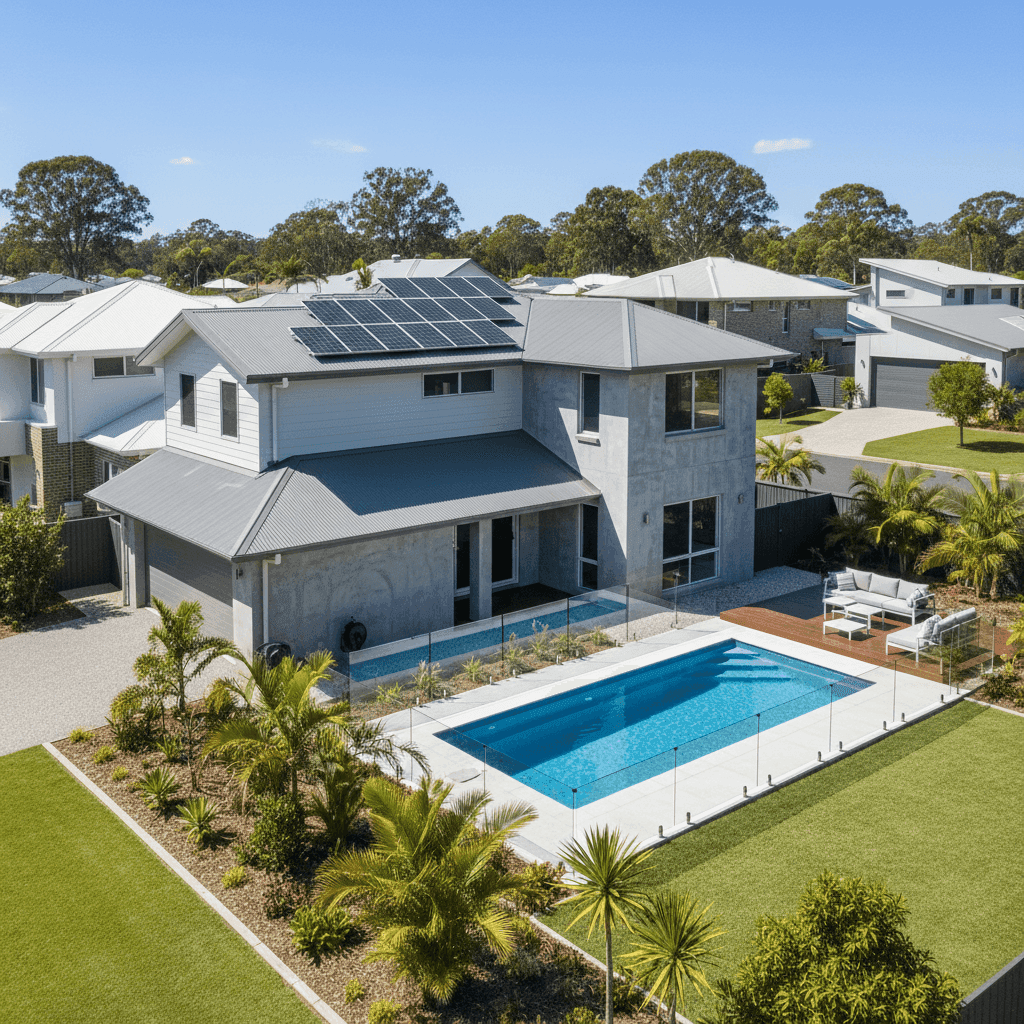
If you own a free-standing home in Goldsborough, QLD 4865, you already know that insuring a property in Far North Queensland comes with its own set of considerations — from tropical weather to cyclone risk. This article breaks down a real home and contents insurance quote for a 2-bedroom, 2-bathroom property in the suburb, compares it against state and national benchmarks, and offers practical tips to help you get the best value on your cover.
---
Is This Quote Fair?
The annual premium on this quote comes in at $3,724 per year (or $357/month), covering both building (sum insured: $706,000) and contents ($42,000), each with a $1,000 excess. Our pricing analysis rates this as CHEAP — below average for the area.
That's a meaningful result. Given that Goldsborough sits within the Cairns LGA — one of Australia's most expensive regions for home insurance — landing a below-average premium is genuinely good news for this homeowner. Cyclone-prone postcodes in Far North Queensland routinely attract some of the steepest premiums in the country, so a quote that undercuts the regional average by a significant margin deserves a closer look.
To be clear, "cheap" doesn't mean inadequate. The building sum insured of $706,000 is substantial, and the contents cover of $42,000 is reasonable for a standard 2-bedroom home. The $1,000 excess on both building and contents is a common middle-ground choice — high enough to keep premiums down, but not so high that a claim becomes financially painful.
---
How Goldsborough Compares
The numbers tell a compelling story when you stack this quote against broader market data:
| Benchmark | Annual Premium |
|---|---|
| This Quote | $3,724 |
| QLD State Median | $3,903 |
| QLD State Average | $9,129 |
| National Median | $2,764 |
| National Average | $5,347 |
| Cairns LGA Average | $12,404 |
A few things stand out here. First, the Cairns LGA average of $12,404 is extraordinary — more than three times this quote. That figure reflects the cyclone loading that insurers apply across the region, and it shows just how wide the spread can be within a single local government area. Second, this quote sits just below the QLD state median of $3,903, which means it's competitive even when measured against the full range of Queensland properties, many of which face far less cyclone exposure than Goldsborough.
Compared to the national average of $5,347, this quote is about 30% cheaper — a solid result for a property in a designated cyclone risk zone.
You can explore more local pricing data on the Goldsborough suburb stats page, or broaden your view with QLD state insurance statistics and national home insurance benchmarks.
---
Property Features That Affect Your Premium
Every home is different, and insurers price risk based on a detailed picture of the property. Here's how the features of this particular home likely influence the premium:
Cyclone Risk Zone
This is the single biggest factor. Goldsborough sits in a designated cyclone risk area, and insurers apply significant loadings to properties in Far North Queensland. The fact that this quote still comes in below the state median suggests the other property characteristics are working in the homeowner's favour.
Concrete Walls & Steel/Colorbond Roof
Concrete external walls and a Colorbond steel roof are among the most cyclone-resilient construction materials available. Insurers recognise this — homes built to withstand high wind events are statistically less likely to suffer catastrophic damage, which can translate to lower premiums. This combination is a genuine asset in a cyclone-prone postcode.
Slab Foundation & Tile Flooring
A concrete slab foundation provides excellent structural stability and reduces the risk of subsidence or flood-related undermining. Tile flooring is similarly durable and resistant to water damage — both features that reduce the likelihood of costly claims.
Built in 2012
A construction year of 2012 means this home was built under relatively modern Australian building codes, which incorporated improved cyclone-resistance standards following lessons from earlier storm events. Newer builds in cyclone zones often attract better rates than older, less-resilient homes.
Pool, Solar Panels & Ducted Climate Control
These additions increase the overall replacement value of the property, which is reflected in the $706,000 building sum insured. A pool introduces some liability considerations, while solar panels add both value and complexity to a rebuild. Ducted climate control is a significant fixed asset. Together, they justify a higher sum insured — and getting that figure right is critical to avoiding underinsurance.
Modest Home Size (123 sqm)
At 123 square metres, this is a compact home. A smaller footprint generally means a lower rebuild cost relative to larger properties, which can help moderate the premium even when the land and inclusions (pool, solar) push the sum insured upward.
---
Tips for Homeowners in Goldsborough
1. Review Your Sum Insured Annually
Building costs in Queensland have risen sharply in recent years. With a sum insured of $706,000 on a 123 sqm concrete home with a pool and solar, it's worth confirming this figure reflects current rebuild costs — including demolition, debris removal, and professional fees. Underinsurance is one of the most common and costly mistakes homeowners make.
2. Don't Skimp on Cyclone Cover
In a cyclone risk area, it can be tempting to reduce your premium by opting for a higher excess or stripping back cover. Resist this urge. Cyclone damage can be extensive and expensive, and a policy that saves you a few hundred dollars a year could leave you tens of thousands out of pocket after a major event.
3. Keep Maintenance Records for Your Roof and Pool
Insurers may ask for evidence of regular maintenance in the event of a claim. Keeping records of roof inspections, Colorbond upkeep, and pool safety compliance not only protects your claim but may also support favourable renewal terms.
4. Compare Quotes Before Renewal
Even if your current premium is competitive, the home insurance market shifts constantly — especially in cyclone-prone regions where insurer appetite can change year to year. Running a comparison at renewal time takes minutes and could save you hundreds.
---
Ready to Compare?
Whether you're reviewing your current policy or shopping for the first time, comparing quotes is the smartest move you can make as a homeowner in Goldsborough. Get a home insurance quote at CoverClub and see how your premium stacks up — in minutes, with no obligation.