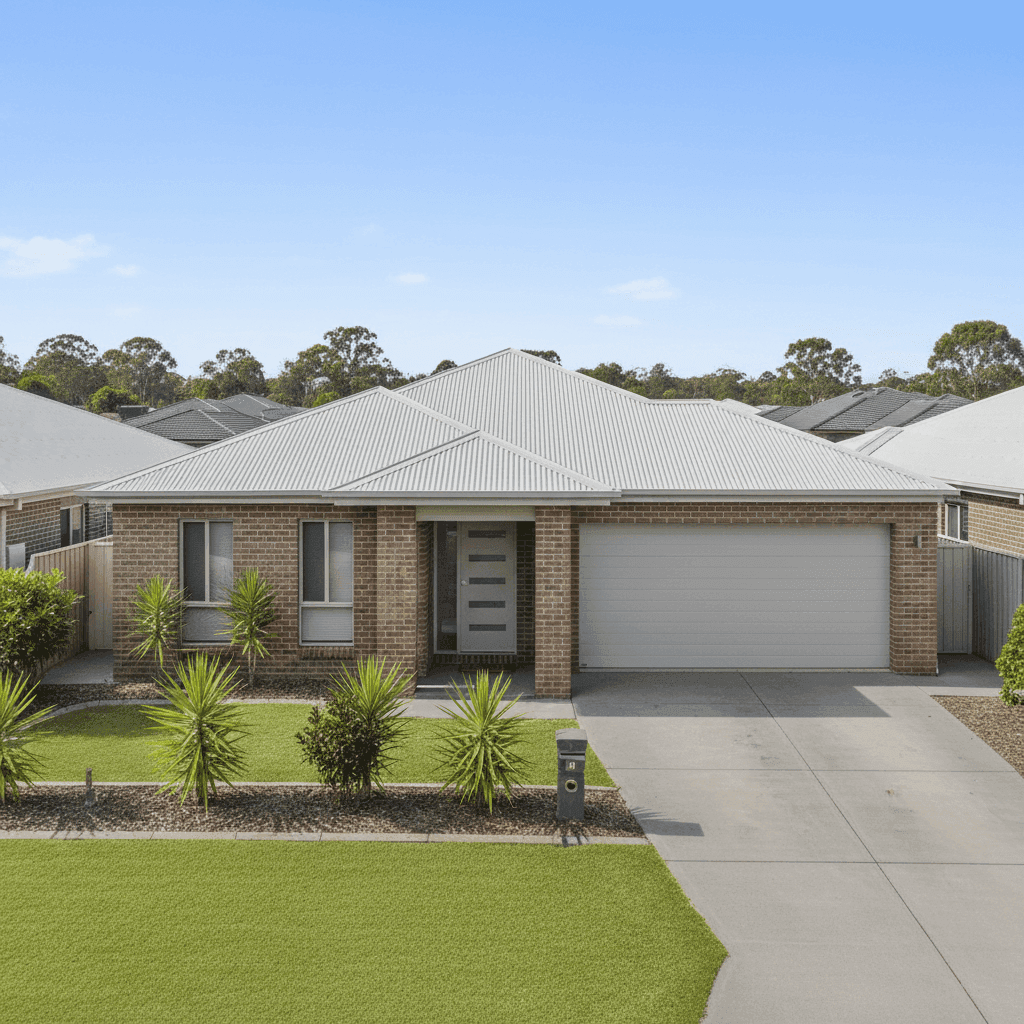
If you own a free standing home in Goodna, QLD 4300, you already know this western Brisbane suburb comes with its own unique set of considerations when it comes to insurance. Sitting within the City of Ipswich, Goodna has a well-documented history with flood events — a factor that plays a significant role in how insurers price cover in the area. This article breaks down a real home and contents insurance quote for a four-bedroom, two-bathroom brick veneer home in Goodna, and puts the numbers in context against suburb, state, and national benchmarks.
---
Is This Quote Fair?
The quote in question comes in at $1,815 per year (or around $174 per month) for combined home and contents cover. The building is insured for $590,000 and contents for $137,000, with a $1,000 excess applying to both.
Our pricing analysis rates this quote as CHEAP — below average for the area. That's genuinely good news for the homeowner. To put it in perspective:
- The suburb median for Goodna is $3,165 per year — meaning this quote is roughly 43% below what most comparable properties pay.
- The suburb average sits at a striking $36,710 per year, heavily skewed by high-risk properties (likely those with significant flood exposure) in the same postcode.
- At the 25th percentile, the cheapest quarter of Goodna quotes still average $2,142 per year — so this premium is even competitive against the lower end of the market.
In short: this is a well-priced policy for Goodna. Whether that reflects the property's specific risk profile, the insurer's pricing model, or a combination of both, the homeowner is in a strong position relative to their neighbours.
---
How Goodna Compares
Goodna's insurance pricing landscape is genuinely unusual — and worth understanding before you assume any quote is reasonable or excessive.
| Benchmark | Annual Premium |
|---|---|
| This quote | $1,815 |
| Goodna suburb median | $3,165 |
| Goodna suburb average | $36,710 |
| Ipswich LGA average | $8,901 |
| QLD state median | $3,903 |
| QLD state average | $9,129 |
| National median | $2,764 |
| National average | $5,347 |
The enormous gap between Goodna's median ($3,165) and average ($36,710) tells a clear story: a subset of properties in this postcode are attracting extremely high premiums — almost certainly due to flood risk. The Brisbane River and Goodna Creek have both caused significant inundation in the area, most notably during the 2011 and 2022 flood events. Properties in low-lying flood-prone pockets can face premiums that are essentially prohibitive.
This quote, at $1,815, sits comfortably below both the state and national medians — a strong result for a four-bedroom home with a $590,000 building sum insured.
---
Property Features That Affect Your Premium
Several characteristics of this property likely contribute to its competitive pricing:
Brick veneer construction is generally viewed favourably by insurers. While not as robust as full double-brick, brick veneer offers solid fire resistance and structural integrity compared to timber-framed or clad alternatives. It's a common and well-understood construction type in Queensland's suburban market.
Steel/Colorbond roofing is another positive signal. Colorbond is durable, low-maintenance, and performs well in severe weather. It's far less susceptible to storm damage than older tile roofs and is a preferred material in many parts of regional and suburban Queensland.
Concrete slab foundation reduces the risk of subsidence and termite ingress compared to raised timber stumps — both of which can lead to costly claims and higher premiums.
Built in 2008, the home benefits from construction standards that incorporate modern building codes, including improved cyclone and wind resistance requirements that were progressively tightened following major weather events in the early 2000s.
Tile flooring throughout is relatively resilient to water damage compared to carpet or timber, which may marginally reduce the contents risk profile.
Standard fittings keep the replacement cost estimate grounded. High-end kitchens, custom joinery, and imported fixtures can push rebuilding costs — and therefore premiums — significantly higher.
Notably, this property has no pool, no solar panels, and no ducted climate control — all of which can add complexity and cost to a policy. Their absence keeps the risk profile straightforward.
---
Tips for Homeowners in Goodna
1. Understand your flood risk before you renew Goodna's flood history means your specific block's elevation and proximity to waterways matters enormously. Use the Queensland Flood Check Property Report to understand your property's flood overlay. If your home is in a low-risk zone, make sure your insurer knows — and that your policy reflects it.
2. Check what "flood" means in your policy Not all policies treat flood the same way. Some distinguish between riverine flooding, flash flooding, and storm surge. Read the Product Disclosure Statement (PDS) carefully, or ask your insurer directly. Given Goodna's history, this is non-negotiable due diligence.
3. Review your building sum insured annually Construction costs in Queensland have risen significantly over the past few years. A $590,000 sum insured may have been accurate when the policy was first taken out, but underinsurance is a real risk. Use a building cost calculator or speak with a quantity surveyor to verify your coverage keeps pace with rebuild costs.
4. Compare quotes at renewal — not just once The gap between the cheapest and most expensive quotes in Goodna is extraordinary. Insurers price flood risk very differently, and the market shifts year to year. Comparing quotes at every renewal cycle — rather than simply auto-renewing — could save you hundreds or even thousands of dollars.
---
Get Your Own Quote
Curious how your Goodna home compares? CoverClub makes it easy to benchmark your premium against real data from your suburb, your LGA, and across Queensland. Start comparing home insurance quotes today and see whether you're paying a fair price — or whether it's time to shop around.
For more suburb-level data, visit our Goodna insurance stats page or explore QLD-wide home insurance trends.