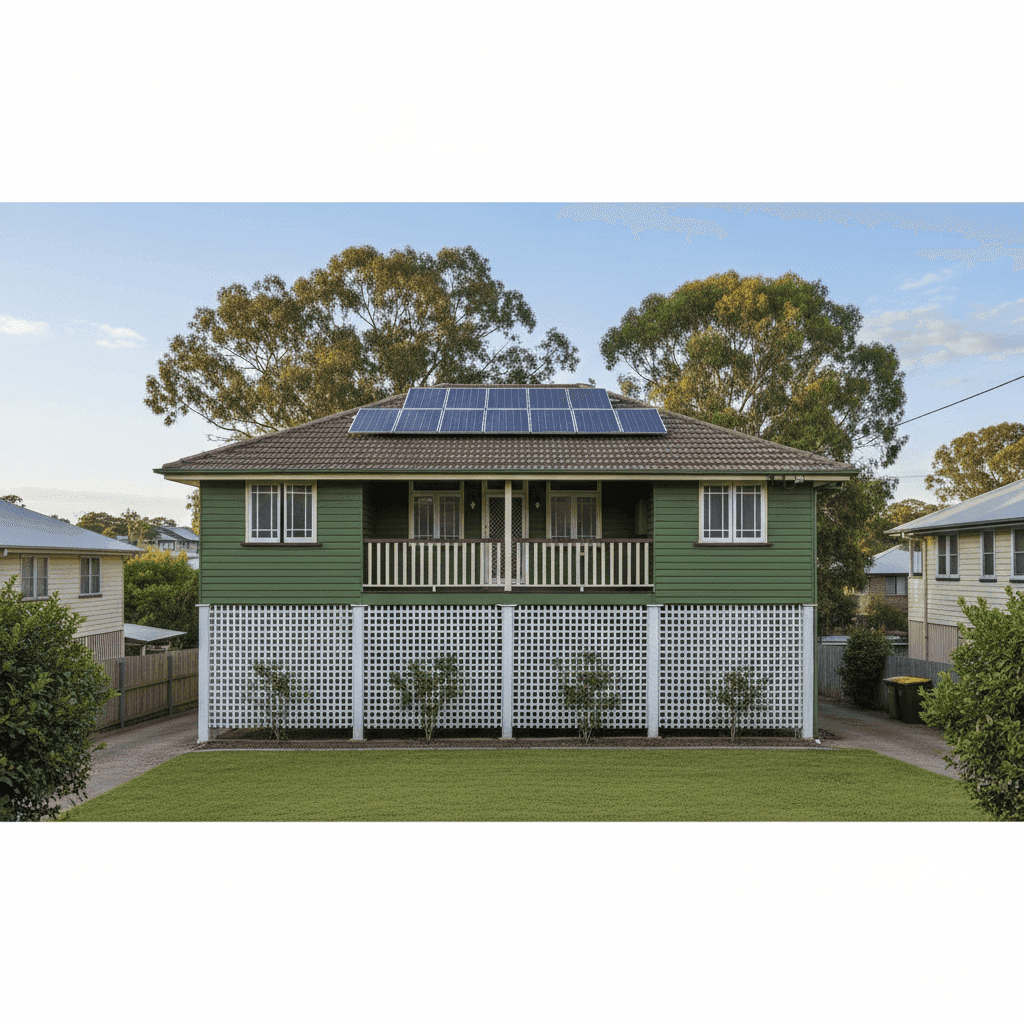
Goodna is a suburb in the City of Ipswich, sitting about 28 kilometres southwest of Brisbane's CBD. It's a well-established residential area with a mix of older Queenslander-style homes and more modern builds — and as this quote analysis shows, it's also a suburb where home insurance costs can vary dramatically depending on your property's characteristics. This article breaks down a recent Home and Contents insurance quote for a four-bedroom, two-bathroom free-standing home in Goodna, and puts the numbers into context so you can make a more informed decision about your own cover.
---
Is This Quote Fair?
The annual premium on this quote comes in at $24,181 per year (or $2,359 per month), with a building sum insured of $665,000 and contents cover of $119,000. Our price rating for this quote is Expensive — Above Average.
To put that in perspective: the suburb average for Goodna sits at $9,018 per year, and the median is $5,157. This quote is more than 2.6 times the suburb average and nearly five times the suburb median. Even accounting for a higher-than-average sum insured, that's a significant gap that warrants a closer look.
It's worth noting that Goodna's own insurance market is already on the pricier side compared to the rest of Queensland and the country as a whole, so a quote this far above even the local average is a strong signal to shop around. The building excess on this policy is $3,000 and the contents excess is $1,000 — both reasonable figures, but the excess alone doesn't explain the premium gap.
---
How Goodna Compares
Here's how Goodna's insurance costs stack up against broader benchmarks, based on data from CoverClub's Goodna suburb stats:
| Benchmark | Average Premium | Median Premium |
|---|---|---|
| Goodna (4300) | $9,018/yr | $5,157/yr |
| Ipswich LGA | $3,034/yr | — |
| Queensland | $4,547/yr | $3,931/yr |
| National | $2,965/yr | $2,716/yr |
A few things stand out here. Goodna's average premium of $9,018 is already nearly double the Queensland state average of $4,547 and three times the national average of $2,965. You can explore Queensland-wide insurance data and national comparisons to see how different regions stack up.
Interestingly, the Ipswich LGA average of $3,034 is significantly lower than Goodna's suburb average — suggesting that Goodna itself carries elevated risk factors that push premiums well above the broader council area. This is almost certainly tied to flood risk, which we'll discuss below.
The wide spread between Goodna's 25th percentile ($2,736) and 75th percentile ($8,983) also tells an important story: premiums in this suburb vary enormously based on individual property characteristics. Some homes in Goodna attract very competitive quotes; others — like the one analysed here — face steep pricing.
---
Property Features That Affect Your Premium
Several characteristics of this property are likely contributing to the elevated premium. Understanding these factors can help you anticipate costs and potentially reduce them.
Flood-Prone Location
Goodna has a well-documented history of flooding, most notably during the 2011 and 2022 Queensland flood events. Many parts of the suburb sit within or near flood-affected zones, and insurers price this risk heavily into their premiums. Even properties that weren't directly inundated can attract higher premiums simply due to their proximity to flood-affected areas.
Elevated on Poles — A Double-Edged Sword
The property is elevated by at least one metre on poles — a classic Queenslander construction approach. While elevation can reduce flood inundation risk and may attract some premium discounts compared to slab-on-ground homes in flood zones, insurers still factor in the age of the subfloor structure, the cost to repair elevated foundations, and the overall vulnerability of the building during extreme weather events.
Weatherboard Timber Walls
Weatherboard timber construction, particularly on a home built in 1965, is considered higher risk than brick veneer or double brick. Timber is more susceptible to fire, termite damage, and general wear — all of which influence how an insurer calculates rebuild costs and risk exposure.
Age of Construction (1965)
At over 60 years old, this home predates many modern building codes. Older homes can carry hidden costs in the event of a claim — from asbestos in wall linings or roofing materials to outdated electrical wiring — and insurers factor this into their pricing.
Solar Panels
The presence of solar panels adds to the insured value of the property and can increase the cost of a full rebuild. Panels also introduce additional risk factors such as fire from inverter faults, hail damage, and the cost of specialist removal and reinstallation during roof repairs.
Building Sum Insured
At $665,000, the building sum insured is on the higher end for the area. A larger insured value naturally results in a higher premium, though it's essential that this figure accurately reflects the full cost of rebuilding — not the market value of the property.
---
Tips for Homeowners in Goodna
If you're a homeowner in Goodna facing high insurance premiums, here are some practical steps you can take:
1. Get multiple quotes — every time. The spread of premiums in Goodna is enormous. With a 25th percentile of $2,736 and a 75th percentile of $8,983, the difference between the cheapest and most expensive insurers for a similar property can be thousands of dollars. Never auto-renew without comparing. Use CoverClub to get a quote and see what the market is offering.
2. Review your sum insured carefully. Over-insuring your building is one of the most common reasons premiums are higher than they need to be. Use a professional building cost calculator or speak with a quantity surveyor to confirm your rebuild cost — not your property's market value. Equally, under-insuring can leave you seriously out of pocket after a claim, so accuracy matters.
3. Ask about flood cover inclusions and exclusions. Not all policies treat flood the same way. Some include it automatically; others offer it as an optional add-on; and some exclude it entirely. In a suburb like Goodna, understanding exactly what your policy covers — and what it doesn't — is critical. Read the Product Disclosure Statement (PDS) carefully and ask your insurer directly.
4. Consider your excess settings. Opting for a higher voluntary excess can reduce your annual premium. If you have the financial capacity to cover a larger out-of-pocket cost in the event of a claim, increasing your excess from $3,000 to $5,000 (for example) may meaningfully lower your premium. Just make sure the saving justifies the additional risk you're taking on.
---
Compare Your Options with CoverClub
Whether you're renewing your existing policy or shopping for the first time, comparing quotes is the single most effective way to avoid overpaying for home insurance. CoverClub makes it easy to see how your premium stacks up against others in your suburb and across Queensland. Get a quote today and find out if you're getting a fair deal — or if there's a better option waiting for you.