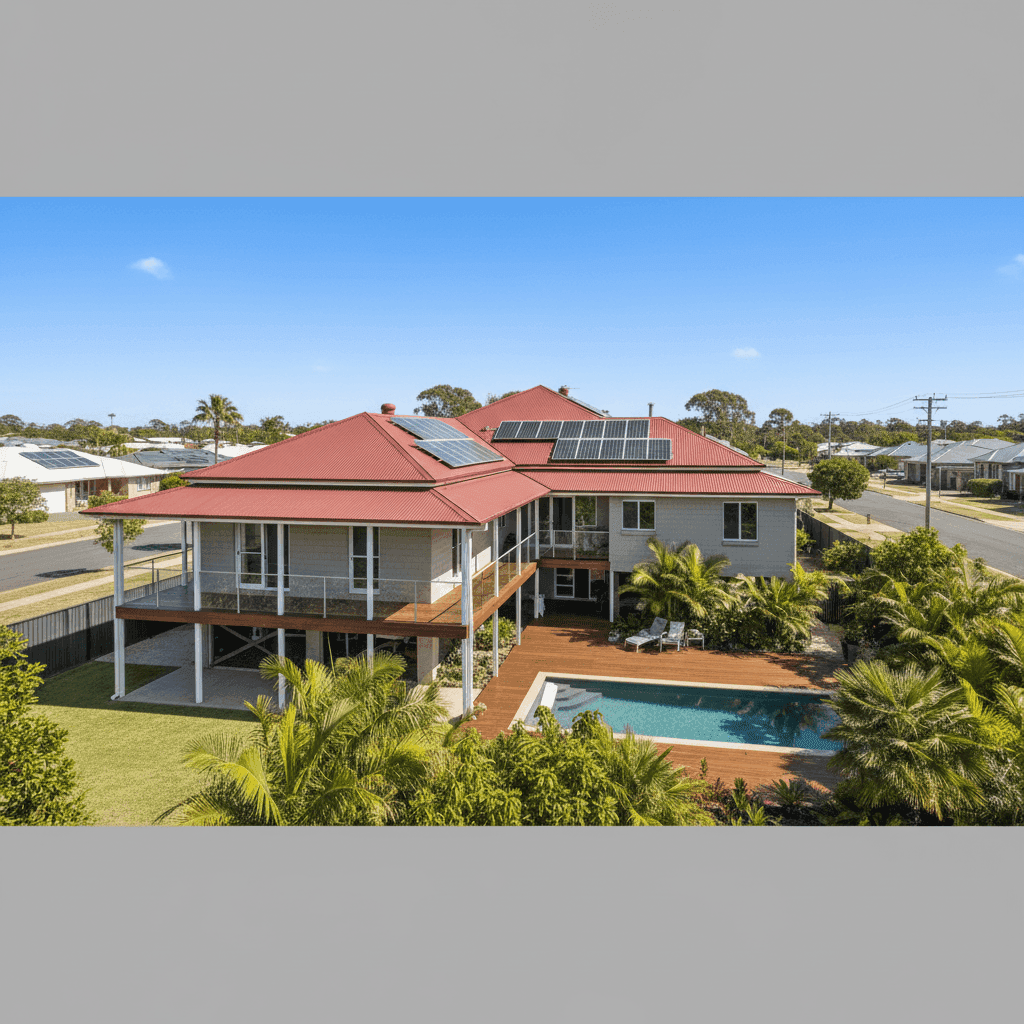
If you own a free standing home in Goondiwindi, QLD 4390, you've probably wondered whether you're paying too much — or too little — for home insurance. This article breaks down a real home and contents insurance quote for a four-bedroom, three-bathroom property in this regional Queensland town, and puts it in context against local, state, and national benchmarks. Whether you're renewing your policy or shopping around for the first time, understanding what drives your premium is the first step to making a smarter decision.
---
Is This Quote Fair?
The annual premium for this quote comes in at $3,323 per year (or $312 per month), covering both building and contents. The building is insured for $1,200,000 and contents for $172,000, with a $1,000 excess on each.
Our price rating for this quote is FAIR — around average for the area.
To put that in perspective, the 25th percentile of quotes in the Goondiwindi suburb sits at $3,153 per year, meaning this premium is only marginally above the cheapest quarter of quotes seen locally. The suburb's median is $4,963 per year, so this homeowner is paying noticeably less than the typical Goondiwindi policyholder. That's a solid outcome, particularly given the property's size (244 sqm), elevated construction, and additional features like a pool and solar panels — all of which can push premiums upward.
In short, while there's always room to compare, this quote represents reasonable value relative to what most Goondiwindi homeowners are paying.
---
How Goondiwindi Compares
Digging into the Goondiwindi suburb insurance data, the picture becomes even clearer:
| Benchmark | Premium |
|---|---|
| This quote | $3,323/yr |
| Suburb 25th percentile | $3,153/yr |
| Suburb median | $4,963/yr |
| Suburb average | $6,914/yr |
| Suburb 75th percentile | $6,630/yr |
| LGA (Goondiwindi) average | $6,634/yr |
| QLD state median | $3,903/yr |
| QLD state average | $9,129/yr |
| National median | $2,764/yr |
| National average | $5,347/yr |
(Based on 26 quotes sampled in the Goondiwindi area.)
A few things stand out here. First, the gap between the suburb average ($6,914) and median ($4,963) is quite wide, suggesting a handful of high-premium properties are pulling the average up significantly. This is common in regional Queensland, where flood zones, elevated risk profiles, and larger properties can result in eye-watering premiums for some homeowners.
Second, the QLD state average of $9,129 per year is exceptionally high compared to the national average of $5,347 — a reflection of Queensland's exposure to extreme weather events including floods, storms, and hail. Yet this quote sits well below both figures, which is encouraging.
The national median of $2,764 is lower than this quote, but that figure includes properties in lower-risk metro areas and states with less severe weather, so direct comparison has its limits.
---
Property Features That Affect Your Premium
Several characteristics of this property influence what insurers are willing to charge. Here's how they play out:
Hebel External Walls
Hebel (autoclaved aerated concrete panels) is generally viewed favourably by insurers. It's fire-resistant, durable, and less susceptible to rot or termite damage compared to timber weatherboard. This can work in the homeowner's favour when it comes to premium pricing.
Steel / Colorbond Roof
Colorbond roofing is another tick for insurers. It's highly durable, resistant to corrosion, and performs well in high-wind conditions — a meaningful advantage in regional Queensland where storms can be severe.
Elevated on Stumps (At Least 1 Metre)
Being elevated by at least one metre is a significant factor. Raised homes are considerably less vulnerable to flood inundation, which is one of the costliest risks insurers price in regional QLD. This elevation is likely contributing meaningfully to the relatively competitive premium on this quote.
Swimming Pool
A pool adds to the replacement cost of the property and introduces some liability considerations. It will contribute modestly to a higher premium, though it's rarely a dramatic factor on its own.
Solar Panels
Solar panels are increasingly common and most insurers now include them under standard building cover, though some treat them separately. Their inclusion in the insured sum means the $1,200,000 building cover needs to account for their replacement value — worth confirming with your insurer.
Ducted Climate Control
Ducted air conditioning is a premium fixture that adds to the overall replacement cost of the home. At 244 sqm with four bedrooms, ducted climate control across the full home represents a meaningful asset to protect.
Timber / Laminate Flooring
Timber and laminate floors can be susceptible to water damage, which is relevant in a region where heavy rainfall events occur. Ensuring your contents and building cover adequately addresses water ingress is important.
---
Tips for Homeowners in Goondiwindi
1. Review Your Sum Insured Annually
Construction costs have risen sharply in regional Queensland over the past few years. A sum insured of $1,200,000 for a 244 sqm home may be appropriate today, but it's worth rechecking each year using a building cost calculator to ensure you're not underinsured — particularly given the elevated construction and quality fittings.
2. Confirm Solar Panel and Pool Coverage
Ask your insurer explicitly how solar panels and the pool are treated under your policy. Some policies include them automatically; others require separate endorsements or have sub-limits. Getting clarity now avoids nasty surprises at claim time.
3. Compare Quotes at Renewal
Given the wide spread of premiums in the Goondiwindi area — from $3,153 at the 25th percentile to $6,630 at the 75th — there's clearly significant variation between insurers. Even if your current premium feels reasonable, running a comparison at renewal could save you hundreds of dollars without sacrificing cover quality.
4. Check Your Flood and Storm Cover
While this property's elevation is a protective factor, Goondiwindi sits in a region that can experience significant rainfall events. Make sure your policy explicitly covers flood (not just storm), as some policies distinguish between the two and may exclude flood damage. It's one of the most important fine-print items for any QLD homeowner.
---
Ready to Compare?
Whether you're happy with your current quote or suspect you could do better, it pays to see what else is out there. Get a home insurance quote at CoverClub and compare options tailored to your Goondiwindi property in minutes. With premiums varying so widely in this area, a quick comparison could make a real difference to your annual costs.