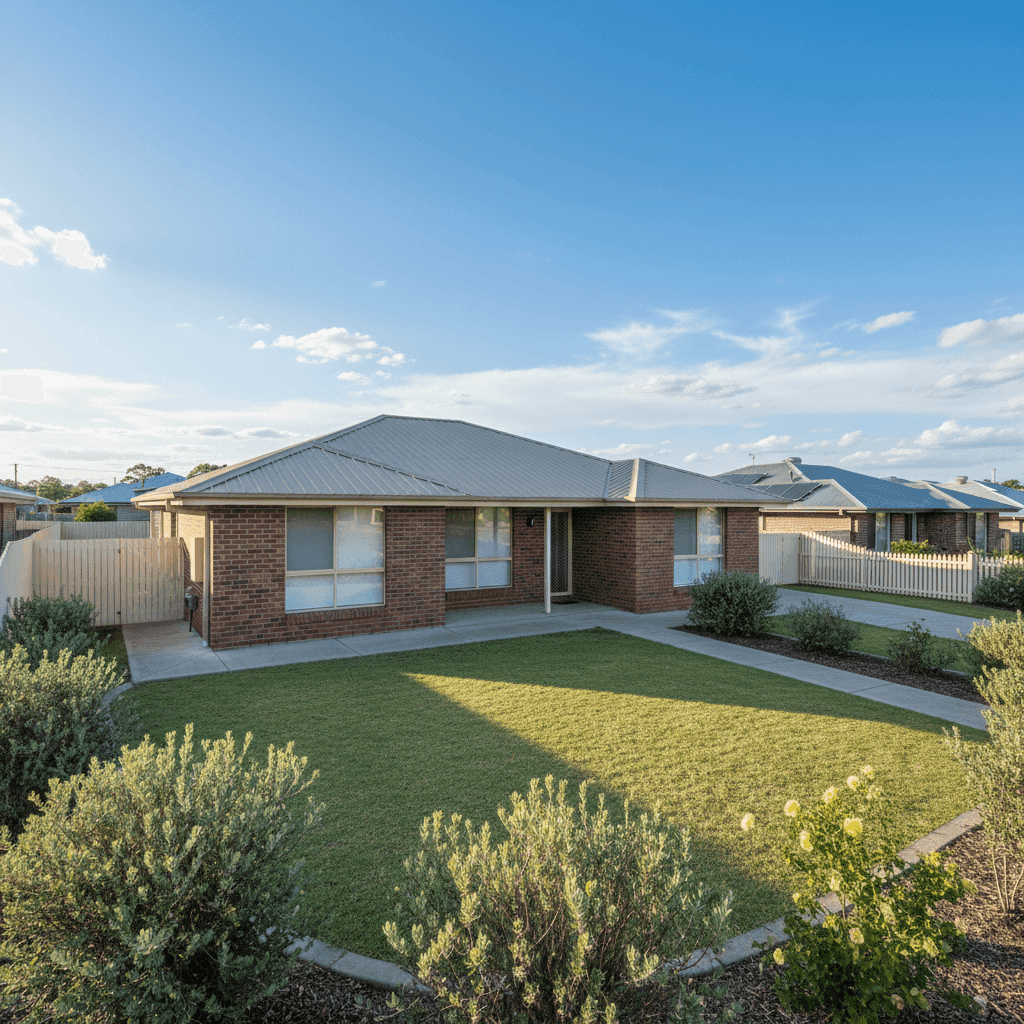
If you own a free standing home in Goondiwindi, QLD 4390, you'll know that finding the right building insurance can feel like navigating a maze. Goondiwindi is a regional town in southern Queensland, sitting close to the New South Wales border along the Macintyre River. It's a community built on agriculture and lifestyle — but that doesn't mean home insurance should cost the earth. In this article, we break down a real building-only quote for a 3-bedroom, 1-bathroom brick veneer home in Goondiwindi, and put the numbers into context so you can make a more informed decision.
---
Is This Quote Fair?
The quote in question comes in at $48,369 per year (or $4,635/month) for building-only cover, with a $1,000 building excess and a sum insured of $741,000. Our price rating for this quote is EXPENSIVE — Above Average.
To put that bluntly: this is a significant premium. Even accounting for a relatively high sum insured of $741,000 — which is appropriate for a 214 sqm home built in 1992 — the annual cost is well above what most Goondiwindi homeowners are paying. At nearly $48,400 per year, this quote is more than six times the suburb average and more than five times the Queensland state average.
That's not a rounding error. That's a signal that it's absolutely worth shopping around.
There are a few reasons a single insurer might price a property this aggressively. Insurers each use their own proprietary risk models, and factors like the specific street, proximity to waterways, claims history in a postcode, or even internal portfolio management decisions can cause one insurer's quote to differ dramatically from another's. The bottom line: a quote this far above market norms warrants immediate comparison.
---
How Goondiwindi Compares
To give this quote proper context, here's how it stacks up against Goondiwindi suburb averages, Queensland state data, and national benchmarks:
| Benchmark | Average Premium | Median Premium |
|---|---|---|
| Goondiwindi (4390) | $6,914/yr | $4,963/yr |
| Queensland | $9,129/yr | $3,903/yr |
| National | $5,347/yr | $2,764/yr |
A few things stand out here. First, the suburb average of $6,914 and median of $4,963 suggest that most homeowners in Goondiwindi are paying a fraction of the $48,369 quoted here. The 75th percentile for the suburb sits at just $6,630 — meaning even the most expensive quarter of quotes in the area comes nowhere near this figure.
It's also worth noting that Queensland's average premium ($9,129) is elevated compared to the national average ($5,347), largely due to the state's exposure to severe weather events including flooding, storms, and cyclones in northern regions. However, Goondiwindi is not classified as a cyclone risk area, which should work in a homeowner's favour when it comes to pricing.
The disparity between Queensland's average ($9,129) and its median ($3,903) tells an important story: a small number of very high-risk properties are pulling the average up significantly. This quote appears to be one of those outliers — and it may not reflect the true risk profile of this particular property at all.
---
Property Features That Affect Your Premium
Every home insurance quote is shaped by the physical characteristics of the property. Here's how the features of this Goondiwindi home factor into the pricing:
Brick Veneer Walls Brick veneer is generally viewed favourably by insurers. It offers solid fire resistance and durability compared to timber or weatherboard cladding. This should, in theory, contribute to a more competitive premium.
Steel/Colorbond Roof Colorbond roofing is a popular choice across regional Queensland and is well-regarded by insurers for its resilience against wind, hail, and fire. It's low maintenance and long-lasting — another tick in the "lower risk" column.
Slab Foundation A concrete slab foundation is considered stable and reduces the risk of subsidence or pest-related structural damage. This is a positive attribute from an underwriting perspective.
Construction Year: 1992 At over 30 years old, the home is approaching the age where insurers may apply additional scrutiny to plumbing, electrical systems, and roofing. While 1992 isn't considered particularly old, it's worth ensuring your sum insured accurately reflects the cost to rebuild — not just the market value.
Ducted Climate Control The presence of ducted air conditioning adds to the replacement cost of the home and can marginally increase the sum insured required. It's a relatively minor factor but worth noting.
No Pool, No Solar Panels The absence of a pool and solar panels simplifies the risk profile. Both features can add complexity to a policy and sometimes nudge premiums higher, so their absence is a modest positive here.
214 sqm Building Size At 214 square metres, this is a mid-sized family home. The $741,000 sum insured equates to roughly $3,463 per sqm — which is on the higher end but may be appropriate depending on finish quality and local rebuild costs.
---
Tips for Homeowners in Goondiwindi
1. Compare multiple quotes — don't accept the first number The data is clear: premiums for the same property can vary enormously between insurers. With a quote like this one sitting so far above the suburb median, even a modest amount of comparison shopping could save thousands of dollars annually. Use CoverClub's free quote comparison tool to see what other insurers are offering for your address.
2. Review your sum insured carefully Make sure your sum insured reflects the actual cost to rebuild your home from scratch — including demolition, materials, and labour at current prices. Over-insuring inflates your premium unnecessarily, while under-insuring leaves you exposed. A quantity surveyor or online rebuild calculator can help you land on the right figure.
3. Ask about your excess options Many insurers offer lower premiums in exchange for a higher voluntary excess. If you're in a financial position to absorb a larger out-of-pocket cost in the event of a claim, increasing your excess from $1,000 to $2,500 or more could meaningfully reduce your annual premium.
4. Check your policy for flood and storm cover Goondiwindi sits on the Macintyre River and has experienced significant flood events historically. Make sure your policy explicitly covers flood damage — not just storm or rainwater damage. These are often defined differently in policy documents, and the distinction matters enormously when it comes time to claim.
---
Ready to Find a Better Rate?
A quote of $48,369 per year for a regional Queensland home is a clear sign that it's time to explore your options. Whether you're renewing an existing policy or insuring a new purchase, comparing quotes is the single most effective way to ensure you're not overpaying.
Get a free home insurance quote at CoverClub and see how your property stacks up. With access to data from across Goondiwindi, Queensland, and the rest of Australia, CoverClub helps you make smarter insurance decisions — without the guesswork.