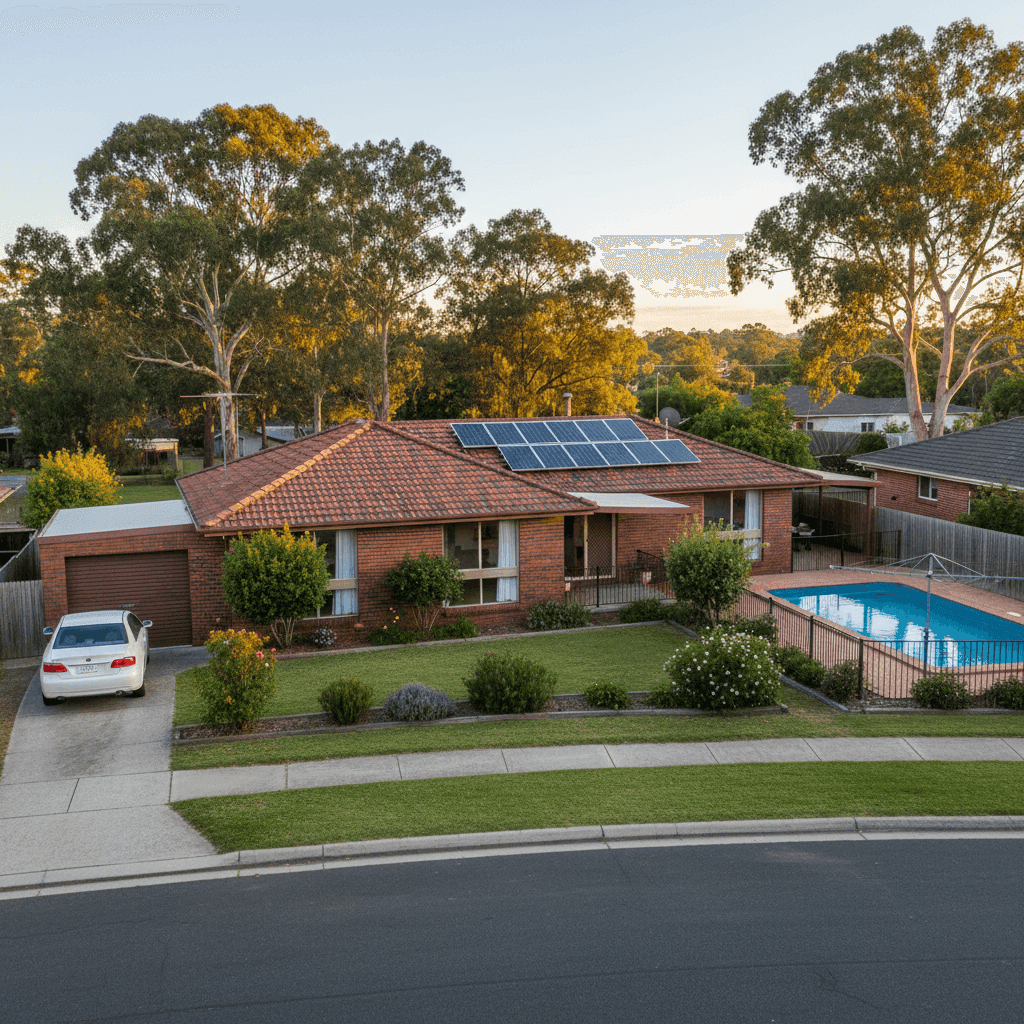
If you own a free standing home in Goonellabah, NSW 2480, you've probably noticed that insurance premiums in the Northern Rivers region can vary wildly. Goonellabah sits in the hilly hinterland above Lismore, and while it avoids some of the flood risk that affects lower-lying areas nearby, there are still a range of property and location factors that shape what you'll pay. This article breaks down a real home and contents insurance quote for a 3-bedroom, 1-bathroom free standing home in the suburb — and puts it in context against local, state, and national benchmarks.
---
Is This Quote Fair?
The quote in question comes in at $1,718 per year (or roughly $170/month) for combined home and contents cover, with a building sum insured of $576,000 and contents valued at $150,000. The building excess is $3,000 and the contents excess is $1,000.
Our price rating for this quote is FAIR — Around Average.
At first glance, $1,718/yr sits comfortably below the suburb average of $2,603/yr and even below the suburb median of $2,202/yr. In fact, it's only just above the 25th percentile for Goonellabah ($1,643/yr), meaning roughly three-quarters of quotes in this suburb come in higher. That's a genuinely competitive result.
That said, "fair" rather than "great" reflects the fact that there's still room to do better — the cheapest quartile of quotes in the suburb starts below $1,643/yr. If you're shopping around, it's worth knowing that meaningful savings may be available with the right insurer and policy settings.
---
How Goonellabah Compares
To understand whether this quote represents good value, it helps to zoom out and look at the broader picture.
| Benchmark | Premium |
|---|---|
| This Quote | $1,718/yr |
| Goonellabah Suburb Average | $2,603/yr |
| Goonellabah Suburb Median | $2,202/yr |
| Goonellabah 25th Percentile | $1,643/yr |
| Goonellabah 75th Percentile | $3,555/yr |
| NSW State Average | $3,801/yr |
| NSW State Median | $3,410/yr |
| National Average | $2,965/yr |
| National Median | $2,716/yr |
| Ballina LGA Average | $5,486/yr |
Based on 62 quotes collected for the Goonellabah area.
The numbers tell an interesting story. This quote is 34% below the suburb average, 55% below the NSW state average, and 42% below the national average. That's a significant gap — particularly when you consider that the broader Ballina LGA average sits at a steep $5,486/yr, likely dragged up by coastal and flood-prone properties elsewhere in the council area.
Goonellabah's elevated position in the landscape appears to work in its favour compared to lower-lying parts of the LGA. You can explore more suburb-level data on the Goonellabah insurance stats page, compare it against NSW state benchmarks, or view national home insurance averages.
---
Property Features That Affect Your Premium
Every property is different, and insurers weigh up a range of characteristics when calculating your premium. Here's how the features of this particular home are likely influencing the price:
Brick Veneer Walls & Tiled Roof
Brick veneer construction with a tiled roof is one of the most common combinations in Australian suburbia — and insurers generally view it favourably. Brick veneer offers solid fire resistance, while tiles are durable and widely understood by underwriters. This combination typically attracts lower premiums compared to, say, weatherboard cladding or older corrugated iron roofing.
Stump Foundation & Timber/Laminate Flooring
The home sits on stumps — a very common foundation type for older Australian homes, particularly those built in the post-war era like this 1965 property. Stumped homes can be more vulnerable to movement and subfloor moisture issues, which some insurers factor into their pricing. The timber and laminate flooring also carries a slightly higher replacement cost than concrete slab floors, which may nudge the building sum insured upward.
Age of Construction (1965)
At 60 years old, this is a well-established home. Older properties can attract higher premiums due to the increased likelihood of ageing infrastructure — think older wiring, plumbing, and roofing materials. However, a brick veneer build from the 1960s is generally regarded as structurally sound, and many insurers are comfortable covering homes of this era.
Swimming Pool
A pool adds to the replacement value of the property and is a factor in the building sum insured. Pools also introduce a liability consideration, though this is typically covered under the home building policy. Make sure your sum insured accounts for the full cost of pool reinstatement.
Solar Panels
Solar panels are increasingly common across Australian rooftops, and this home has them. Most standard home building policies cover solar panels as a fixed fixture of the property, but it's worth confirming with your insurer that the panels and inverter are included in your sum insured — especially given the cost of modern systems.
Standard Fittings Quality
With standard (rather than premium or high-end) fittings, the rebuild cost per square metre is more predictable and moderate. This is reflected in the $576,000 building sum insured for a 160 sqm home — roughly $3,600/sqm, which is a reasonable estimate for a standard-finish brick veneer home in regional NSW.
---
Tips for Homeowners in Goonellabah
1. Review Your Building Sum Insured Regularly
Construction costs in regional NSW have risen sharply in recent years. A sum insured that was accurate two or three years ago may now fall short of what it would actually cost to rebuild your home. Use a building cost calculator or speak with a local builder to sense-check your figure annually.
2. Check That Your Pool and Solar Are Properly Covered
Both features add meaningful value to your property. Confirm with your insurer that the pool, its equipment, and your solar panel system (including the inverter) are explicitly covered under your policy — and that the sum insured is high enough to replace them if needed.
3. Consider Your Excess Settings Carefully
This policy carries a $3,000 building excess and a $1,000 contents excess. A higher excess generally lowers your premium, but make sure you could comfortably cover that amount out of pocket in the event of a claim. If $3,000 would be a stretch, it may be worth adjusting the excess and accepting a slightly higher annual premium.
4. Shop Around at Renewal Time
Insurance loyalty rarely pays. Insurers frequently offer better rates to new customers than to existing ones. Even if your current premium seems reasonable, it's worth getting a fresh set of quotes each year — particularly given the wide spread of prices in Goonellabah (from $1,643 at the 25th percentile to $3,555 at the 75th).
---
Compare Your Home Insurance Quote Today
Whether you're reviewing an existing policy or shopping for the first time, comparing quotes is the single most effective way to make sure you're not overpaying. CoverClub makes it easy to see how your premium stacks up against real data from your suburb, state, and across Australia.
Get a home insurance quote now and find out if you're getting a fair deal — or if there's a better option waiting for you.