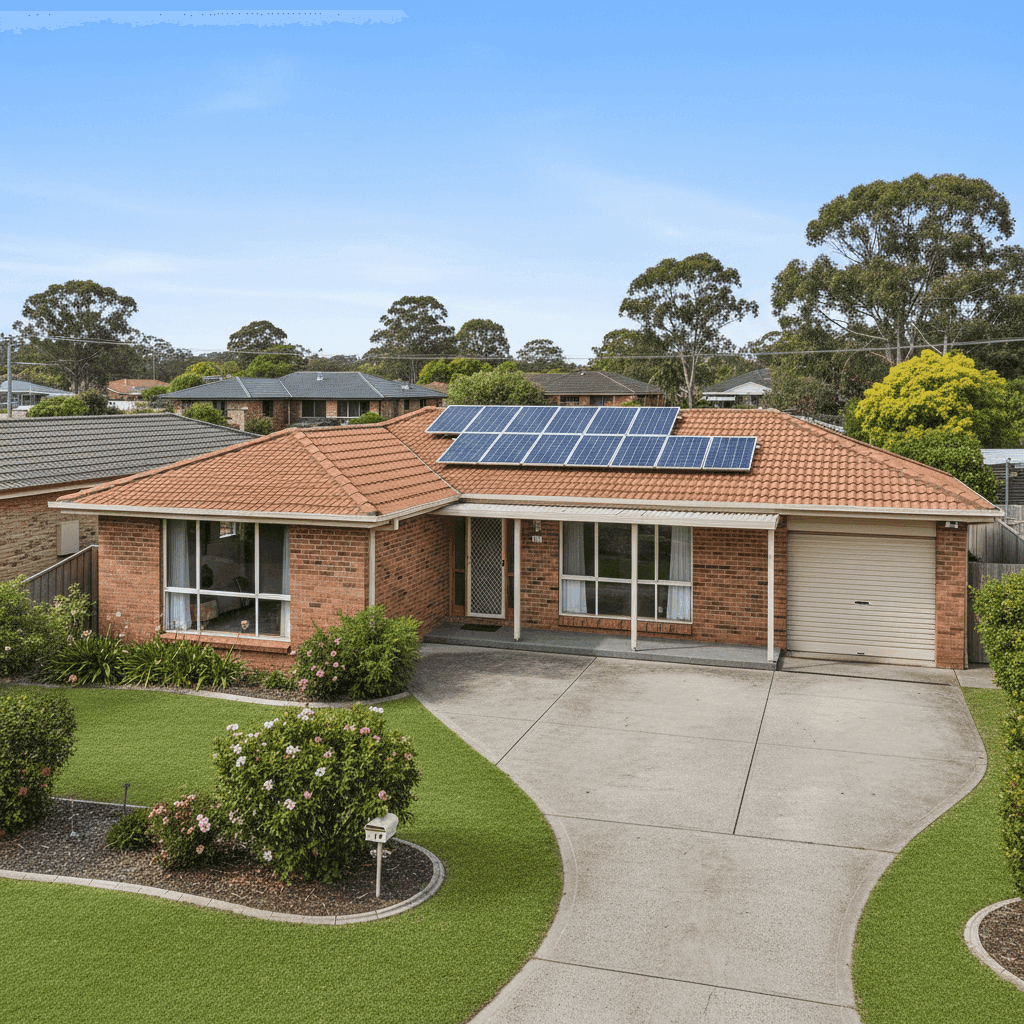
If you own a free standing home in Goonellabah, NSW 2480, you've probably wondered whether you're paying a fair price for your building insurance — or whether there's a better deal out there. Goonellabah sits in the hinterland above Lismore in the Northern Rivers region, and like much of regional New South Wales, insurance premiums here can vary enormously depending on the insurer, your property's characteristics, and local risk factors. This article breaks down a real building-only insurance quote for a 3-bedroom, 2-bathroom free standing home in the suburb, and puts it into context against local, state, and national benchmarks.
---
Is This Quote Fair?
The quote in question comes in at $1,443 per year (or $150 per month) for building-only cover with a sum insured of $549,000 and a building excess of $4,000. Our price rating for this quote is CHEAP — below average for the area.
To put that in perspective: the average home insurance premium in Goonellabah sits at $2,603 per year, with a median of $2,202. This quote lands well below both figures, and even comes in under the suburb's 25th percentile of $1,643 — meaning it's cheaper than roughly 75% of quotes we've seen for similar properties in the postcode. That's a genuinely strong result.
It's worth noting that a higher excess of $4,000 has contributed to bringing the premium down. Opting for a higher excess is a common and legitimate strategy to reduce your annual outgoings — just make sure you're comfortable covering that amount out of pocket if you ever need to make a claim.
---
How Goonellabah Compares
Looking beyond the suburb, the broader picture reinforces just how competitive this quote is. Based on data from 62 quotes collected for the Goonellabah area, the full premium spread runs from around $1,643 at the 25th percentile all the way to $3,555 at the 75th percentile — a wide range that reflects how differently insurers price risk in this region.
At the LGA level, the picture becomes even more striking. The Ballina LGA average sits at $5,486 per year — nearly four times the quote analysed here. This elevated LGA figure is largely driven by coastal and flood-exposed properties within the broader council area, which push the average up significantly.
Zooming out to NSW as a whole, the state average is $3,801 per year with a median of $3,410. Nationally, the average across Australia is $2,965 per year (median: $2,716). This quote beats every single one of those benchmarks — suburb, state, and national — by a meaningful margin.
| Benchmark | Premium |
|---|---|
| This Quote | $1,443/yr |
| Goonellabah Suburb Average | $2,603/yr |
| Goonellabah Suburb Median | $2,202/yr |
| NSW State Average | $3,801/yr |
| National Average | $2,965/yr |
| Ballina LGA Average | $5,486/yr |
---
Property Features That Affect Your Premium
Several characteristics of this property work in its favour from an insurance pricing perspective.
Brick veneer construction is generally well-regarded by insurers. While not as robust as full double brick, brick veneer offers solid fire resistance and durability compared to timber-framed or clad homes, which can attract higher premiums.
Tiled roofing is another positive. Tiles are considered a lower-risk roofing material compared to Colorbond or corrugated iron in some scenarios, and they're highly durable under normal weather conditions. However, they can be more costly to repair after hail or storm events, so it's worth checking your policy's storm cover carefully.
Slab foundation is the standard for homes of this era and is generally straightforward for insurers to assess. Combined with timber and laminate flooring, the internal fit-out is practical and mid-range — consistent with a standard fittings quality rating, which keeps the rebuild cost estimate reasonable.
The home was built in 1975, which puts it in a generation of properties that insurers know well. Homes of this age are typically solid in construction but may have older electrical wiring, plumbing, or roofing materials that could increase the likelihood of a claim over time. It's a good idea to keep maintenance records and address any known issues proactively.
Solar panels are present on this property. While solar adds value to the home, it's important to confirm with your insurer whether the panels are explicitly covered under your building policy — not all policies include them by default, and replacement costs can be significant.
The absence of a pool and ducted climate control simplifies the risk profile slightly, and the property falls outside a designated cyclone risk zone, which is a meaningful factor in keeping premiums lower than coastal and far-north Queensland equivalents.
---
Tips for Homeowners in Goonellabah
1. Confirm your solar panels are covered Solar panel systems can cost thousands of dollars to replace. Check your policy's product disclosure statement (PDS) to confirm they're included under building cover, and make sure the sum insured reflects their value.
2. Review your sum insured annually With building costs rising across Australia, a sum insured of $549,000 for a 153 sqm home may need revisiting over time. Use a building cost calculator or speak with a quantity surveyor to ensure you're not underinsured — this is one of the most common and costly mistakes homeowners make.
3. Understand the flood risk in your area The Northern Rivers region has experienced significant flooding in recent years. Even if your specific property in Goonellabah sits on higher ground, it's worth confirming whether flood cover is included in your policy or available as an add-on. Don't assume it's automatically included.
4. Shop around at renewal time The wide spread of premiums in Goonellabah — from $1,643 to $3,555 across the middle 50% of quotes — shows that insurers price this suburb very differently. Loyalty doesn't always pay in home insurance. Use a comparison tool at renewal to make sure you're still getting a competitive rate.
---
Compare Your Own Quote
Whether you're buying a new policy or reviewing your existing one, it pays to see what's available across multiple insurers. Get a home insurance quote on CoverClub and see how your premium stacks up against the suburb, state, and national averages — in seconds. You can also explore the full Goonellabah insurance stats to understand what other homeowners in your area are paying.