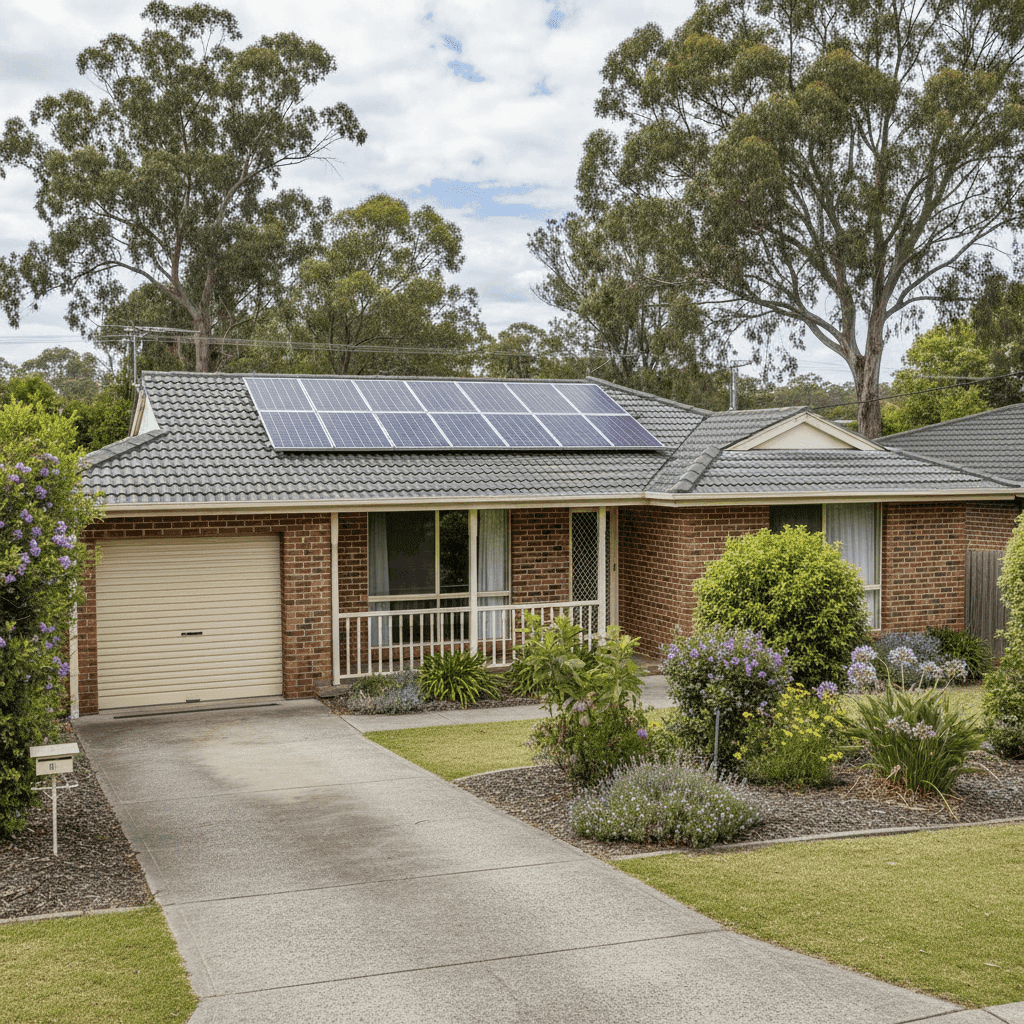
If you own a free standing home in Goonellabah, NSW 2480, you've probably wondered whether you're paying a fair price for building insurance — or whether you could be doing better. Goonellabah is a well-established suburb in the Lismore local government area, sitting on the Northern Tablelands just inland from the coast. It's a popular choice for families thanks to its quiet streets, good schools, and relative affordability compared to nearby coastal towns. But insurance costs in regional NSW can vary enormously, so it pays to understand exactly where your premium sits in the broader market.
This article breaks down a real building insurance quote for a 3-bedroom, 2-bathroom free standing home in Goonellabah — and puts it in context against local, state, and national benchmarks.
---
Is This Quote Fair?
The short answer: yes, and then some. This quote comes in at $1,426 per year (or around $148 per month) for building-only cover with a sum insured of $549,000. Based on data from CoverClub's national statistics, this premium is rated CHEAP — below average by a meaningful margin.
To put that in perspective, the suburb average for Goonellabah sits at $2,603/year, and the median is $2,202/year. This quote falls well below even the 25th percentile for the suburb, which is $1,643/year — meaning it's cheaper than roughly 75% of comparable quotes collected in the area. That's a genuinely strong result.
It's also worth noting the building excess here is $4,000, which is on the higher side. A higher excess is one of the most common ways insurers reduce your upfront premium — so part of the savings reflects that trade-off. If you needed to make a claim, you'd be covering the first $4,000 out of pocket. For homeowners with a solid emergency fund, this can be a smart way to keep ongoing costs down.
---
How Goonellabah Compares
Looking at the broader picture, premiums in Goonellabah are notably lower than many other parts of New South Wales — but that doesn't mean they're cheap by national standards.
| Benchmark | Average Premium |
|---|---|
| Goonellabah (2480) | $2,603/yr |
| NSW State Average | $3,801/yr |
| National Average | $2,965/yr |
| Ballina LGA Average | $5,486/yr |
The standout figure here is the Ballina LGA average of $5,486/year — more than double the quote being analysed, and significantly higher than the Goonellabah suburb average. This reflects the elevated flood and storm risk that affects many properties in the broader Ballina/Richmond Valley region, particularly those closer to the coast or low-lying flood plains. Goonellabah's elevated position on the tablelands provides some natural protection from these risks, which is likely a key driver of its comparatively lower premiums.
The NSW state average of $3,801/year also sits well above the suburb median, reinforcing that Goonellabah is a relatively affordable area to insure — at least for properties with favourable characteristics.
Based on 62 quotes collected in the suburb, the spread is wide: from around $1,643/year at the 25th percentile up to $3,555/year at the 75th percentile. That's a $1,900 range, which underscores just how much individual property features and insurer pricing models can shift your premium.
---
Property Features That Affect Your Premium
Several characteristics of this particular home are likely contributing to its competitive premium:
Brick veneer construction is generally well-regarded by insurers. It offers solid fire resistance and durability, and tends to attract lower premiums compared to timber-framed or clad homes. Combined with a tiled roof, this property sits in a construction category that most insurers consider lower risk.
Slab foundation is another neutral-to-positive factor. Slab-on-ground homes are straightforward to assess and don't carry the same underfloor moisture or pest risks associated with raised timber stumps.
Timber and laminate flooring is worth noting as a contents consideration — though since this policy is building-only, it's less of a factor here. However, if the flooring is part of the building structure (as it often is), it's captured within the sum insured.
The 1975 construction year places this home in a period when building standards were solid, though not as stringent as modern codes. Older homes can sometimes attract slightly higher premiums due to the cost of like-for-like replacement of period features, but a 1975 brick veneer home is generally not considered high-risk.
Solar panels are present on this property. Most standard building policies do cover rooftop solar systems as part of the building, but it's worth confirming this with your insurer — coverage limits and exclusions can vary, particularly for battery storage systems.
The absence of a pool and ducted climate control keeps things simple, and the non-cyclone risk zone classification means this property avoids one of the most significant premium loading factors seen in northern Queensland and parts of WA.
---
Tips for Homeowners in Goonellabah
1. Review your sum insured regularly At $549,000 for a 153 sqm home, this sum insured is in a reasonable range — but building costs have risen sharply in recent years. It's worth checking your sum insured annually against current construction cost estimates to avoid being underinsured. Many insurers offer a building calculator, or you can use the Cordell Sum Sure tool.
2. Understand your excess trade-off A $4,000 excess has helped achieve a lower premium here, but make sure it's an amount you could genuinely cover if a claim arose. If your savings buffer is limited, consider whether a lower excess (with a slightly higher premium) gives you better peace of mind.
3. Confirm solar panel coverage With solar panels on the roof, ask your insurer specifically how they're covered — including what happens if panels are damaged in a storm or by falling debris. Check whether inverters and battery systems (if applicable) are included or need to be listed separately.
4. Compare at renewal time Even a cheap quote can become an average one after a few years of automatic renewals. Insurers frequently adjust pricing, and loyalty doesn't always pay. Use a comparison tool like CoverClub to benchmark your renewal offer against the current market before you accept it.
---
Find Your Best Rate with CoverClub
Whether you're a first-time buyer or a long-term homeowner in Goonellabah, it's worth knowing what the market looks like before you commit to a policy. CoverClub makes it easy to compare building insurance quotes side by side, so you can see exactly how your premium stacks up. Get a quote today and find out if you're getting the value you deserve.