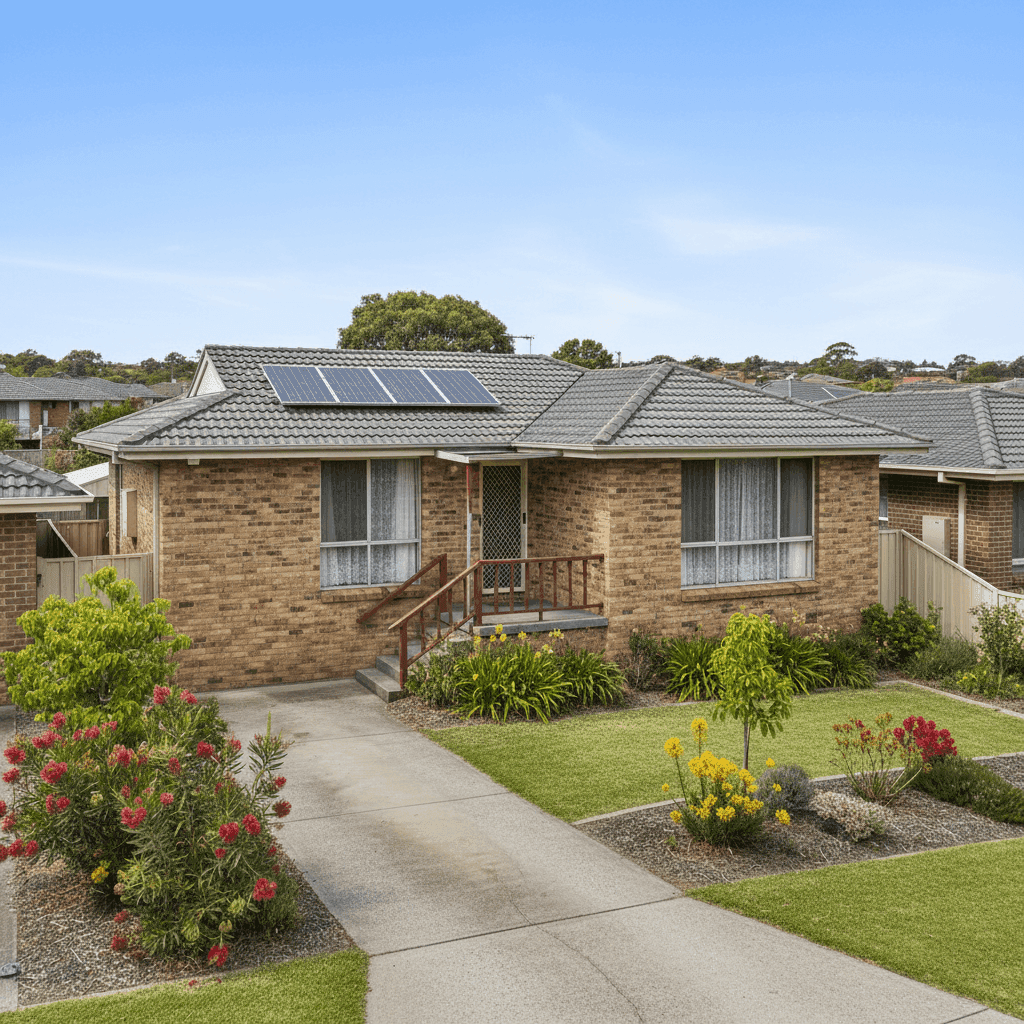
Gordon is a well-established residential suburb in the south of the Australian Capital Territory, known for its quiet streets, family-friendly atmosphere, and predominantly brick homes built during the late 1980s and 1990s. If you own a free standing home in this part of Canberra, understanding what you should be paying for home and contents insurance — and why — can make a real difference to your household budget. This article breaks down a recent quote for a four-bedroom brick veneer home in Gordon ACT 2906, compares it against local and national benchmarks, and offers practical tips to help you get the best value cover.
---
Is This Quote Fair?
The quote in question comes in at $1,482 per year (or $142/month) for combined home and contents insurance, covering a building sum insured of $600,000 and contents valued at $50,000, each with a $1,000 excess.
Our analysis rates this quote as FAIR — Around Average, and the numbers back that up. Based on 80 quotes collected for Gordon ACT 2906, the suburb average sits at $1,524 per year and the median at $1,403 per year. At $1,482, this premium lands almost exactly between those two figures — solidly in the middle of the pack for the area.
To put it another way, roughly half of Gordon homeowners are paying less than $1,403 and half are paying more. This quote sits just above that midpoint, which suggests the pricing is reasonable but not exceptional. There's likely room to do better with the right insurer, but you're certainly not being gouged.
The interquartile range for Gordon runs from $1,205 (25th percentile) to $1,782 (75th percentile), meaning this quote falls comfortably within the middle 50% of premiums in the suburb. That's a reassuring sign that the coverage is competitively priced relative to comparable properties nearby.
---
How Gordon Compares
One of the most striking takeaways from this analysis is just how affordable Gordon is compared to broader benchmarks.
| Benchmark | Average Premium | Median Premium |
|---|---|---|
| Gordon (suburb) | $1,524/yr | $1,403/yr |
| Unincorporated ACT (LGA) | $2,172/yr | — |
| ACT (state) | $2,288/yr | $2,186/yr |
| National | $5,347/yr | $2,764/yr |
Compared to the ACT state average of $2,288 per year, this quote represents a saving of over $800 annually — that's more than 35% below what the typical Canberran pays. Against the national average of $5,347 per year, the difference is even more dramatic, though it's worth noting that the national figure is heavily skewed by high-risk areas such as cyclone-prone regions in Queensland and Northern Australia.
The more meaningful national comparison is the median of $2,764, and even against that figure, Gordon homeowners are paying substantially less. The suburb's low-risk profile — no cyclone exposure, relatively low bushfire risk compared to ACT's rural fringe, and stable urban infrastructure — helps keep premiums well below the national norm.
For a deeper look at how Gordon stacks up over time, visit the Gordon ACT 2906 insurance stats page.
---
Property Features That Affect Your Premium
Several characteristics of this particular property influence the premium, both positively and negatively.
Brick Veneer Walls & Tiled Roof Brick veneer construction with a tiled roof is among the most common and insurer-friendly combinations in suburban Canberra. Both materials are considered durable and fire-resistant, which generally attracts more competitive premiums compared to timber weatherboard or Colorbond alternatives. Insurers view these materials favourably when assessing rebuild risk.
Slab Foundation A concrete slab foundation is standard for homes of this era in the ACT and is generally seen as a low-risk construction type. It reduces concerns around subsidence or underfloor flooding that can affect other foundation types, contributing to a more stable risk profile.
Solar Panels The presence of solar panels adds a modest layer of complexity to the insurance picture. Panels represent an additional asset that needs to be covered, and their installation on the roof introduces a small additional risk (e.g., storm damage or electrical faults). It's important to confirm with your insurer that solar panels are explicitly included in your building cover — not all policies cover them by default.
Ducted Climate Control Ducted heating and cooling systems are a significant fixed asset and can be costly to repair or replace. Ensuring your building sum insured of $600,000 adequately accounts for the replacement cost of this system — along with the rest of the home — is essential to avoid being underinsured.
Building Size & Age At 130 sqm and built in 1994, this home is a mid-sized property of moderate age. Homes from this era are generally well-understood by insurers, though the 30-year age means some systems (plumbing, electrical) may be approaching the end of their service life — something worth factoring into your maintenance planning.
Contents Cover A contents value of $50,000 is on the lower end for a four-bedroom home. It's worth doing a thorough room-by-room audit to ensure this figure genuinely reflects the replacement cost of your furniture, appliances, clothing, and personal items. Underinsuring contents is a common and costly mistake.
---
Tips for Homeowners in Gordon
1. Review your sum insured regularly Building costs in the ACT have risen significantly over recent years. A $600,000 sum insured may have been appropriate when the policy was first taken out, but with construction costs continuing to climb, it's worth getting an independent building replacement estimate to ensure you're not underinsured. Many insurers offer online calculators to help.
2. Confirm solar panel coverage If your solar panels aren't explicitly listed in your policy schedule, contact your insurer to clarify. Some policies include them as part of the building; others require a specific endorsement. Given the cost of a full solar system, this is not a detail to leave ambiguous.
3. Shop around at renewal time A "fair" rating means there may be better deals available. Insurance premiums can vary significantly between providers for identical properties, and loyalty doesn't always pay. Use a comparison tool like CoverClub to benchmark your renewal quote before automatically accepting it.
4. Consider raising your excess to lower your premium With both building and contents excesses set at $1,000, there may be an opportunity to increase these slightly in exchange for a lower annual premium — particularly if you have an emergency fund in place. Even moving to a $1,500 or $2,000 excess can produce meaningful savings over time.
---
Compare Your Home Insurance Today
Whether you're renewing an existing policy or insuring a new property in Gordon, it pays to compare. CoverClub makes it easy to see what other homeowners in your suburb are paying and to get quotes tailored to your property. Start your free comparison at CoverClub and make sure you're getting the right cover at the right price.