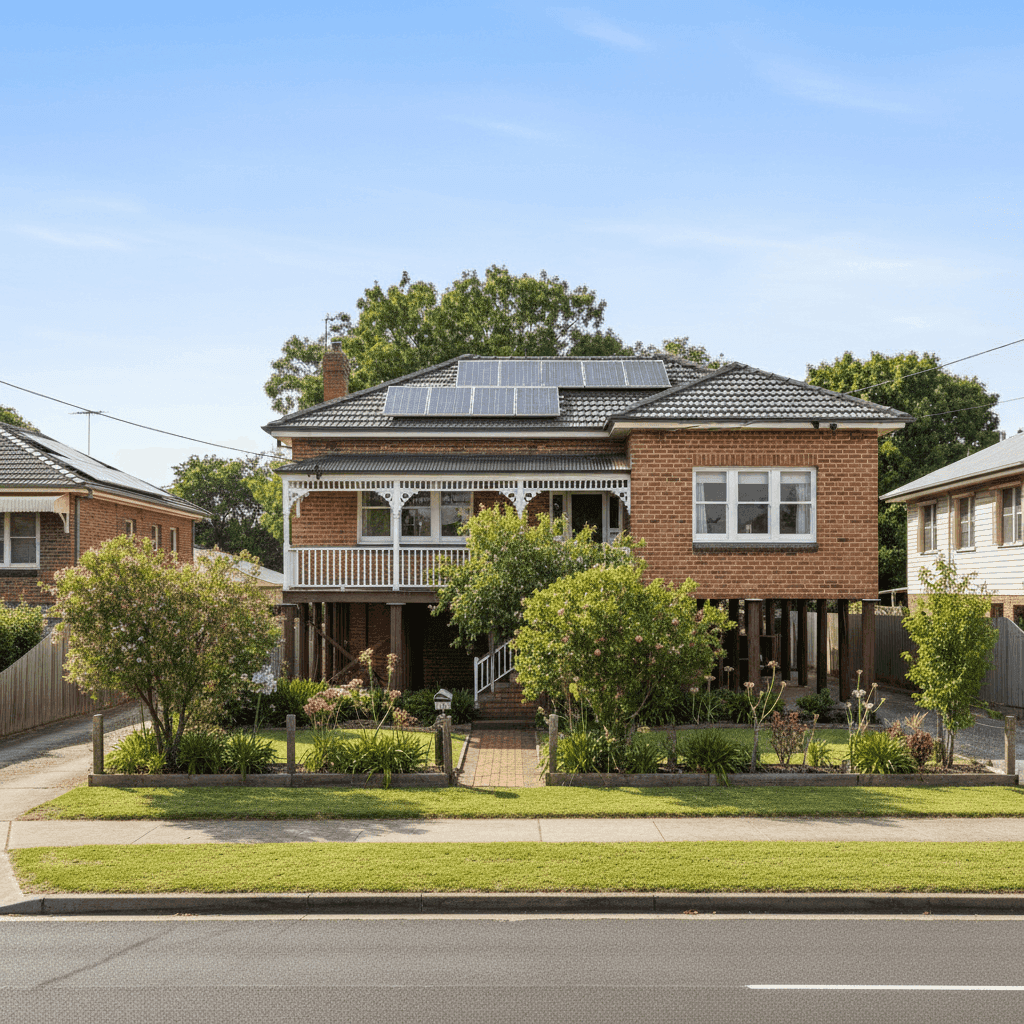
If you own a free standing home in Goulburn, NSW 2580, you're probably curious about whether you're paying a fair price for building insurance — or leaving money on the table. This article breaks down a real building-only insurance quote for a three-bedroom, two-bathroom home in Goulburn, comparing it against suburb, state, and national benchmarks so you can make a genuinely informed decision.
---
Is This Quote Fair?
The short answer: yes — and then some. This quote came in at $987 per year (or around $100 per month), which CoverClub rates as CHEAP — meaning it sits well below the average for the area.
To put that in perspective, the average building insurance premium across Goulburn (postcode 2580) sits at $3,072 per year, with a median of $2,872. Even the cheapest quarter of quotes in the suburb — the 25th percentile — averages $1,659 per year. This quote at $987 undercuts even that lower benchmark, placing it among the most competitive premiums available locally.
The building is insured for $300,000, with a $4,000 building excess. The higher excess is one likely contributor to the lower premium — insurers typically reward policyholders who are willing to absorb more of the initial cost of a claim. It's a worthwhile trade-off for many homeowners, particularly those with solid financial buffers who are primarily concerned with protecting against large, catastrophic losses rather than minor repairs.
---
How Goulburn Compares
Goulburn is a regional city in the Southern Tablelands of New South Wales, and its insurance pricing reflects a relatively moderate risk profile compared to many other parts of the country. Here's how the numbers stack up:
| Benchmark | Premium |
|---|---|
| This quote | $987 / yr |
| Goulburn suburb average | $3,072 / yr |
| Goulburn suburb median | $2,872 / yr |
| Goulburn 25th percentile | $1,659 / yr |
| Wingecarribee LGA average | $3,312 / yr |
| NSW state average | $9,528 / yr |
| NSW state median | $3,770 / yr |
| National average | $5,347 / yr |
| National median | $2,764 / yr |
A few things stand out here. The NSW state average of $9,528 per year is dramatically higher than what Goulburn homeowners typically pay — a reflection of the premium spikes seen in flood-prone, bushfire-affected, or cyclone-risk regions elsewhere in the state. Goulburn, by comparison, benefits from a relatively benign risk profile.
Interestingly, Goulburn's suburb average of $3,072 also sits above the national median of $2,764, suggesting that while the region isn't extreme, it does carry some risk factors that push premiums modestly above the typical Australian home. You can explore the full breakdown of Goulburn's insurance statistics here.
---
Property Features That Affect Your Premium
Every home is different, and insurers price premiums based on a detailed assessment of construction, location, and risk. Here's how this particular property's features likely influence its cost:
Brick Veneer Walls
Brick veneer is one of the most common wall constructions in Australia and is generally viewed favourably by insurers. It offers solid fire resistance and durability, which can contribute to lower premiums compared to timber-framed or clad exteriors.
Concrete Tile Roof
A concrete roof is durable and long-lasting, with good resistance to fire and wind. Insurers tend to rate concrete roofs positively, as they're less susceptible to storm damage than some other materials — an important factor in the Southern Tablelands, where hail and high winds can occur.
Stump Foundation (Elevated by at Least 1m)
This property sits on stumps and is elevated by at least one metre — a construction style more commonly associated with older Queensland-style homes but found across regional NSW as well. Elevation can actually be a double-edged sword for insurance: it may reduce flood risk at ground level, but it can also increase vulnerability to wind uplift. Insurers assess this carefully. On balance, the elevation here appears to have been priced in without significantly inflating the premium.
Timber and Laminate Flooring
Timber and laminate floors are considered a standard fitting type and don't typically push premiums up on their own. However, they can be more costly to repair or replace following water damage compared to tile — something worth keeping in mind when setting your sum insured.
Solar Panels
This home has solar panels, which are a growing feature across Australian properties. Most building policies cover solar panels as part of the structure, but it's worth confirming with your insurer that the panels are explicitly included — and that the sum insured accounts for their replacement cost.
Construction Year: 1970
Homes built in 1970 are over 50 years old and may carry higher maintenance and repair costs. Older properties can sometimes attract higher premiums due to ageing electrical wiring, plumbing, and structural components. The fact that this quote remains highly competitive despite the age of the property is notable.
---
Tips for Homeowners in Goulburn
Whether you're reviewing your current policy or shopping for the first time, here are some practical steps to make sure you're getting the best value:
- Review your sum insured annually. Building costs have risen sharply in recent years due to labour and materials inflation. A sum insured of $300,000 may have been accurate at the time of purchase but could be insufficient to fully rebuild today. Use a building cost calculator or speak with a quantity surveyor to verify your figure.
- Understand your excess trade-off. This policy carries a $4,000 building excess — higher than average. While this reduces your annual premium, make sure you have that amount readily accessible in an emergency. If cash flow is a concern, consider whether a lower excess with a slightly higher premium might suit you better.
- Confirm solar panels are covered. Check your policy wording to ensure your solar system is included under the building definition. Some policies have sub-limits or exclusions for solar panels, particularly for older systems or those not installed by a licensed electrician.
- Compare quotes at renewal time. Insurance markets shift, and loyalty doesn't always pay. Even if your current premium is competitive, running a fresh comparison at renewal can surface better deals — or at least give you confidence that you're already on a good rate.
---
Ready to Compare?
This quote is a strong result for a Goulburn homeowner — but the right policy for you depends on your full circumstances. Whether you're looking for building-only cover or want to bundle contents insurance as well, comparing multiple quotes side by side is the smartest way to find the right balance of price and protection.
Get a personalised home insurance quote at CoverClub and see how your home stacks up in seconds.