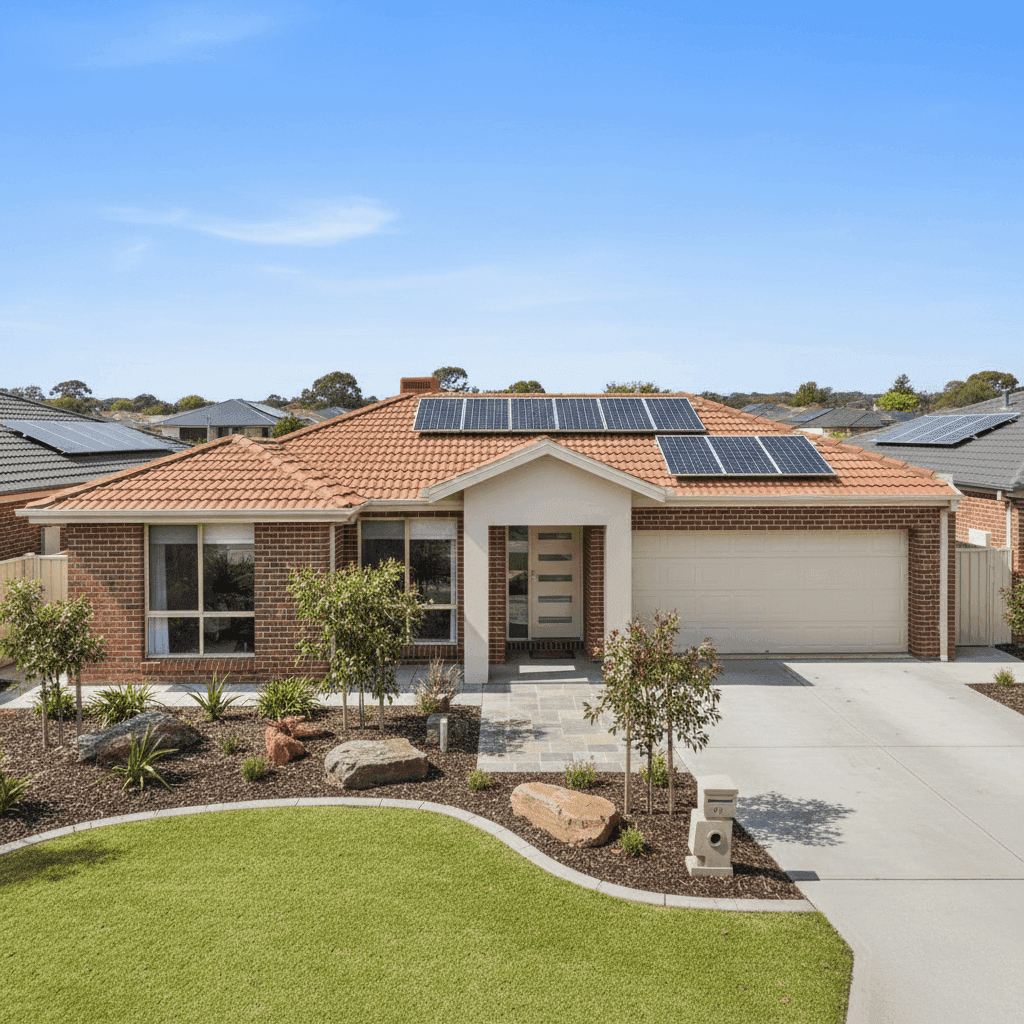
If you own a free standing home in Gowrie, NSW 2330, you've likely noticed that home insurance isn't cheap — and a recent quote we analysed for a five-bedroom property in this area confirms that premiums here sit well above both state and national benchmarks. In this article, we break down what's driving the cost, how it stacks up against comparable properties across New South Wales and Australia, and what you can do to make sure you're not paying more than you need to.
---
Is This Quote Fair?
The quote in question covers home and contents insurance for a five-bedroom, two-bathroom free standing home in Gowrie, coming in at $5,859 per year (or $561 per month). The building is insured for $2,001,000 and contents for $249,000, with a $1,000 excess applied to both building and contents claims.
Our price rating for this quote is EXPENSIVE — above average. That's not a label we apply lightly. When we compare this figure against broader market data, the premium is meaningfully higher than what most Australian homeowners pay for equivalent cover.
To put it in perspective:
- The NSW state average premium is $3,801/yr, and the median sits at $3,410/yr
- The national average is $2,965/yr, with a national median of $2,716/yr
At $5,859, this quote is roughly 54% above the NSW average and nearly double the national median. Even accounting for the high sum insured — $2,001,000 for the building alone is a substantial figure — this premium warrants a closer look and, ideally, a comparison against other insurers.
---
How Gowrie Compares
While suburb-level data for Gowrie (postcode 2330) isn't available in sufficient volume to produce a statistically reliable local average, we can use the Hawkesbury LGA average of $4,423/yr as a useful regional reference point. That figure already sits above the NSW state average, which tells us that properties in this broader area tend to attract higher premiums than many other parts of the state.
You can explore more detailed pricing trends for this region at our Gowrie NSW 2330 insurance stats page, or compare against the full NSW state insurance data and national benchmarks.
Even within a higher-cost region, though, the $5,859 quote exceeds the Hawkesbury LGA average by more than $1,400 per year — a gap that suggests there may be room to negotiate or find a more competitive policy without sacrificing cover quality.
---
Property Features That Affect Your Premium
Several characteristics of this property have a direct bearing on the premium calculated by insurers. Understanding these factors can help you have a more informed conversation with your insurer or broker.
Building Size and Sum Insured
At 325 square metres, this is a large home by Australian standards. Combined with a building sum insured of $2,001,000, the replacement cost exposure for an insurer is significant. Larger homes cost more to rebuild, and that risk is priced accordingly. It's worth confirming whether your sum insured accurately reflects current construction costs — both over-insuring and under-insuring carry real consequences.
Brick Veneer Construction
Brick veneer walls are one of the more common construction types in NSW and are generally viewed favourably by insurers. Brick veneer offers solid fire resistance and structural durability, which can help moderate premiums compared to timber-framed or clad alternatives.
Tiled Roof
A tiled roof is similarly well-regarded in the insurance market. Tiles are durable, fire-resistant, and long-lasting when maintained properly. This is a positive factor for your premium profile.
Slab Foundation
A concrete slab foundation is standard for homes built in this era and is considered low-risk by most insurers. It reduces concerns around subsidence or pest-related structural damage that can affect older homes on stumps or piers.
Solar Panels
This property has solar panels, which are increasingly common across Australian homes. While solar panels themselves add replacement value to a property, most home and contents policies can be extended to cover them. It's important to confirm with your insurer that your solar system is explicitly included in your building cover — and that the sum insured accounts for its replacement cost.
Construction Year
Built in 2004, this home is relatively modern, which generally works in your favour. Newer homes are built to more recent standards, reducing the likelihood of age-related structural claims compared to homes from the mid-20th century.
---
Tips for Homeowners in Gowrie
Whether you're reviewing an existing policy or shopping for a new one, here are some practical steps to help you get better value on your home insurance.
1. Review your sum insured carefully A building sum insured of $2,001,000 is substantial. Use a building cost calculator or speak with a quantity surveyor to confirm this figure reflects the actual cost to rebuild your home — not its market value. Over-insuring is a common and costly mistake.
2. Compare quotes from multiple insurers The single biggest lever you have is comparison shopping. Premiums for the same property can vary by hundreds — sometimes thousands — of dollars between insurers. Get a quote through CoverClub to see how different providers price your specific property.
3. Ask about bundling discounts Many insurers offer discounts when you combine home and contents policies, or when you hold multiple policies (such as car insurance) with the same provider. Given this quote already covers both building and contents, confirm you're receiving any applicable multi-policy discount.
4. Consider your excess level Both the building and contents excess on this policy are set at $1,000. Opting for a higher voluntary excess can reduce your annual premium, though you'll need to weigh that against the out-of-pocket cost if you do need to make a claim.
---
Ready to Find a Better Deal?
A premium of $5,859 per year is a significant household expense — and our analysis suggests there may be more competitive options available for this property. At CoverClub, we make it easy to compare home and contents insurance quotes from a range of Australian insurers, so you can see exactly what you're getting and what you're paying for.
Start comparing home insurance quotes today and find out whether you could be getting better cover for less.